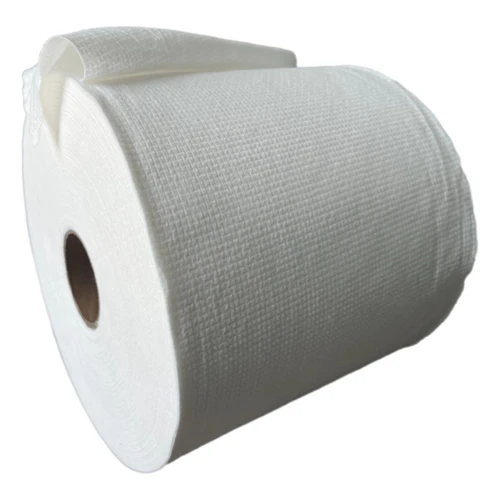
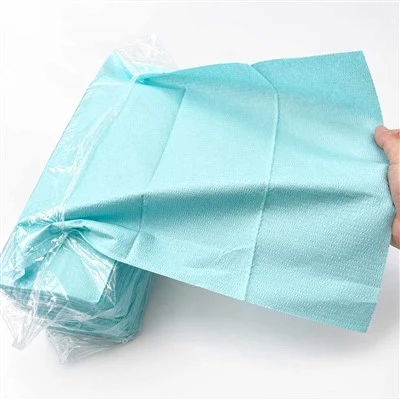
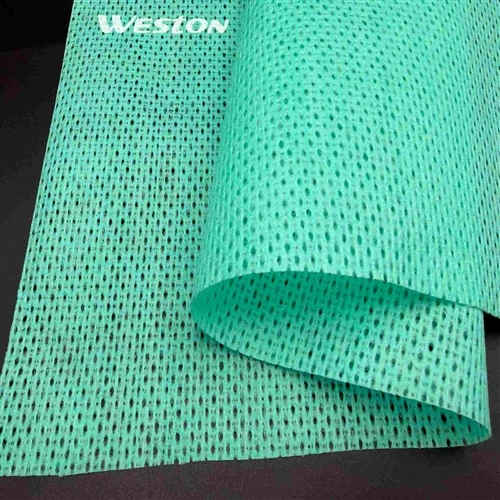
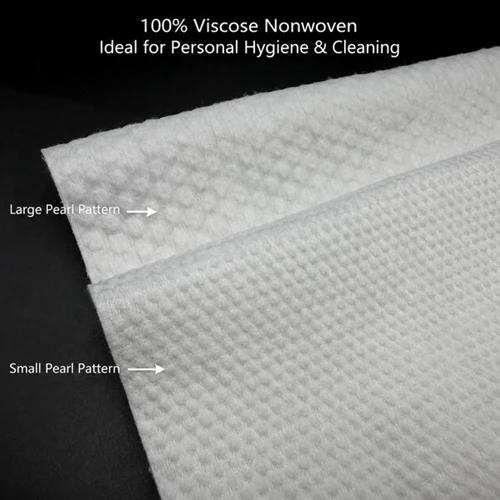
Spunlace cloth is also called spunlace non-woven fabric, also called "spunlace cloth". The concept of "jet-spun net cloth" is derived from the mechanical acupuncture process. The so-called "jet spun net" is to use high-pressure water to pierce into the fiber net, so that the fibers are entangled with each other, so that the original loose fiber net has a certain strength and complete structure. The process flow is: fiber metering and mixing-opening and removing impurities-mechanical messy carding to form a web-fiber web pre-wetting-water needle entanglement-surface treatment-drying-coiling-inspection-packaging and storage. The spunlace device uses high-speed and high-pressure water jets to spray the fiber web to rearrange and entangle the fibers in the fiber web to become a non-woven fabric with a complete structure and certain strength and other properties. The physical properties of this spunlace non-woven fabric are different from common needle-punched non-woven fabrics, and it is the only non-woven fabric that can make its final product similar to textiles in terms of hand feel and performance.
Advantages of spunlace:
------There is no extrusion of the fiber web in the spunlace process, thereby increasing the bulkiness of the final product; no resin or adhesive is used, thereby maintaining the inherent softness of the fiber web; The high degree of integrity prevents the product from being fluffy; the fiber web has high mechanical strength, which can reach 80% to 90% of the strength of the textile; the fiber web can be mixed with any variety of fibers. It is particularly worth mentioning that the spunlace web can be compounded with any base fabric to make a composite product. Products with various functions can be produced according to different purposes.
Advantages of spunlace cloth:
------1, Soft, good drape;
------2, Good strength;
------3. It has high hygroscopicity and quick wetness;
------4, Low fuzziness;
------5, Washable;
------6, No chemical additives;
------7. The appearance is similar to textiles.