Spunlace Fabric Applications: A Complete Guide to Where and Why This Material Works
Spunlace fabric is everywhere - and most people have no idea. It's the soft layer in the baby wipe pulled from the packet at 2 a.m., the industrial cloth pressed against an engine block in an auto shop, the foot pad at a spa entrance, and the clean towel a car detailer uses on a freshly waxed hood. One category of material. An extraordinary range of real-world jobs.
This guide walks through every major application area in honest, practical terms. No inflated claims. Just where spunlace actually works, why it works there, and what decision-makers - whether they're buyers, brand owners, or product developers - need to understand before specifying it.

What Is Spunlace Fabric, and Why Does Its Structure Matter?
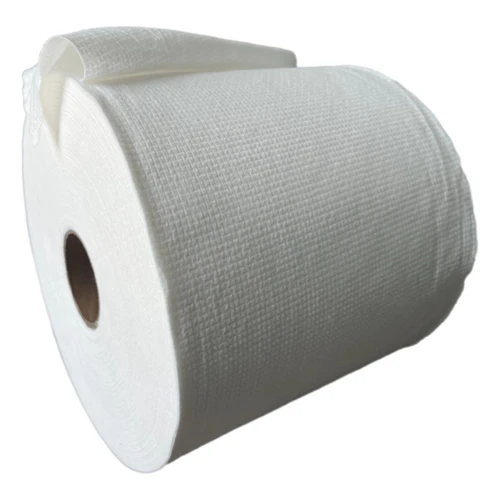
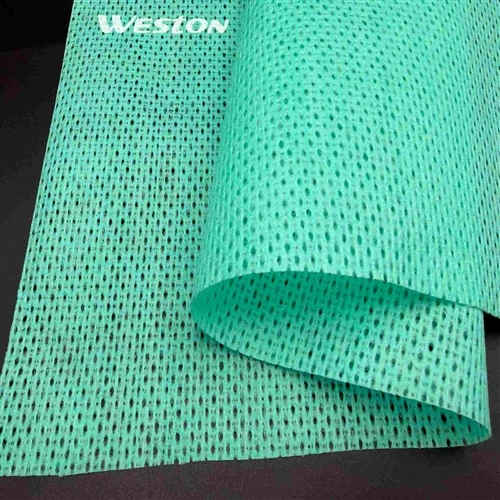
Spunlace (technically called hydroentangled nonwoven fabric) is produced by directing high-pressure water jets through a loosely arranged web of fibers. The force of the water physically entangles the fibers with each other - no adhesive, no thermal bonding, no chemical binder. The result is a coherent fabric held together purely by the mechanical interlocking of its fibers.
That process matters because it directly determines the material's properties:
Softness: Without hard binders or heat treatment, spunlace retains the natural hand feel of its component fibers - cotton feels like cotton, viscose feels smooth, polyester stays resilient.
Wet strength: The entangled fiber structure doesn't collapse when wet, which is why spunlace holds together under load when saturated with water, formula, or cleaning solution.
Absorbency: The open fiber network pulls and holds liquid efficiently - critical in wipe, hygiene, and medical applications.
Breathability: Unlike film-laminated materials, base spunlace allows air to pass through, which matters wherever it sits next to skin for extended periods.
Low lint: The entangled structure sheds very few loose fibers, which is important in medical, optical, and electronics environments.
These five properties, taken together, explain why spunlace keeps appearing across such a wide range of industries. It's not versatility for its own sake - it's that the same physical qualities happen to solve different problems in different contexts.
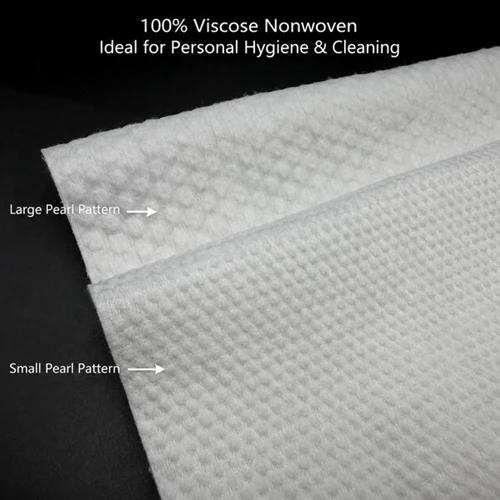
Fiber type is everything. Viscose (rayon) is commonly used for its softness and absorbency. Polyester adds strength and solvent resistance. Cotton delivers natural feel and biodegradability. Lyocell (Tencel) offers a sustainable profile. Most commercial spunlace products are blends - the specific blend determines which properties dominate.
1. Personal Care and Baby Products: The Largest Market by Volume
Baby Wipes: High Standards, High Stakes
Baby wipes represent one of the most technically demanding applications in the entire nonwoven industry. The product must simultaneously satisfy multiple, sometimes competing requirements: it has to be soft enough for a newborn's skin (pH-sensitive and far more permeable than adult skin), strong enough to pull cleanly from a wet-stack dispenser without tearing, stable enough to hold a water-based cleansing formula for months without degrading, and safe enough to use around sensitive mucous membranes.
Spunlace fabric checks all of these boxes in a way that alternative substrates - paper, air-laid, or thermobonded nonwovens - cannot reliably do together. Its wet strength prevents mid-use disintegration. Its soft surface minimizes skin friction. Its open structure holds and releases the lotion or solution evenly across the wipe surface.
For brands and retailers entering this space, Private Label Baby Wipes represent a significant commercial opportunity precisely because the substrate quality is so controllable. A manufacturer working with consistent, well-specified spunlace can produce private label baby wipes that match or exceed the performance of national brands - the fabric technology is available and scalable. What differentiates private label success in this category is selecting the right basis weight (typically 40–60 gsm for standard wipes, higher for premium thick wipes), the right fiber blend (viscose/polyester is common; 100% cotton or viscose commands a premium), and a formula that complements the substrate rather than degrading it.
Private Label Baby Wipes are now a mainstream retail format. Drugstore chains, grocery retailers, and e-commerce brands all carry them. The underlying nonwoven quality is the one factor that separates a product consumers reorder from one they abandon after the first pack. Getting the spunlace specification right is not a secondary decision - it is the product decision.
Facial Wipes and Makeup Removal Pads
Facial cleansing wipes need a substrate that can physically lift makeup - including waterproof mascara and long-wear foundation - without abrading skin. Spunlace performs here because the fiber surface creates micro-level texture that catches and holds pigment particles rather than simply smearing them.
The gentleness requirement is non-negotiable. Skin around the eyes is among the thinnest and most sensitive tissue on the body. A facial wipe substrate with any roughness, stiffness, or loose fiber shedding is immediately felt - and immediately rejected by consumers. Viscose-rich spunlace blends consistently deliver the softness profile this application requires.
Feminine Hygiene and Adult Incontinence
Feminine hygiene products - menstrual pads and panty liners specifically - use spunlace as a topsheet layer. The function here is directional: liquid should pass through quickly and not return to the surface. Spunlace's fiber structure, when engineered correctly, achieves that one-way behavior without needing hydrophilic or hydrophobic chemical coatings (though these are sometimes added for performance tuning).
Adult incontinence products operate on the same principle but at higher absorbency volumes. As global populations age - particularly in Europe, Japan, and increasingly in China and the US - this category is growing steadily. Spunlace is a standard choice for the layers that contact skin, primarily because its softness reduces the skin breakdown risk associated with prolonged moisture exposure.
2. Medical and Clinical Applications: Performance Without Compromise
In medical settings, material performance is a patient safety issue - not a product marketing claim. Spunlace earns its place in hospitals and clinics through documented, measurable properties.
Wound Care and Dressings
Wound dressings built on spunlace substrates absorb wound exudate (the fluid that collects around healing tissue) without bonding to the wound surface. Non-adherence during dressing removal is clinically significant: it reduces secondary injury, pain, and the risk of disrupting healing tissue. Some advanced wound care products laminate spunlace with hydrogel or foam layers to add moisture management and antimicrobial function while retaining the soft, non-adhering contact layer.
Absorbent wound pads in surgical and emergency settings use higher basis weight spunlace - sometimes compressed or multi-layered - to manage blood and fluid at volume.
Surgical Drapes and Gowns
Surgical gowns and drapes require fabrics that simultaneously block fluid penetration (to protect the sterile field) and remain comfortable for surgical teams wearing them for hours at a time. A gown that causes heat stress or restricts movement creates a secondary risk in the operating room.
Spunlace composites - typically the fabric laminated to a thin barrier film - are used here because the base fabric can be engineered to provide comfort, breathability, and drape, while the laminate handles the barrier requirement. The two-layer construction delivers what neither component alone could provide.
Medical Wipes for Disinfection and Patient Care
Medical-grade wipes for surface disinfection, instrument wiping, and patient skin prep are a high-volume, repeat-purchase category in clinical supply chains. The substrate must hold the disinfectant solution without rapid evaporation, release it effectively on contact with the target surface, and leave no lint residue - especially important on optical equipment, electronic monitoring devices, and sterile trays.
Low-lint spunlace is specifically valued in these applications. The alternative - woven gauze or paper wipes - either lints badly or breaks down chemically when exposed to alcohol-based disinfectants. Spunlace handles both requirements reliably.

3. Automotive Care: Where Microfiber Meets Spunlace Technology
The automotive care market is worth examining carefully, because it involves both microfiber nonwovens and spunlace, and the two are often confused or conflated.
Microfiber Towels for Cars: What the Material Actually Does
Microfiber towels for cars are the standard professional and consumer choice for paint-safe surface wiping, detailing, and interior cleaning. Microfiber towels for cars work because the individual fibers are split during manufacturing into wedge-shaped strands many times finer than a human hair. These split fibers create enormous surface area that physically lifts and holds dust, oils, and debris - rather than pushing it around.
Microfiber towels for cars occupy a different technical category from standard spunlace: they're typically woven or knitted microfiber rather than hydroentangled nonwoven. However, the automotive wipes market also includes a significant volume of spunlace-based automotive wipes - particularly for interior surfaces, dashboard cleaning, and quick-detail applications where the rougher texture of microfiber is not desirable.
For brands developing car care product lines, the choice between microfiber towels for cars and spunlace wipes is application-specific. Microfiber towels for cars are the right choice for paint surfaces, glass, and exterior detailing where scratch-free performance is paramount. Spunlace automotive wipes are better suited to absorbent, single-use, or wet-application formats - pre-moistened interior wipes, tire cleaning pads, and disposable detailing cloths where reusability is not required.
Both categories benefit from understanding the nonwoven substrate science. Microfiber towels for cars from quality-focused manufacturers use tightly specified fiber counts (typically 70/30 polyester-polyamide split) and consistent pile heights - small variations here produce large differences in scratch risk on clear-coat paint.
Spunlace in Automotive Interiors
Beyond car care products, spunlace is embedded inside vehicle interiors in ways passengers never see:
Headliners - the fabric ceiling of a car - use lightweight spunlace as a facing material. Requirements include low weight (to avoid sag over time), smooth surface for adhesive bonding to the backing foam, consistent thickness for uniform appearance, and resistance to off-gassing that would fog interior glass.
Door panel soft surfaces and instrument panel trim incorporate spunlace facing layers that provide a soft-touch quality OEM buyers specify. Unlike vinyl or molded plastics, these fabric surfaces dampen sound, warm to touch faster, and provide haptic feedback that signals quality to the occupant.
Seat covers and trim components use spunlace in protective and structural roles - as a barrier between upholstery foam and outer cover fabrics, preventing migration of foam particles to the visible surface.
4. Household and Industrial Cleaning: High Volume, Practical Value
Household Cleaning Wipes
Household surface wipes - for kitchen counters, bathroom surfaces, appliances, and electronics - are a globally high-volume consumer product. The substrate choice matters more than packaging for actual product performance.
Spunlace wipes saturated with cleaning solution need to:
Hold the solution without dripping excessively during storage
Release the solution evenly during wiping rather than depositing it all in the first stroke
Maintain structural integrity through the entire cleaning task without tearing, even on rough or textured surfaces
Leave no lint on glass, screens, or polished surfaces
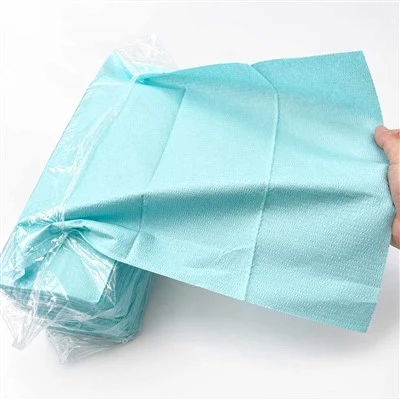
Standard spunlace at 40–80 gsm handles all four requirements effectively. Paper-based wipes fail the third. Foam fails the fourth. Spunlace is the practical answer for most household wipe applications.
Industrial Wipes for Demanding Environments
Industrial wipes in automotive manufacturing, aerospace assembly, and precision electronics face conditions that consumer wipes never encounter: aggressive organic solvents, abrasive metal particles, extreme temperatures, and repeated mechanical abrasion.
The substrate specification changes significantly at this end of the market. Higher basis weights (80–120 gsm and above) provide more material to resist tearing. Polyester-rich fiber blends resist solvent degradation where viscose or cotton would swell and lose strength. Some industrial wipes use cross-lapped fiber orientations to achieve equal strength in machine and cross directions.
The specification decision matters to procurement teams not just for performance but for total cost: a wipe that disintegrates mid-task means a second wipe used, and in high-volume industrial settings that adds up quickly.
Mop Heads and Floor Cleaning Systems
Mop heads for commercial cleaning - hotels, hospitals, offices, food processing facilities - are a practical application that demonstrates spunlace's durability. A mop head must survive repeated machine washing at high temperature, maintain its structure under wet mechanical stress, and absorb water efficiently without becoming too heavy to wring.
Spunlace mop head blanks, particularly in cotton-polyester blends, meet these requirements across hundreds of wash cycles - a durability profile that pure cotton (which degrades) and synthetic microfiber (which can develop odor if not dried properly) don't always match.
5. Foot Care: The Growing Role of Wood Pulp PP Wipes
Foot hygiene is an underserved product category that is growing in Asia, the Middle East, and increasingly in Western markets - driven by spa culture, hotel amenity standards, and post-pandemic hygiene awareness.
Wood Pulp PP Foot Wipes: Structure and Function
Wood Pulp PP Foot Wipes are a specific nonwoven format combining wood pulp fibers (which provide softness and high absorbency) with polypropylene fibers (which provide structural strength and durability). Wood Pulp PP Foot Wipes are typically produced through an airlaid or wetlaid process rather than hydroentangling, though some spunlace variants also incorporate wood pulp.
Wood Pulp PP Foot Wipes are used in:
Hotel and spa amenity kits - as disposable foot wipers placed at poolside, sauna exits, and bathroom entrances
Pedicure preparation - for cleaning feet before treatment without the cross-contamination risk of shared towels
Sports facilities and gyms - for foot hygiene stations near showers and changing areas
Airline amenity packs - in some premium cabin kits as part of multi-step skincare or hygiene offerings
Medical foot care - for diabetic foot hygiene routines where thorough, gentle cleansing matters clinically
The wood pulp component in Wood Pulp PP Foot Wipes is what delivers the soft, slightly exfoliating texture that works well on toughened foot skin. The PP fiber network holds the pad together structurally, preventing tearing even when the pad is pre-moistened and pressed against a hard surface with body weight.
For brands developing private label personal care ranges, Wood Pulp PP Foot Wipes represent a genuine product gap. Most retailers either don't carry them or carry a single undifferentiated SKU. There is room for a well-positioned product with clear use-case communication (pre-moistened vs. dry, scented vs. unscented, individual sachets vs. flip-top canister).
6. Apparel and Bedding: Nonwovens That Function Like Textiles
Activewear and Innerwear
Moisture management layers in activewear and innerwear increasingly incorporate spunlace components. The material's ability to transport sweat away from skin without a chemical hydrophilic treatment is commercially attractive - it simplifies production and avoids the performance degradation that wash-out hydrophilic finishes suffer over time.
Disposable or short-use innerwear - increasingly common in travel retail, spa amenity kits, and healthcare settings - relies almost entirely on spunlace substrates. The material is soft enough to wear for a full day, structured enough to hold its shape, and light enough to compress into small packaging.
Bedding: Mattress Covers, Pillow Protectors, and Beyond
Mattress covers and pillow protectors in hotel, hospital, and home bedding applications use spunlace facing layers - often laminated with a waterproof barrier film - to create surfaces that are soft to sleep on, easy to launder, and resistant to liquid penetration.
Disposable bed pads for medical, elderly care, and maternity settings are typically airlaid or spunlace composites designed for single-use protection under patients. These products are a significant volume category in healthcare procurement.
Furniture Upholstery Backing
Furniture manufacturers use spunlace as a backing fabric on upholstered surfaces - between the foam core and the decorative face fabric. This layer prevents foam particles from migrating through to the visible surface, adds dimensional stability to prevent deformation over years of use, and improves the bonding surface for adhesive assembly. Consumers don't see it, but its presence is detectable in how the furniture holds its shape over time.
7. Filtration: A Technical Niche With Real Commercial Significance
Spunlace's open, tortuous fiber network creates effective physical filtration through a mechanism called depth filtration: particles must navigate a complex three-dimensional path through the fabric, and most are captured along the way.
Air filtration applications include HVAC pre-filters (where spunlace removes coarse particles before air reaches finer filter media), industrial dust collection pre-layers, and face mask outer layers where particle capture efficiency and breathability must coexist.
Liquid filtration applications span food and beverage processing (where fiber compatibility with food-contact regulations matters), pharmaceutical manufacturing (where cleanliness specifications are strict and particulate shedding must be near zero), and industrial cooling water systems where biofouling control benefits from efficient pre-filtration.
The key selection variable for filtration applications is the relationship between pore size, basis weight, and fiber diameter. These can all be tuned during manufacturing - making spunlace a flexible option for filter engineers who need a specific performance profile rather than a commodity substrate.

8. Packaging and Product Protection
Protective packaging for high-value, fragile, or surface-sensitive goods increasingly uses spunlace instead of foam, tissue, or bubble wrap. The reasons are practical:
No loose particles: Foam degrades and sheds granules; paper tears and produces chips; spunlace stays coherent and particle-free even when abraded against sharp edges.
Conformability: Spunlace wraps and forms around irregular shapes without creating pressure points that could dent or scratch.
Appearance: Spunlace wrapping material looks intentional and quality-associated - relevant for luxury goods, premium electronics, and optical components where unboxing experience matters.
Recyclability: Depending on fiber composition, some spunlace packaging materials can enter textile or cellulosic waste streams rather than landfill.
Industries using spunlace packaging materials include consumer electronics (particularly lens and screen protection), fine watches and jewelry, optical instruments, and ceramic or glass artware.
Buying Smart: What to Evaluate Before Specifying Spunlace
Whether sourcing for a Private Label Baby Wipes program, building out a line of Microfiber Towels For Cars, or developing a range of Wood Pulp PP Foot Wipes, the sourcing decision comes down to the same set of evaluation criteria:
1. Fiber composition and blend ratio. This single variable drives most of the performance differences between products at the same basis weight. Request the full fiber breakdown, not just the marketing description.
2. Basis weight and tolerance. Specify the gsm you need and the acceptable tolerance range (±5% is standard; tighter tolerances indicate better manufacturing control). Light products at the lower end of tolerance won't perform as specified.
3. Wet tensile strength. For any wet application - wipes, medical products, cleaning cloths - test wet tensile in both machine direction and cross direction. Failure in one direction means the product tears predictably in use.
4. Liquid absorption and retention. How much solution does the fabric hold per gram of dry weight? How quickly does it absorb? How much is released under light pressure vs. heavy pressure? These numbers predict end-use performance better than general descriptions.
5. Lint index. For medical, optical, or electronic applications, request quantified lint test results. Qualitative descriptions are insufficient.
6. Certifications relevant to the application. OEKO-TEX Standard 100 for skin-contact products. ISO 13485 compliance for medical-grade products. REACH compliance for chemical safety in EU markets. Flushability certifications (GD4 or equivalent) if that claim is needed.
7. Minimum order quantities and sampling flexibility. For new product development and private label programs, the ability to sample different specifications without committing to large volumes is commercially significant. A manufacturer that offers development-stage sampling is a meaningfully different partner than one that insists on production minimums from the first conversation.
Summary: One Material, Many Answers
Spunlace fabric persists across so many industries because it solves a genuinely common problem: how to make a material that is simultaneously soft, strong when wet, absorbent, lint-free, and manufacturable at scale. That combination is harder to achieve than it sounds, and the fact that spunlace delivers it without adhesives, heat treatment, or chemical binders makes it a clean, adaptable starting point for product developers across markets.
From Private Label Baby Wipes that compete with national brands on substrate quality, to Microfiber Towels For Cars and spunlace automotive wipes that protect paint-safe surfaces, to Wood Pulp PP Foot Wipes filling a genuine gap in personal hygiene retail - the applications are different, but the underlying logic is consistent: pick the right fiber blend, the right structure, and the right basis weight for the job, and spunlace delivers.
The material is not magic. It is well-understood, well-engineered, and widely available from manufacturers who know how to produce it to specification. The brands that get the most from it are the ones that treat substrate selection as a product decision rather than a procurement formality.