Are There Any Truly Flushable Baby Wipes?
The honest answer is no-not in the sense that most parents probably mean. Some baby or family wipes are specifically designed and tested to meet established flushability criteria, but no wipe currently sold can be treated as universally equivalent to toilet paper across all household pipes, septic systems, municipal sewers, wastewater facilities, and real-world usage patterns. A wipe may clear the toilet successfully and still break down more slowly than toilet paper, accumulate farther down a pipe, or create problems when thousands or millions of households flush similar products. The word "flushable" therefore describes a tested product claim, not a guarantee that flushing is risk-free everywhere.
That distinction explains why the subject of flushable baby wipes has become so confusing. One parent may flush a wipe for years without seeing a problem. Another may discover a serious blockage and blame the wipes immediately. A wastewater utility may report large amounts of wipes in its sewer system, while a manufacturer points to laboratory testing showing that its product meets an accepted flushability guideline. All of those observations can be true at the same time because they are answering different questions.
The real issue is not simply whether a wipe can disappear down a toilet. It is whether it disperses quickly enough, reliably enough, and under enough different conditions to behave like toilet paper throughout the entire journey from a bathroom to a sewer or septic system.
To understand that question, it helps to examine flushability from several different scales: the meaning of the word itself, laboratory testing, household plumbing, municipal infrastructure, environmental consequences, legal disputes, regulatory policy, and finally the baby-wipe shelf itself.
What Does "Flushable" Actually Mean?
The first problem is surprisingly simple: the word itself has not always had the precise meaning consumers assume.
For much of the history of the wipes industry, "flushable" was not a tightly controlled consumer term backed by one universal government test. Manufacturers could make the claim by following industry guidance, conducting internal assessments, or using testing frameworks intended to evaluate how a wipe behaves after flushing.
One of the most widely recognized technical frameworks has been the INDA/EDANA Guidelines for Assessing Flushability, commonly known as GD4. The framework was developed to evaluate several different aspects of wipe behavior rather than simply asking whether a toilet can carry the wipe away.
Testing can examine whether a wipe passes through the toilet and drainline, whether it settles rather than remaining buoyant, whether it breaks apart sufficiently during agitation, whether fragments can pass through screening, and whether the material biodegrades under aerobic and anaerobic conditions.
That is important because passing a flushability test does not mean a wipe becomes identical to toilet paper.
It means the material has met a defined engineering threshold under defined test conditions.
That difference is at the center of nearly every argument surrounding flushable wipes.
A useful way to think about it is this:
A toilet-flushing test asks, "Can this material move through the system?"
A disintegration test asks, "How quickly does this material fall apart?"
A wastewater test asks, "What happens when this material reaches treatment equipment?"
A consumer asks a different question: "Can I flush this and forget about it?"
Those are not the same question.
The distinction becomes even more important when considering how many wipes are actually intended to be flushable. Estimates cited within the industry have suggested that only a small percentage of wipes on the market are specifically designed to break down in sewer environments. Most wipes-including many conventional baby wipes-were never engineered for flushing in the first place.
That means a photograph of a sewer packed with wipes does not automatically prove that certified flushable products caused the blockage. At the same time, it does not prove that a flushable label guarantees safe behavior in every sewer system.
The difference between those two claims is exactly where the controversy begins.

Inside the Laboratory: Why the Scientific Debate Has Not Completely Disappeared
The next question is whether the testing itself is trustworthy.
There is a credible case on both sides.
From the industry's perspective, flushability guidelines have not simply appeared overnight. They have gone through multiple revisions over the years and have incorporated input from technical specialists and wastewater professionals. Supporters argue that properly tested and correctly labeled products represent only a small fraction of the wipes that utilities encounter in sewer blockages.
Critics, however, have argued that some laboratory methods do not perfectly replicate the turbulence, flow characteristics, residence time, and mechanical forces of actual wastewater systems.
One of the most discussed examples is the "slosh box" style of testing used to simulate the movement of wipes through wastewater. Critics have compared certain versions of manufacturer-oriented testing with alternative utility-focused protocols and pointed to differences in water volume, agitation time, agitation speed, and sieve size.
This is not necessarily evidence of deliberate deception.
It is a methodological issue.
A laboratory test is a model of reality. The question is always how closely that model represents the messy and highly variable conditions found in actual infrastructure.
This also explains another apparent contradiction that often appears in discussions about flushable wipes.
A wipe can pass through a toilet without causing an immediate blockage and still remain largely intact for a considerable amount of time afterward.
Those two results do not contradict each other.
Imagine a wipe leaving the toilet bowl successfully and entering a drainline. The toilet has done its job. But the wipe may still be substantially intact several minutes later. If it encounters another wipe, grease, hair, roots, sediment, a damaged pipe joint, or an existing partial obstruction, it may become part of a much larger mass.
Toilet paper behaves differently because it is designed to lose structural integrity quickly after contact with water and mechanical agitation.
The engineering challenge for wipes is that durability and dispersibility naturally pull in opposite directions.
Consumers want a wipe to remain strong enough to pick up moisture, dirt, and biological residue without tearing in their hands. Wastewater systems want the opposite: a material that loses strength rapidly after flushing.
The stronger a wipe needs to be during use, the more carefully its fibers and bonding structure must be engineered if it is also expected to disperse afterward.
This tension becomes even more important with products intended for babies and toddlers, because softness, wet strength, skin compatibility, and cleaning performance are all major priorities.
What Actually Happens Inside Your Own Plumbing?
For most households, the question eventually becomes much more personal:
"I have flushed these wipes before, and nothing happened. Are they really dangerous?"
Not necessarily.
But that experience is weaker evidence than it seems.
A toilet successfully clearing a wipe only tells you that the wipe made it through the immediate flushing path. It does not tell you what happens several meters farther down the drainage system.
Household blockages often develop gradually.
A wipe may encounter a rough pipe joint. A section of aging plumbing may already be partially restricted. Tree roots may have entered an underground line. Grease or sediment may already be present. Once a wipe catches in one of these areas, another wipe may attach to it later.
Then another.
Then another.
The resulting problem can take weeks or months to become noticeable.
This is why the argument "I have flushed them for years without a problem" can be misleading. It shows that the household has not yet experienced a visible failure. It does not prove that the behavior is risk-free.
A useful comparison is a road that has carried overloaded trucks for years without collapsing. The absence of a visible failure today does not mean the road has unlimited structural capacity.
The same principle applies to drainage infrastructure.
The type of wastewater system also matters.
A home connected to a municipal sewer generally has a longer journey between the toilet and the final treatment process. Flow, distance, dilution, pumps, screens, and other infrastructure provide multiple stages between the household and the treatment plant.
A private septic system is different.
More than one in five U.S. households rely on private septic systems, and those systems have their own limitations in terms of solids handling, flow conditions, tank maintenance, and downstream absorption. A material that remains relatively intact may create a more direct problem when a household system has limited capacity to deal with it.
And when something eventually goes wrong, consumers face a very practical problem.
The package may have said "flushable," but the plumbing bill still arrives at the house.
For renters, this can also create another layer of uncertainty: who is responsible for the repair?
That is one reason the word "flushable" carries much greater practical weight than it initially appears to.
When Millions of Households Make the Same Decision
The biggest logical mistake in the flushable-wipe debate is confusing individual behavior with population-level behavior.
A single wipe may not cause a blockage.
A million households making the same decision every day is a completely different engineering problem.
This distinction is critical.
An infrastructure system can tolerate occasional unusual materials while still being poorly suited to receiving those materials continuously.
Municipal wastewater operators have repeatedly reported significant costs associated with removing wipes from sewer systems. Estimates cited in the wider U.S. discussion have ranged from roughly hundreds of millions of dollars per year to around $1 billion annually, depending on the methodology, time period, and costs included.
One major U.S. city alone has reported spending more than $18 million over a period of several years manually removing wipes and related material from its sewer network.
These numbers do not prove that every flushable wipe is defective.
They demonstrate something different: wastewater systems have to deal with the combined consequences of millions of individual disposal decisions.
There is another uncomfortable detail.
Baby wipes are frequently found among the wipes recovered from sewer systems even though many mainstream baby wipes clearly instruct users not to flush them.
That means the infrastructure problem cannot be attributed only to products that use the word "flushable."
It is also a consumer-behavior problem.
A parent in a hurry may flush a wipe because the disposal bin is full. A toddler may use several wipes during toilet training. A caregiver may assume that a small, soft wipe will break down because it looks similar to toilet paper.
The result is that clearly labeled "Do Not Flush" products can enter wastewater systems anyway.
At the extreme end of the problem are fatbergs: large masses of wipes and other non-dispersible material bound together by fats, oils, grease, and debris.
Some documented blockages have reached extraordinary proportions, including masses tens of meters long and many meters wide.
They are not evidence that every wipe automatically creates a fatberg.
They are evidence of what can happen when material that does not readily disperse accumulates inside a wastewater network over time.
Where Do the Wipes Go After the Toilet?
Even when a wipe does not block your household plumbing, another question remains:
What happens to it afterward?
This is where the issue moves from plumbing engineering to environmental science.
One of the clearest examples comes from the River Thames, where accumulated wipes have contributed to enormous deposits along parts of the river system. At one heavily affected site near Hammersmith Bridge, the material accumulation became more than a meter deep and roughly the size of two tennis courts. Large-scale mechanical clean-up operations have subsequently been required, involving hundreds of tons of material.
The visual impact is striking, but the more important issue is what the material represents.
A wipe that does not biodegrade rapidly does not simply vanish.
It can fragment.
Synthetic fibers can gradually break into smaller particles, contributing to microplastic pollution. Researchers have also found microplastic fibers in fish and other organisms living in aquatic environments.
That does not mean every flushed wipe directly turns into microplastics that are immediately eaten by fish.
The broader point is that persistent materials remain part of the environment longer than a consumer may expect from something that feels like an ordinary tissue.
Yet here again, careful analysis matters.
A substantial portion of wipes recovered from sewage systems was never intended to be flushed in the first place. An independent collection study in New York found that more than 98% of the wipes recovered were not designed to be flushed.
That changes the environmental discussion.
This is not simply a story about manufacturers producing allegedly flushable wipes.
It is also a story about consumers flushing products that explicitly say they should not be flushed.
The environmental impact therefore comes from both product design and disposal behavior.

When Flushability Claims Reach the Courtroom
The legal record surrounding wipes is similarly mixed.
There have been cases in which regulators and courts challenged flushability advertising because companies were unable to substantiate that their products would break apart without causing problems in plumbing or septic systems.
There have also been significant financial settlements relating to flushability claims.
At the same time, not every investigation has ended with a finding that the manufacturer's claims were unlawful or false. Some investigations have closed without a finding of wrongdoing. Some lawsuits have been weakened when municipalities could not reliably identify which specific products were responsible for blockages in their sewer systems.
Those details matter.
It is tempting to turn the issue into a simple story:
"Wipes clog sewers, therefore every flushable claim must be false."
The evidence does not support such a simple conclusion.
There is another legal distinction that is often missed.
A wipe's claim that it is flushable is one question.
A claim that it is natural, plant-based, biodegradable, or environmentally friendly is another.
A product could theoretically perform adequately in one technical category while still facing legal scrutiny over an environmental marketing claim.
These claims should not automatically be treated as interchangeable.
After more than a decade of legal disputes, investigations, industry arguments, and consumer complaints, the strongest conclusion is not that every flushable wipe is fraudulent.
It is that the term has historically existed in a regulatory environment that was less uniform and less independently policed than many consumers assumed.
That gap between consumer expectation and technical definition is the real source of much of the distrust.
Regulators Are Changing the Conversation
Regulation has increasingly focused not only on what a wipe can theoretically do, but also on how consumers understand disposal instructions.
Several U.S. states now require clearer "Do Not Flush" labeling for non-flushable wipes.
At the federal level, proposed legislation has attempted to establish more consistent labeling requirements across the country, although legislative progress has been uneven.
The more surprising development has come from the United Kingdom.
For several years, the UK operated an independently verified certification system intended to identify products that met a stricter standard for flushability.
The certification was ultimately discontinued after about five years and roughly 100 accredited products.
The important part of that decision was not simply whether the certified products passed testing.
The deeper conclusion was about consumer behavior.
Even a technically accurate "flushable" label could create the wrong behavioral message if consumers interpreted it as permission to flush wipes generally.
In other words, the problem was no longer only:
"Can this product pass the test?"
It became:
"Does this label encourage the right behavior?"
That is a fundamentally different regulatory question.
A product can be technically dispersible under a defined test and still contribute to a broader disposal problem if consumers interpret the label too broadly.
And the regulatory direction is becoming even more direct.
Wales is moving toward a ban on the sale of wet wipes containing plastic beginning in December 2026, with England scheduled to follow in 2027.
This approach largely sidesteps the argument about whether a particular wipe should be classified as flushable.
Instead of asking consumers to interpret increasingly complicated technical claims, regulators are moving toward eliminating plastic-containing wet wipes from the market altogether.
That is a significant shift.
So, Are Any Baby Wipes Truly Flushable?
Now we can return to the original question.
The first thing to understand is that most conventional baby wipes are not intended to be flushed. Their primary priorities are usually softness, cleaning performance, wet strength, moisture retention, and skin comfort-not rapid disintegration inside sewer systems.
A much smaller category of wipes has been developed specifically for family bathrooms, toilet training, or similar applications and is marketed as flushable.
Those products are not necessarily identical to conventional baby wipes.
Their fiber selection, bonding structure, basis weight, wet strength, and dispersibility can be engineered differently to encourage faster breakdown after disposal.
But there is still a fundamental limitation.
There is no universal bathroom, sewer, septic system, or wastewater environment.
A product may perform well under a defined test protocol and still encounter conditions in which the system behaves differently.
Old pipes are different from new pipes.
Straight pipes are different from damaged pipes.
Municipal sewers are different from private septic systems.
A single wipe is different from ten wipes.
One household is different from a city receiving millions of wipes every day.
That is why saying "a wipe is flushable" and saying "it is always safe to flush" should never be treated as identical statements.
The most defensible conclusion is that no currently marketed wipe-including wipes positioned specifically for children or families-has been demonstrated to behave exactly like toilet paper across the full variability of real-world plumbing and wastewater systems at population scale.
The strongest evidence for this position is not that all flushable wipes fail.
It is that even technically successful products cannot remove the variability of the infrastructure into which they are being flushed.
What Should Parents Actually Do?
For households with septic tanks, older plumbing, recurrent drainage problems, or uncertain infrastructure, the safest practical approach is to treat "flushable" as a product claim rather than a guarantee.
For households connected to municipal sewers, the risk profile may be different, especially when an individual product has been specifically engineered and tested for flushability.
But lower risk is not the same as zero risk.
The simplest way to reduce uncertainty is still remarkably low-tech: use a small bathroom or diaper-change disposal bin.
That becomes especially useful during diaper changes, travel, toilet training, or any situation in which a proper waste bin is not immediately available.
It also allows parents to separate two different needs:
The wipe needs to be strong and effective while being used.
The plumbing needs the waste to break apart after disposal.
A good product should be designed around the first requirement.
Waste management should handle the second.
Choosing Baby Wipes by Application, Not by One Marketing Word
For manufacturers, importers, distributors, and private-label buyers, this discussion points toward a broader lesson.
The most important question should not simply be whether a wipe can carry the word "flushable."
It should be:
What performance characteristics does the intended application actually require?
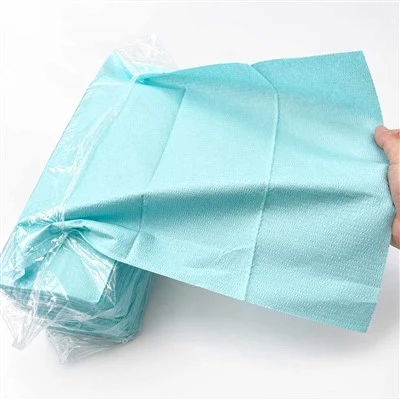
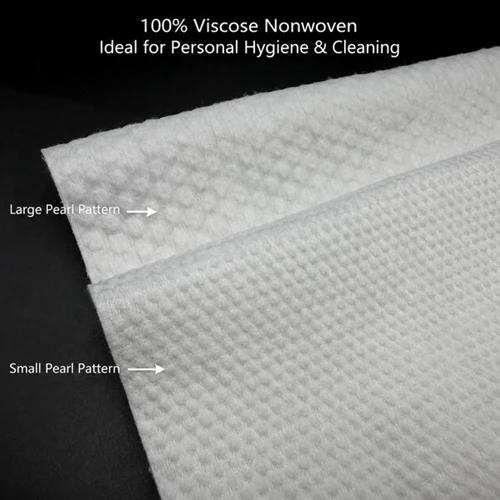
For baby dry wipes, buyers may prioritize softness, liquid absorption, fiber cleanliness, wetting performance, skin-friendly materials, and the ability to customize sheet size, weight, folding, and packaging.
For baby wet wipes, additional factors may include lotion compatibility, liquid retention, tensile strength, surface softness, packaging format, and consistency during long-term production.
For products marketed around environmental considerations, fiber composition and disposal behavior become even more important.
For buyers developing private-label products, these requirements can also be combined with custom OEM or ODM manufacturing.
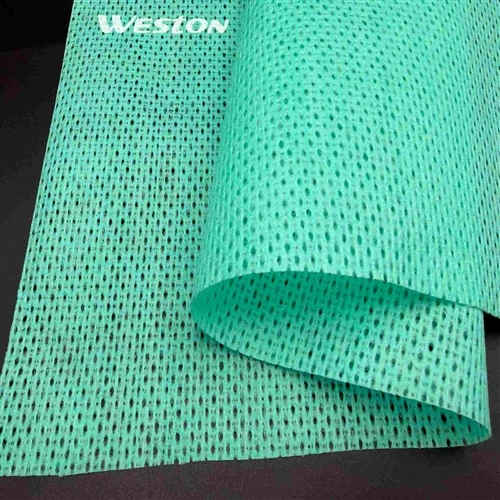
A professional spunlace nonwoven manufacturer can help develop different substrate structures for different applications instead of forcing one material to serve every purpose.
For companies looking for customized baby wipes, Weston Nonwoven can provide OEM and ODM manufacturing for both baby dry wipes and baby wet wipes, with customization options for material structure, basis weight, dimensions, folding, packaging, and other product specifications according to the target application and market.
The key is to develop the wipe around its real use case rather than allowing one marketing term to define the entire product.
The Bottom Line
The phrase "flushable baby wipes" sounds like a simple product category, but it actually describes a complicated interaction between material science, laboratory testing, household plumbing, wastewater engineering, consumer behavior, environmental impact, and regulation.
A wipe can pass a technical test.
A toilet can clear it.
A household can use it for years without a blockage.
A wastewater utility can still recover large quantities of wipes.
A river can accumulate persistent wipe material.
A regulator can decide that the label itself creates too much behavioral confusion.
None of these statements automatically cancels out the others.
That is the real lesson.
"Flushable" should be treated as a claim with a defined testing basis-not as a universal promise that a wipe will behave exactly like toilet paper in every plumbing system.
For parents, the safest everyday rule remains simple: unless there is a specific reason to do otherwise, put used baby wipes in the trash.
For manufacturers and buyers, the better long-term approach is equally simple: design the wipe according to its intended application, verify the material properties that actually matter, and make disposal instructions clear enough that consumers do not have to interpret technical terminology at the moment they are changing a diaper.
A wipe does not have to be flushable to be a good baby wipe.
In many cases, the better product is simply the one that performs exceptionally well where it is actually supposed to be used.