Why Grey Color Industrial Cleaning Cloth Is Ideal for Factory Cleaning
Factory cleaning is not a "clean environment task." It happens in real conditions-oil mist in the air, fine metal dust on surfaces, lubricants on machines, and constant movement of people and equipment. In this kind of setting, cleaning materials are not judged by appearance. They are judged by whether they still work after repeated use.
That is why the Grey Color Industrial Cleaning Cloth has quietly become a practical choice in many industrial environments. It is not a fancy innovation, but a response to very real operational needs.

1. Factory Cleaning Is About Function, Not Appearance
1.1 Real environments are always contaminated
Unlike household cleaning, factory floors and production lines deal with:
Oil and grease buildup
Metal shavings and dust
Chemical residues
Frequent cross-contamination risks
In such conditions, expecting a cloth to "stay clean-looking" is unrealistic.
1.2 Why appearance becomes misleading
White or light-colored cloths tend to show dirt immediately. While this sounds useful, it often creates a false signal:
Cloths look unusable too early
Workers replace them before they are actually worn out
Material waste increases without real performance need
This is where neutral tones like grey begin to make more sense.
2. Why Grey Color Works Better in Industrial Use
2.1 Visual neutrality supports practical judgment
The Grey Color Industrial Cleaning Cloth does not visually exaggerate dirt levels. Instead, it provides a balanced visual reference.
This helps workers:
Judge usability based on actual performance
Avoid unnecessary replacement
Maintain consistent cleaning routines across shifts
2.2 Reduced visual fatigue in long shifts
Factory cleaning is repetitive. When every stain looks highly visible, it can distort perception and increase fatigue.
Grey reduces this effect by:
Softening contrast between clean and used areas
Helping workers focus on task efficiency instead of appearance
Supporting more stable decision-making during long shifts

3. Performance Depends on Material, Not Color
3.1 The real engineering behind cleaning cloths
Color alone does not determine cleaning ability. What matters is the structure of the material.
High-quality industrial cloths are evaluated by:
Absorption speed and capacity
Tensile strength under friction
Lint control during wiping
Compatibility with oils and solvents
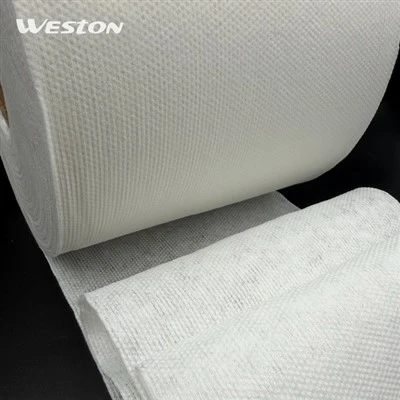
In many industrial applications, materials like Triple Roll Wood Pulp Spunlace Nonwoven Fabric are used as the base structure because they combine cellulose absorption with polyester reinforcement.
3.2 Why spunlace structure matters
Spunlace nonwoven technology uses high-pressure water jets to entangle fibers without adhesives.
This results in:
Stronger fiber bonding
Better liquid absorption pathways
Lower lint shedding compared to woven rags
When combined with grey dyeing, the result is a cloth that performs consistently while remaining visually stable.
4. Efficiency Gains That Are Often Overlooked
4.1 Longer usable lifecycle
In real factory use, the biggest cost is not the cloth itself-it is how often it is replaced.
The Grey Color Industrial Cleaning Cloth helps extend usage cycles because:
It does not "look dirty too early"
Workers trust its usability longer
Replacement decisions become more performance-based
4.2 Waste reduction in daily operations
When cloths are discarded based on appearance rather than function, waste increases significantly.
Grey helps reduce:
Premature disposal
Over-consumption of cleaning materials
Unnecessary inventory turnover
This is not a dramatic change, but it adds up over time in large-scale production environments.
5. Stability in Multi-Shift Industrial Work
5.1 Consistency across teams
Factories often operate in shifts. One shift's cleaning standards affect the next.
Grey cleaning cloths provide:
More consistent visual condition across shifts
Less disagreement about "usable vs. unusable" cloths
Smoother handover between teams
5.2 Reduced variability in cleaning behavior
When workers rely less on visual judgment, cleaning becomes more standardized. This improves overall process stability.
6. A Practical Material Choice, Not a Trend
It is important not to overstate the role of color. Grey does not make a cloth stronger or more absorbent by itself.
Its value is practical:
It supports realistic usage decisions
It reduces waste caused by visual bias
It improves operational consistency
In industrial environments, these small improvements matter more than dramatic claims.

7. Where Material Innovation Comes In
Behind products like the Grey Color Industrial Cleaning Cloth, manufacturers such as Weston Nonwoven focus on combining material engineering with real-world usability.
In some production lines, substrates like Triple Roll Wood Pulp Spunlace Nonwoven Fabric are used to balance absorbency and durability, making them suitable for oil-heavy and high-friction cleaning tasks.
The goal is not to create "perfect cloths," but to create reliable ones that behave predictably in messy environments.
8.Small Design, Real Operational Value
Factory cleaning is a system, not a single action. Every detail-from fiber structure to color choice-affects efficiency over time.
The Grey Color Industrial Cleaning Cloth represents a simple but effective idea: reduce unnecessary judgment, focus on actual performance, and keep cleaning operations stable under real industrial pressure.
It is not about making cleaning easier. It is about making it more consistent, predictable, and practical-shift after shift.