1. The Microscopic Secret: Fiber Diameter and Morphology
The core reason microfiber avoids scratching lies in its ultra-fine fiber structure-a trait that redefines how cleaning materials interact with surfaces. Traditional cleaning fabrics (e.g., cotton, polyester blends) have fiber diameters ranging from 20 to 50 micrometers (μm), roughly the thickness of a human hair. These thick fibers create concentrated pressure points when pressed against delicate surfaces: a single coarse fiber can act like a tiny chisel, digging into gaps or abrading thin protective layers (e.g., phone screen coatings, car clear coats).
Microfiber, by contrast, typically has individual fiber diameters of 0.5 to 10 μm-some even as fine as 0.1 μm, thinner than a strand of spider silk. This minuscule size distributes contact force across thousands of fibers per square centimeter. Instead of one fiber bearing all the pressure, hundreds of microfibers share the load, reducing surface pressure to levels too low to cause scratches.
Equally critical is microfiber's split-fiber morphology. High-performance microfibers (like those used in industrial or precision cleaning) undergo a "splitting" process, where single fiber filaments are divided into 8, 16, or even 32 smaller strands. These split fibers form a dense, velvet-like texture with millions of tiny "fingers" that reach into surface crevices to trap dirt and dust. Unlike rough fabrics that push particles across surfaces (creating scratches), these micro-fingers lift debris away-eliminating the friction that causes damage.
2. Material Science: Hardness Matching and Composition
Scratching occurs when a material's hardness exceeds that of the surface it contacts. Microfiber's composition is engineered to avoid this mismatch, thanks to careful material selection.
Most microfibers are blends of polyester (60-80%) and polyamide (nylon, 20-40%)-a combination that balances softness, strength, and hardness. To quantify this, we use the Mohs Hardness Scale, which ranks materials from 1 (talc, softest) to 10 (diamond, hardest). Key surfaces cleaned with microfiber have specific hardness values:
Smartphone screens (glass or Gorilla Glass): Mohs 5.5-6
Car clear coats (acrylic or polyurethane): Mohs 2-3
Household ceramics (porcelain, glass): Mohs 6-7
Polyester and polyamide fall far below these ranges: polyester has a Mohs hardness of ~2, while polyamide is ~1.5. This "softer than target" design ensures microfiber cannot abrade the surfaces it cleans. Even when used with light pressure, the fibers flex rather than scrape-unlike rigid materials (e.g., plastic scrub pads, steel wool) that score surfaces. The polyamide component adds another layer of protection: it absorbs moisture (up to 7 times its weight) to create a "lubricating barrier" between the fiber and surface. Wet microfibers glide more smoothly, reducing friction further and preventing dry particles from being ground into the surface-a common cause of micro-scratches with dry cleaning cloths.

3. Manufacturing Craft: How Spunlace Technology Enhances Non-Scratching Performance
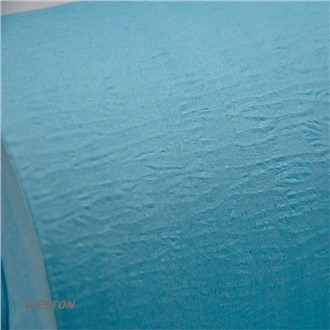
A material's potential is only realized through precise manufacturing-and for microfiber, spunlace technology (a core expertise of Weston Nonwoven as a leading Spunlace Manufacturer) is a game-changer for non-scratching performance.
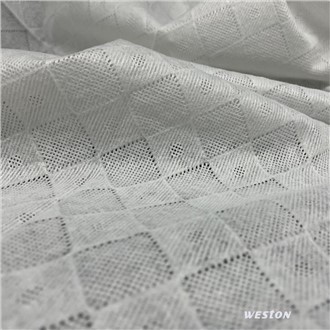
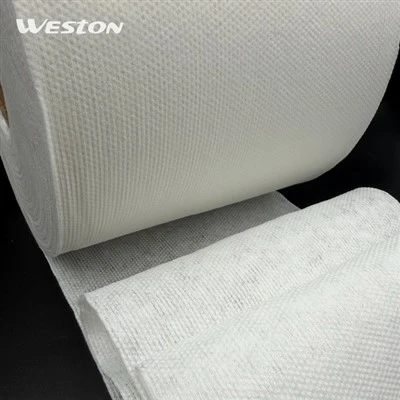
Traditional woven or knitted fabrics rely on thread interlacing, which creates rough seams, loose fiber ends, or uneven tension points. These imperfections are hidden to the naked eye but act as micro-scrapers when rubbed against delicate surfaces. Spunlace technology, by contrast, uses high-pressure water jets (up to 300 bar) to entangle microfiber filaments into a uniform web. There are no stitches, no knots, and no protruding fibers-just a dense, smooth fabric where every fiber is locked in place.
Weston Nonwoven's spunlace process takes this a step further: it controls water jet pressure and fiber alignment to ensure consistent thickness and softness across the entire cloth. For precision applications (e.g., surface preparation for electronics or automotive painting), this uniformity eliminates "hot spots" where fiber density is low (and pressure concentrates). The result is a microfiber cloth that feels equally soft across its surface and cannot scratch-even when used on ultra-sensitive substrates like optical lenses or polished metal.
4. Cleaning Mechanism: Adsorption Over Abrasion
Scratching often stems from how a material cleans, not just what it's made of. Traditional cleaning tools (e.g., cotton rags, sponges) rely on friction: you scrub to loosen dirt, which means pushing particles (sand, dust, grit) against the surface. These particles act as abrasives, leaving tiny scratches even if the tool itself is soft.
Microfiber reverses this logic with physical adsorption-a process driven by its enormous surface area. A single square meter of microfiber cloth has a surface area of up to 400 square meters (thanks to its fine, split fibers). This large surface area creates strong van der Waals forces (weak molecular attractions) that pull dirt, oil, and dust particles onto the fiber surface. Instead of scrubbing, you wipe-and the microfibers "catch" debris like a magnet.
This mechanism is why Microfiber Cloth For Phone is ideal for smartphone screens: it removes fingerprints and dust without pressing particles into the screen's anti-reflective coating. Similarly, Microfiber Towels For Cars clean car paint by lifting road grime (e.g., brake dust, pollen) instead of rubbing it into the clear coat-preventing the swirl marks that plague traditional cotton towels. There's no friction, no pressure, and no scratches-just efficient, gentle cleaning.
5. Pros and Cons: A Comprehensive View of Microfiber's Non-Scratching Trait
To understand microfiber's non-scratching advantage fully, we must weigh its strengths against limitations:
Pros
Universal non-scratching ability: Works on all delicate surfaces (screens, paint, glass, wood) without specialized treatments.
Long-lasting protection: Unlike disposable wipes (which can degrade and leave fiber fragments), high-quality microfiber (like Weston's) retains its structure for hundreds of washes, maintaining non-scratching performance over time.
Reduced chemical use: Its adsorption power means less reliance on harsh cleaners (which can damage surfaces). For example, Surface Preparation Microfibre Cloths clean industrial parts with just water, avoiding chemical etching.
Cons
Bacterial growth risk: Microfiber's high absorbency can trap moisture, leading to bacteria or mold if not dried properly. Regular washing (in warm water, no fabric softener-softener coats fibers and reduces adsorption) is essential.
Limited oil resistance: While excellent for dust and water-based stains, microfiber struggles with heavy oils (e.g., motor oil, cooking grease). In these cases, a mild detergent is needed to break down oils-though the cloth itself still won't scratch.
Heat sensitivity: High temperatures (above 60°C) can melt or shrink microfibers, damaging their split structure and reducing non-scratching performance.
These limitations are manageable with proper care-and they pale in comparison to the risk of scratches from traditional tools.
Real-World Applications: Weston's Microfiber Solutions

As a trusted Spunlace Manufacturer and supplier, Weston Nonwoven translates microfiber's scientific advantages into practical products that solve real-world scratching problems.
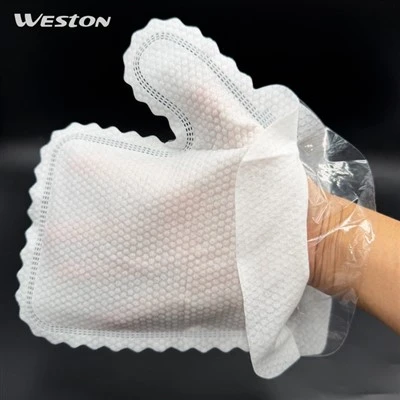
For industrial surface preparation (e.g., before painting, coating, or bonding), Surface Preparation Microfibre Cloths remove dust, lint, and residue without leaving scratches or fibers-critical for ensuring adhesion and finish quality. In consumer electronics, Microfiber Cloth For Phone is designed with extra-fine (0.5 μm) split fibers to clean even the smallest gaps around phone cameras or ports. For automotive care, Microfiber Towels For Cars feature a plush, 300 GSM (grams per square meter) weight to absorb more water and trap more dirt-all while being gentle enough for matte or metallic paint.
Every Weston microfiber product is manufactured with the same spunlace precision: no rough edges, no inconsistent fiber density, just reliable non-scratching performance. For businesses or individuals seeking to test this quality, free samples are available by contacting info@westonmanufacturing.com.
Microfiber does not scratch by accident-it is the result of intentional engineering: ultra-fine fibers that reduce pressure, soft materials that avoid hardness mismatches, spunlace technology that eliminates imperfections, and an adsorption mechanism that replaces friction. For Weston Nonwoven, this science is more than a manufacturing process-it's a commitment to creating tools that protect surfaces while delivering superior cleaning. Whether you're cleaning a phone, a car, or an industrial part, microfiber's non-scratching magic isn't just convenient-it's rooted in physics, chemistry, and craft.