Choosing between polyester and non-woven fabric is not about picking a "better" material. It is about understanding what each one is designed to do. For buyers, especially in industrial, medical, or consumer product sectors, this decision affects cost, performance, and even brand positioning.
This guide breaks down the differences in a practical way, so you can make decisions based on real use-not assumptions.
What Is Polyester Fabric?
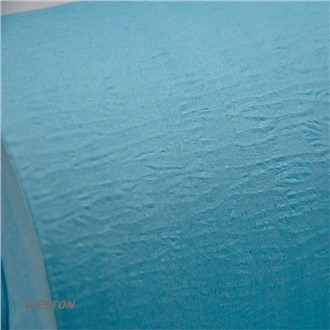
Polyester is a synthetic fiber made from polymer compounds derived from petroleum. It is typically woven or knitted into fabric, giving it a stable and uniform structure.
Key Characteristics of Polyester
Strong and durable, suitable for repeated use
Resistant to stretching, shrinking, and wrinkles
Holds shape well over time
Less breathable compared to natural fibers
Not biodegradable, which raises environmental concerns
Because of these properties, polyester is widely used in clothing, upholstery, and industrial textiles where long-term performance matters.
What Is Non-Woven Fabric?
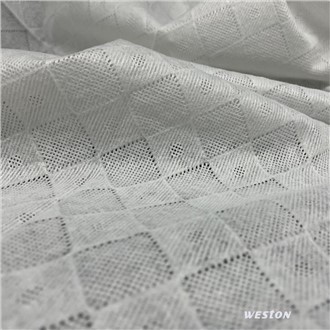
Non-woven fabric is made by bonding fibers together through mechanical, thermal, or chemical processes. It does not involve weaving or knitting, which makes production faster and more flexible.
Key Characteristics of Non-Woven Fabric
Lightweight and cost-efficient
Flexible in texture (soft, stiff, thick, or thin)
Often designed for single-use or short-term use
Can be breathable and absorbent
Some types are biodegradable or more eco-friendly
Non-woven materials are commonly used in hygiene products, medical supplies, wipes, and packaging.
Structural Difference That Changes Everything
The core difference lies in how the materials are built.
Polyester fabric has an ordered structure, with fibers woven tightly together.
Non-woven fabric has a random fiber arrangement, bonded into a sheet.
This structural gap directly affects durability, cost, and application range.
For example, a woven polyester fabric can handle repeated washing and stress, while a non-woven fabric is better suited for controlled, short-term use such as wipes or medical disposables.
Performance Comparison in Real Use
Durability
Polyester clearly performs better in long-term applications. It can withstand repeated use, friction, and washing without losing integrity.
Non-woven fabric, on the other hand, is typically designed for limited use cycles. Some high-quality types, like spunlace non-woven, offer better strength but still do not match woven polyester.
Cost Efficiency
Non-woven fabric usually has a lower production cost, especially in large volumes. This makes it ideal for disposable or high-turnover products.
Polyester has a higher upfront cost but delivers value over time due to its durability.
Breathability and Comfort
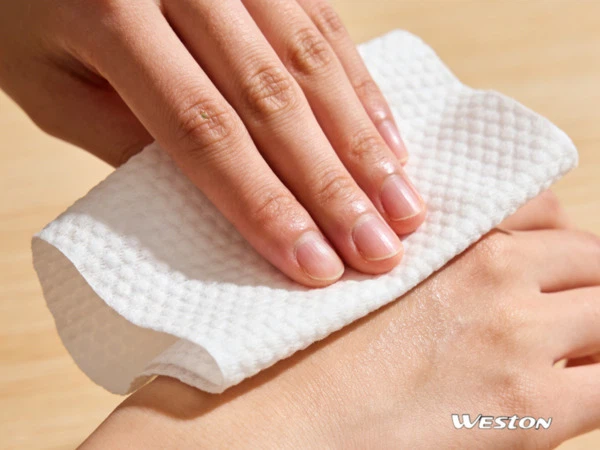
Non-woven fabrics, especially spunlace types, often feel softer and more breathable. This is why they are widely used in personal care products like Exfoliating Facial Wipes.
Polyester can trap heat and moisture, which may reduce comfort in certain applications.
Environmental Impact
Neither material is perfect.
Polyester is long-lasting but not biodegradable.
Non-woven fabric can be waste-intensive if used in disposable products, but some variants use biodegradable fibers.
The environmental impact depends more on how the product is used than the material itself.
Application-Based Decision Making
Instead of asking which material is better, it is more useful to match the material to the application.
When Polyester Makes More Sense
Reusable textiles such as uniforms or bags
Outdoor and heavy-duty applications
Products requiring structural stability
When Non-Woven Fabric Is the Better Choice
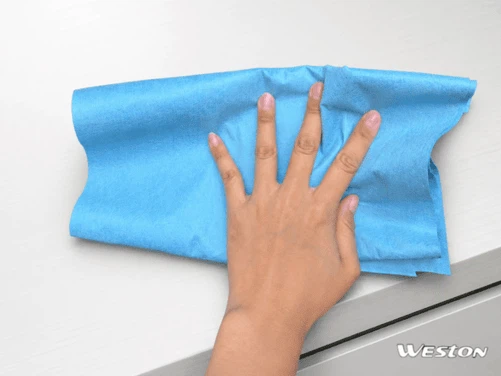
Hygiene and medical products
Disposable or single-use items
Cleaning and personal care products
For example, in the wipes industry, non-woven fabric dominates because it combines softness, absorbency, and cost control. This is especially true for spunlace non-woven materials used by professional manufacturers and dry wipes supplier networks.
A Practical Buying Scenario
Imagine you are sourcing materials for a skincare brand.
If you choose polyester, the fabric may be too rough and not absorbent enough for facial use.
If you choose spunlace non-woven fabric, you get a soft, lint-free, and skin-friendly material ideal for Exfoliating Facial Wipes.
This is not just a material decision-it directly affects user experience and product performance.
Why Spunlace Non-Woven Stands Out
Among non-woven types, spunlace (hydroentangled) fabric is worth special attention.
It uses high-pressure water jets to bond fibers, resulting in:
Better strength compared to other non-woven fabrics
Cloth-like softness
High absorbency and low lint
These features make it a preferred material for wipes, medical textiles, and cosmetic applications.
Manufacturers like Weston Nonwoven focus on this category, offering stable quality and customization for global buyers. For sourcing teams, working with an experienced dry wipes supplier can reduce risks related to consistency, lead time, and product performance.
A Smarter Way to Choose
A useful way to evaluate materials is to think in terms of lifecycle:
How many times will the product be used?
Does it require washing or disposal?
Is softness or strength more important?
What is the cost per use, not just unit cost?
Polyester works best when durability is the priority.
Non-woven fabric works best when efficiency, hygiene, and controlled usage are required.
Final Insight
There is no shortcut answer to "which is better." Polyester and non-woven fabric solve different problems.
For buyers, the goal is not to choose the stronger material, but the more suitable one. In many modern applications-especially wipes, medical use, and personal care-non-woven fabric, particularly spunlace, is not just an alternative. It is the standard.
And when product quality depends on consistency and skin contact, material choice becomes a business decision, not just a technical one.