The Science of a Flawless Finish
So, the party's over, the photos are posted, but your fabulous faux lashes are holding on for dear life. We've all been there: staring into the mirror, fingertips raw, wondering if your real eyelashes will become collateral damage in this late-night struggle. The good news? It doesn't have to be this way. Removing lash glue isn't a test of strength; it's a lesson in practical chemistry. Let's decode the secret to a pain-free, lash-preserving removal process.
The Enemy: What Is Lash Glue, Anyway?
To defeat your opponent, you must know it. Most high-performance lash glues are cyanoacrylates. Sounds complex, but think of it as a super-smart, medical-grade version of the super glue you'd use for crafts.
Here's the magic and the menace: in its liquid form inside the tube, these molecules are stable. The moment it meets the trace amounts of water vapor in the air and on your lash line, it undergoes a process called anionic polymerization. In simple terms, the molecules rapidly link together into incredibly strong, long chains, creating a solid, plastic-like network that binds your lash band to your skin.
This is why pulling at a dry bond is a terrible idea. You're not breaking a surface-level sticky connection; you're trying to rip apart a solidified plastic mesh that has intertwined with your natural lashes. Ouch.
The Liberation Strategy: Breaking the Chemical Chains
You can't fight chemistry with brute force. You have to outsmart it. The goal isn't to pull the glue apart; it's to dissolve or swell that polymer network until it loses its grip. This is where the right tools come into play, acting as chemical keys to unlock the glue's structure.
The Common Contenders: A Breakdown of Power
Let's evaluate the most common removal methods based on their scientific efficacy.
The Gentle Warm-Up: Steam & Warm Water
How it Works: Heat can slightly soften the hardened polymer matrix, making it more flexible and less brittle.
The Verdict: A fantastic pre-treatment, but rarely a complete solution on its own. It prepares the battlefield for the main event. A warm compress held gently on the eye for 60 seconds is a perfect start.

The Household Hero: Oil-Based Removers
How it Works: This is the principle of "like dissolves like." Most lash glues are oil-soluble. The oil molecules (from coconut, jojoba, or in your cleansing balm) penetrate the polymer network, causing it to swell, soften, and ultimately lose its adhesive strength. The glue doesn't fully vanish; it loses its stickiness and can be gently wiped away.
The Verdict: Highly effective and widely accessible. However, it can be messy and requires thorough emulsification (adding water to turn the oil milky) to rinse cleanly without leaving a residue that could irritate the eyes or clog pores.
The Specialized Specialist: Dedicated Lash Glue Removers
How it Works: These are the elite forces. They contain specific solvents (like PPG, Butylene Glycol) engineered to target the molecular bonds of cyanoacrylate. They don't just swell the glue; they actively break the chains, effectively reversing the polymerization process on a microscopic level.
The Verdict: This is the most efficient and targeted approach. It's designed for the job, meaning it works faster and requires the least amount of mechanical action (rubbing, pulling), thereby maximizing the safety of your natural lashes and delicate eyelid skin.
Your Foolproof, Step-by-Step Removal Protocol
Knowledge is nothing without action. Follow this precise sequence for a flawless removal every single time.
Step 1: Prep & Patience
Wash your hands thoroughly. This is non-negotiable. Begin with a warm compress over your closed eyes for 60 seconds to soften the glue.
Step 2: Apply Your "Chemical Key"
This is the critical step. Using a pointed cotton swab, apply your chosen remover (oil or dedicated solution) directly and generously to the lash band, where the glue meets your skin and natural lashes. The key is saturation. You are giving the solvent a direct path to its target.
Step 3: The Waiting Game
Close your eye and wait. Give it 60-120 seconds. Let the chemistry happen! You should feel nothing, or at most a slight cooling sensation. If you feel stinging, stop immediately.
Step 4: The Gentle Slide
After waiting, take a fresh cotton swab and gently slide the false lash along your lid from the outer corner inward. Do not pull up or out. If it doesn't budge, apply more remover and wait longer. The lash should release with zero resistance.
Step 5: The Clean Finish
Once the lashes are off, use a gentle, water-soluble cleanser to wash your entire face and eye area, ensuring all solvent and glue residue is removed. Follow with your regular skincare routine.
The "Thou Shalt Not" List: Common Catastrophes to Avoid
The Rip & Tear: This is the cardinal sin. It damages the hair follicles, leading to sparse natural lashes over time.
The Acetone Ambush: While nail polish remover (acetone) can dissolve cyanoacrylate, it is far too harsh for the orbital area. It will strip your skin's natural oils, cause extreme dryness, and can be dangerously irritating to your eyes.
The Sharp Object Fiasco: Using tweezers, pins, or nails to pick and pry at the glue is a direct ticket to a corneal abrasion or a skin infection. Just don't.
The Professional's Secret for Flawless Application & Removal
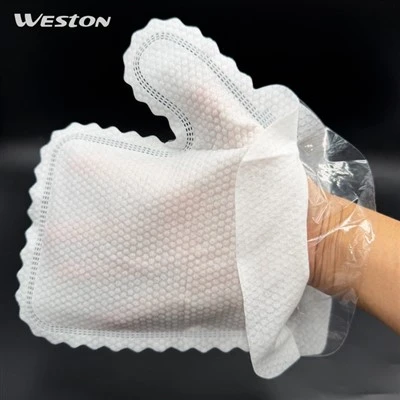
The entire process we've described hinges on one principle: respecting the chemistry from start to finish. This philosophy is what drives professional product development. For instance, in a controlled environment like the Weston Nonwoven factory, this deep understanding of adhesives and solvents leads to the creation of optimized tools for professionals and enthusiasts alike. Products like their Professional Salon Lash Glue Wipes are engineered not as a simple wipe, but as a precision delivery system. The nonwoven material is saturated with a formulated solvent blend, designed to effectively break down professional-grade lash adhesives without the mess of bottles and swabs, ensuring a clean, controlled, and safe removal process that protects the investment in your natural lashes.
Ultimately, the easiest way to remove lash glue is to approach it not as a chore, but as the final, crucial step of wearing falsies. By choosing a method that respects the science and your skin, you transform a potential nightmare into a simple, satisfying ritual. Your lashes will thank you for it.
Curious about the tools of the trade? For a hands-on experience with professional-grade solutions, a free sample of products like our professional removal wipes can be requested via info@westonmanufacturing.com.