Let's talk about the elephant in the makeup room: those gorgeous pre-glued lashes that make your eyes pop in the morning but turn into clingy exes by nighttime. If you've ever stood in front of your bathroom mirror at 11 PM, tugging at stubborn false lashes while your natural ones wave goodbye, this is your intervention.
The Chemical Romance You Didn't Sign Up For
Here's what nobody tells you when you're enchanted by those pre-glued lashes: you're essentially applying industrial-grade adhesive millimeters from your eyeball. The pre-applied glue on these lashes isn't your grandmother's craft glue-it's typically a cyanoacrylate or acrylate polymer blend, the chemical cousin of super glue.
Think about it: manufacturers design this adhesive to survive tears, sweat, humidity, and your emotional breakdown during that sad movie scene. It creates a mechanical bond by seeping into the microscopic crevices of your skin, forming what engineers would call an "interfacial lock." You're not just peeling off makeup; you're trying to reverse a chemical bonding process.
This is precisely why ripping them off feels like waxing your eyelid. Because, essentially, you are.

Why Your Current Removal Method Is Probably Wrong
Walk into any beauty salon, and you'll witness crimes against eyelashes. The most common? The "yank-and-pray" technique. People treat lash removal like removing a Band-Aid-quick and violent. But your eyelid isn't a scraped knee; it's 0.5mm of delicate skin covering crucial structures, and your natural lashes have a growth cycle you're about to interrupt.
Water won't save you either. Oil-based adhesives laugh at water. You might as well try dissolving peanut butter with ice cubes. Regular makeup removers? They're formulated for pigments and oils, not polymer chains. That's like bringing a butter knife to a sword fight.
The damage accumulates silently. Each aggressive removal session pulls out 2-5 natural lashes (yes, someone studied this). Multiply that by your weekly lash habit, and you're looking at progressively thinner lash lines. The irony? You started wearing false lashes to enhance your natural ones, and now you need them to hide the damage.
The Molecular Breakdown Method: Science Meets Beauty
Here's the approach that actually respects both chemistry and your face:
Step 1: The Softening Phase (8-10 minutes)
Soak a cotton pad with an oil-based remover-the kind that explicitly targets adhesives, not just mascara. Press it gently against your closed eyelid, focusing on the lash line. You're not wiping; you're creating contact time for molecular dissolution.
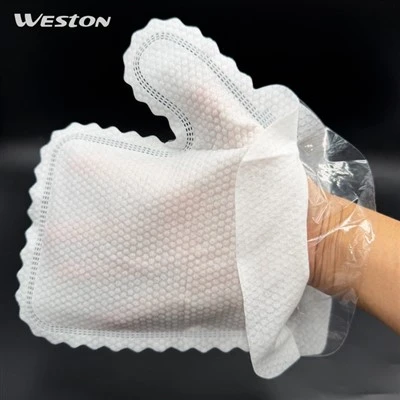
What's happening microscopically? The oil molecules are infiltrating the polymer chains of the adhesive, weakening the intermolecular forces. This isn't magic-it's organic chemistry doing its job. For professionals working in high-volume settings, Lash Glue Remover Sheets offer a pre-soaked, portion-controlled solution that eliminates guesswork and product waste.
Step 2: The Gentle Persuasion (2-3 minutes)
Using a clean cotton swab, lightly press and roll along the lash band from outer corner to inner. You should feel the lash beginning to lift. If it doesn't? Don't force it. Return to Step 1. Patience here saves you weeks of lash regrowth later.
The key is recognizing the "release point"-that moment when the adhesive has sufficiently broken down and the lash band moves freely. Force it earlier, and you're pulling against chemical bonds that haven't yielded yet.
Step 3: Residue Elimination (5 minutes)
This is where amateurs stop and professionals continue. Adhesive residue remains invisible but problematic-it accumulates dust, blocks follicles, and creates a bacterial breeding ground. Use a fresh application of remover or switch to micellar technology to capture remaining particles.
For salons managing multiple clients, Eco-Friendly Makeup Remover Wipes provide a hygienic, single-use option that prevents cross-contamination while addressing both adhesive and makeup removal in one step.
The Professional's Toolkit: What Actually Works
Beauty bloggers need to level with their audiences about equipment. Your fingers are not precision tools. You need:
Dual-sided cotton swabs: One pointed end for precision, one rounded for broader strokes
Magnifying mirror: Because you can't remove what you can't see clearly
Proper lighting: Overhead bathroom lights create shadows exactly where you need visibility
Dedicated adhesive remover: Not coconut oil, not baby oil, not whatever's trending on social media
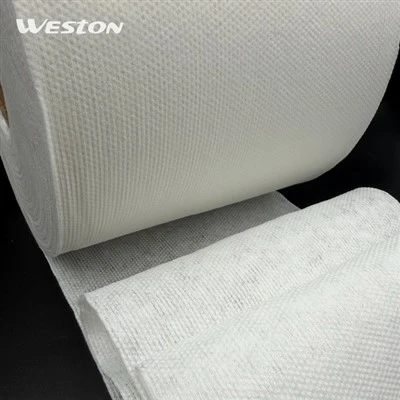
For procurement managers evaluating supplies for beauty salons, consider that Spunlace Nonwoven Wipes For Beauty Salons offer superior absorption and strength compared to traditional cotton, reducing product usage while improving client outcomes. The spunlace manufacturing process creates a fabric structure that won't shred or leave fibers-critical when working around the eyes.
The Hidden Costs of Shortcuts
Let's discuss what happens when you skip proper removal:
Follicle trauma leads to a condition called traction alopecia-permanent lash loss from repeated pulling. Unlike scalp hair, eyelash follicles have limited regenerative capacity. Damage them enough, and they simply stop producing.
Blepharitis-inflammation of the eyelid margin-often stems from accumulated cosmetic residue. The symptoms include burning, itching, and crusty deposits. Treatment requires weeks of lid hygiene and sometimes medicated ointments.
Accelerated skin aging around the eyes isn't just from sun exposure. Repeated mechanical stress breaks down collagen and elastin. Those fine lines? Some of them are from your nightly lash wrestling match.
The Procurement Perspective: What Buyers Should Demand
If you're responsible for stocking beauty salons or makeup studios, the conversation around lash removal products needs elevation beyond price-per-unit. Consider:
Material composition: Nonwoven fabrics outperform traditional woven materials in wet strength and lint-free performance. This matters when working centimeters from the cornea.
Saturation consistency: Pre-saturated sheets eliminate the variables of over or under-application that come with bottled removers.
Environmental impact: Single-use doesn't have to mean environmental disaster. Biodegradable options exist that maintain performance while reducing landfill contribution.
Weston's manufacturing approach addresses these considerations through their nonwoven technology platform, offering professional-grade solutions that balance efficacy with sustainability. For those interested in evaluating quality before committing to bulk orders, free samples are available at info@westonmanufacturing.com.
The Uncomfortable Truth About Daily Lash Wear
Here's the perspective that beauty influencers often avoid: maybe you don't need false lashes every single day. The cosmetic industry profits from convincing you that your natural features need constant enhancement, but your eyelashes have an actual biological function beyond aesthetics.
Each lash grows for about 90 days before falling out naturally. Constant application and removal disrupts this cycle. The adhesive exposure, the physical manipulation, the cleansing products-they all stress the follicle. Taking breaks isn't weakness; it's strategic maintenance.
When Damage Has Already Occurred
If you're reading this while nursing over-processed eyelids, here's your recovery protocol:
Immediate care: Cold compress for 10 minutes to reduce inflammation. Follow with a ceramide-rich eye cream to restore barrier function.
Week-long treatment: Suspend all false lash use. Apply a peptide serum to stimulate follicle activity. Avoid waterproof mascara, which requires aggressive removal.
Long-term strategy: Implement a "rest day" ratio-for every three days of lash wear, take one day off. Your follicles will thank you with fuller, healthier natural lashes.
The Bigger Picture
Removing pre-glued lashes correctly isn't about adding fifteen steps to your routine-it's about understanding that your body's smallest parts deserve the same respect as the larger ones. Those tiny eyelash follicles are working hard to protect your vision while you're busy making them look Instagrammable.
The beauty industry sells enhancement, but sustainability-both environmental and biological-requires a different conversation. It's about making informed choices: choosing quality removal products, understanding the chemistry you're working with, and recognizing when "less" becomes "more."
Your eyelids will outlast any makeup trend. Treat them accordingly.