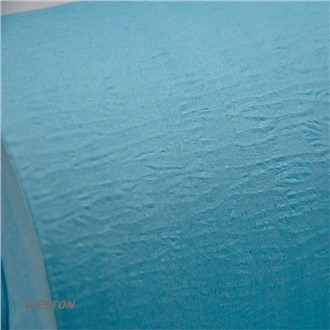
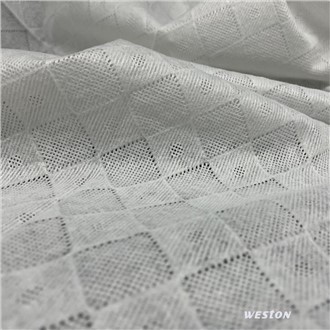
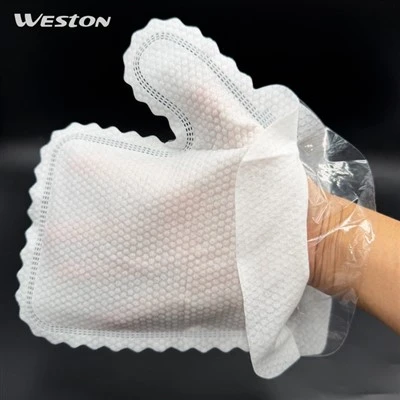
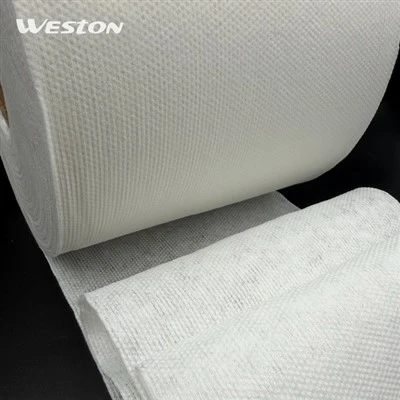
Professional buyers don't purchase dish cloths; they procure hygienic performance. The "best fabric" is the one that optimizes fluid handling, soil removal, rapid drying, and safety within your exact workflow. Below is a concise, multi-angle analysis that goes beyond surface claims and ties fiber chemistry, structure, and operations into a single, actionable framework. References to engineered nonwovens are included where they clarify mechanisms, with subtle nods to Weston Nonwoven's solutions such as the Washable Lazy Dishwashing Cloth, the Commercial-Grade Reusable Kitchen Wipes Roll, Food Grade Disinfectant Wipes, and Bamboo Dish Cloths. For free sample requests: info@westonmanufacturing.com
1) Define "Best" by Measurable Outcomes
A dish cloth's fabric must consistently achieve four outcomes:
Hygienic control: Short moisture dwell time, low lint, stable under sanitizers.
Cleaning efficacy: Rapid soil detachment, high useful absorption, efficient wring-out.
Durability-in-use: Wet tensile strength, abrasion resistance, edge stability across cycles.
Compliance and sustainability: Predictable performance over wash cycles; clear end-of-life.
Translate these into metrics you can audit: g/g absorption, time to saturation, % liquid released after wringing, wet tensile (MD/CD), drying time to safe moisture thresholds, particle shedding, and sanitizer/temperature tolerances.
2) The Science Behind Soil Removal
Dish soils are not monolithic. You deal with mixed-phase residues (fats, proteins, starches, minerals). Effective fabrics balance three mechanisms:
Detachment: Mechanical edge action + surfactant synergy. Split microfibers and apertured nonwovens excel.
Transport: Capillary wicking into fiber networks. Regenerated cellulosics lead in aqueous uptake.
Release: Clean wring-out without structural collapse. Hydroentangled blends offer stable pore architecture.
Practical rule: Grease-heavy zones benefit from structured microfibers or apertured nonwovens; aqueous spill and rinse tasks favor cellulosic-rich builds. Hybridized designs, as seen in engineered rolls like the Commercial-Grade Reusable Kitchen Wipes Roll, can straddle both.
Fiber Chemistry vs. Fabric Structure

Composition matters-but structure decides deployment.
Cotton/Cellulosics (including bamboo-derived viscose)
Pros: High hydrophilicity, alkaline tolerance, thermal robustness.
Cons: Slower drying when dense; can retain oils; lint risk if poorly constructed.
Synthetic Microfiber (polyester/polyamide)
Pros: High surface area; excellent particulate pickup; fast drying; streak-free finishes.
Cons: Heat and oxidizer limits vary; potential oil "loading" without proper detergents.
Engineered Nonwovens (viscose/polyester, PP/PET variants)
Pros: Tunable porosity; low lint; fast-dry apertures; strong wet tensile; predictable roll-to-roll quality.
Cons: PP heat limits; requires thoughtful finishing to avoid oil smear.
Structural levers-hydroentanglement, aperture geometry, basis weight, edge finishing-can elevate a mid-tier fiber into a top-performing tool. That's why items like the Washable Lazy Dishwashing Cloth and the Commercial-Grade Reusable Kitchen Wipes Roll perform reliably across shifts: the build is engineered for wet strength, rapid drying, and low lint.
4) Absorption Is Not Enough: Useful Capacity and Wring-Out
Capacity must translate into throughput. Three pitfalls reduce "useful capacity":
Excessive swelling in pure cellulosics can collapse pores, trapping liquid and soils.
Overweight fabrics store water but resist expression, slowing stations and increasing odor risk.
Weak bonding deforms under wring torque, degrading over a few cycles.
Target materials that hit a balance: fast uptake, high expression under standard wring, minimal structural fatigue. Hydroentangled viscose/polyester nonwovens with apertures are proven in this window-precisely the design space of engineered rolls for kitchen operations.
5) Drying Kinetics and Biofilm Control
Microbial risk is a time-in-moisture problem. What matters:
Drying speed: Open, apertured structures and microfibers dry faster than dense terry.
Residual load: Fabrics that release more on wring-out start drier.
Storage behavior: Edge-stable cloths hang flat and allow better airflow; bulky, slow-drying pieces promote odor and biofilm.
If you prioritize safety with minimal training overhead, choose fast-drying constructions that remain dimensionally stable after repeat sanitizing.
6) Lint and Surface Integrity in Food Zones
Lint is a zero-tolerance defect around plating and open-ingredient handling. Tactics:
Prefer hydroentangled nonwovens or tight-knit microfibers for low particle counts.
Demand edge engineering (ultrasonic or heat-cut on synthetics; robust overlock on textiles).
Validate via standardized wet-rub lint tests, not subjective "low-lint" claims.
Engineered low-lint performance is a hallmark of structured wipes like the Commercial-Grade Reusable Kitchen Wipes Roll and pre-saturated formats such as Food Grade Disinfectant Wipes where consistent substrate integrity is essential.
7) Chemical and Thermal Compatibility
Thermal: Cellulosics handle high-temp washes and steam better than PP-based nonwovens; microfibers vary by blend.
Chemistry: Oxidizers, quats, and alkaline detergents can degrade dyes, finishes, or polymer chains. Confirm compatibility tables for your sanitizer regime.
Leachables: Food-contact workflows require substrates with controlled extractables under sanitizer exposure-an area where purpose-built Food Grade Disinfectant Wipes provide predictable outcomes.
Match fabric to your harshest common denominator: the hottest, strongest cycle you routinely run.
8) Sustainability That Survives Audit
Durability x wash cycles x waste mass determines footprint. Best practices:
Use durable reusables with validated cycle counts in prep and general cleaning.
Deploy controlled single-use for pathogen-critical, high-risk turnovers only.
For cellulosics (including Bamboo Dish Cloths), consider local end-of-life options and contamination realities; plan for practical disposal, not theoretical composting.
Consistency across locations matters more than headline claims.
Use-Case Mapping: Choose by Station, Not by Fashion

Heavy grease/cookline
Fabric: Apertured, hydroentangled nonwovens or robust microfiber.
Why: Balanced oil detachment and fast drying with reliable wring-out.
Prep and general sanitation
Fabric: Cellulosic-rich nonwovens or washable blends for aqueous uptake and sanitizer turnover.
Plating, glass, stainless finishing
Fabric: Fine-denier microfiber; tight-knit, split-fiber surfaces for streak-free results.
Dish area, harsh chemistry
Fabric: High wet tensile, alkaline-tolerant builds; reinforced edges; predictable lint behavior.
This mapping aligns with engineered options such as the Washable Lazy Dishwashing Cloth for multi-shift reuse and the Commercial-Grade Reusable Kitchen Wipes Roll for consistent, low-lint throughput.
10) Procurement Checklist: Demand Data, Not Adjectives
Absorption: g/g; time to 95% saturation; capillary rise.
Release: % mass expressed after defined wring torque.
Strength: Wet tensile MD/CD; burst; abrasion cycles.
Lint: Particle counts after standardized wet rub.
Drying: Time to <15% moisture at controlled conditions.
Compatibility: Max wash temp; sanitizer resistance.
Lifecycle: Wash cycles to ≥80% performance retention.
Safety: Food-contact suitability of fibers/finishes where applicable.
Pilot with real soils and your detergent/sanitizer stack. Track odor onset, drying times on racks, and user feedback.
11) The Strategic Role of Engineered Nonwovens
Why nonwovens often win in professional kitchens:
Tunable pore structures improve both pickup and wring-out.
Apertures accelerate drying and reduce smear on greasy surfaces.
Hydroentanglement delivers low lint with strong wet tensile.
Roll formats standardize consumption and training-precisely the logic behind the Commercial-Grade Reusable Kitchen Wipes Roll.
Pair these with zone-based SOPs and color-coding to cap cross-contamination risk.
12) "Bamboo" Without the Myths
Most "bamboo" fabrics in this category are bamboo-derived viscose-regenerated cellulose with excellent hydrophilicity and hand feel. Performance depends on structure: low-lint construction, reinforced edges, and controlled wet strength. Properly engineered Bamboo Dish Cloths can be outstanding for aqueous cleanup and high-temp laundering, provided oil management is addressed via detergent pairing or blended fibers.
13) Sanitizing Workflows Need Substrate Control
For disinfection passes, substrate behavior determines dose uniformity and safety. Purpose-built Food Grade Disinfectant Wipes ensure even release, dimensional stability, and minimal extractables under food-contact sanitizers. This protects both efficacy and auditability across shifts.
14) Implementation: SOPs Make Fabric Choices Real
Color-code by zone to lock tasks to substrates.
Define detergent and sanitizer pairings compatible with your chosen fabrics.
Train on wring technique and hang-dry protocols (spread, not bunched).
Set replacement thresholds (lint onset, absorbency loss, edge fray).
Audit monthly: drying times, odor incidents, lint complaints, wipe consumption per station.
15) Bottom Line for Buyers
There is no universal "best" fabric; there is a best-for-purpose fabric.
For mixed soils and high throughput, engineered, apertured, hydroentangled nonwovens deliver the most balanced performance.
For finishing and streak-free surfaces, quality microfiber leads.
For high-temperature laundering and alkaline regimes, cellulosics-including well-built bamboo-derived options-provide durability and safety.
Select, test, and standardize using quantified metrics; then lock in SOPs.
Weston Nonwoven designs align with this evidence-led approach, including the Washable Lazy Dishwashing Cloth, the Commercial-Grade Reusable Kitchen Wipes Roll, Food Grade Disinfectant Wipes, and Bamboo Dish Cloths. For technical specifications or a free sample program, contact: info@westonmanufacturing.com.