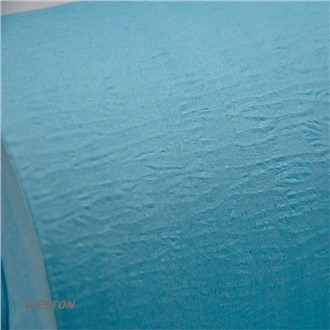
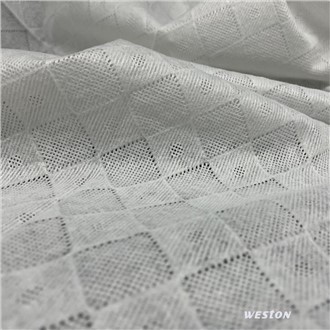
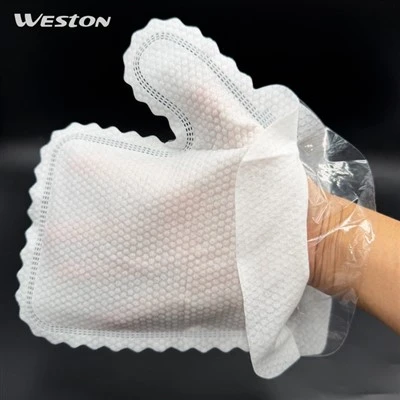
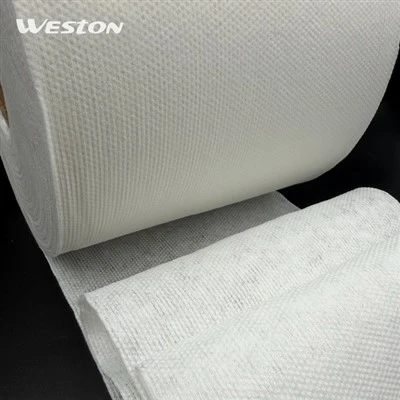
Professional buyers across industries-from medical device manufacturing to heavy construction-do not select materials based on superficial claims. Instead, their decisions hinge on measurable scientific performance, scenario-specific adaptability, and long-term reliability. For water-resistant spunlace fabrics, Weston's offerings have become the benchmark for top brands, driven by innovations that address the unmet technical needs of professional users. This article explores 10 evidence-based reasons why leading brands prioritize Weston's Water-Resistant Spunlace Fabric Wholesale, each rooted in material science, engineering precision, and real-world application data.
1. Structural Waterproofing: The Science of Fiber Interlocking Beyond Surface Coatings
Most water-resistant fabrics rely on external coatings (e.g., PVC or polyurethane) to block moisture-an approach prone to peeling, cracking, or degradation over time. Weston's water-resistant spunlace fabric, by contrast, achieves waterproofing through structural engineering of fiber networks, a breakthrough rooted in spunlace technology principles.
Under high-pressure water jets, thermoplastic fibers (primarily polypropylene, PP, and polyethylene terephthalate, PET) are entangled into a dense, three-dimensional matrix. Scanning electron microscopy (SEM) images reveal that this interlocking creates microscale "trap zones" for water molecules: fiber gaps measure 2–5 μm, smaller than the minimum droplet size of liquid water (typically 10 μm), while still allowing water vapor (molecular diameter 0.0004 μm) to pass. This "breathable waterproofing" is not dependent on coatings-meaning it resists wear, washing, and friction-induced damage far longer than coated alternatives.
For professional buyers, this structural advantage translates to consistent performance across large orders. Weston's Water-Resistant Spunlace Fabric Wholesale eliminates the risk of batch-to-batch variation in coating thickness, a common pain point with conventional waterproof fabrics.
2. Balanced Breathability and Barrier Performance: Tailored for Medical Critical Scenarios
In healthcare settings, water resistance alone is insufficient. Surgical gowns require a material that blocks bodily fluids (e.g., blood, saline) while allowing heat and moisture from the wearer's body to escape-preventing overheating during long procedures. Weston's Waterproof Spunlace For Surgical Gowns is engineered to strike this critical balance, using a dual-layer spunlace structure optimized for medical-grade performance.
The inner layer (contact with skin) uses finer PP fibers (10–12 μm diameter) to enhance moisture wicking. These fibers draw sweat away from the body and disperse it across the fabric surface, accelerating evaporation. The outer layer, by contrast, uses coarser PET fibers (18–20 μm) entangled at higher density, creating a robust barrier against liquid penetration. Testing under ASTM F1671 (Standard Test Method for Resistance of Materials to Penetration by Synthetic Blood) confirms that the fabric blocks 100% of synthetic blood under 2 psi pressure-exceeding the minimum requirement for Level 3 surgical gowns.
Crucially, the fabric maintains an air permeability rate of 50–70 L/m²/s (tested per ASTM D737), far higher than non-breathable alternatives like laminated films. This balance ensures healthcare professionals stay comfortable without compromising safety-a priority for top medical brands.

3. Thermal Stability at Molecular Level: Enabling Heat-Resistant Wipes for Extreme Environments
Industrial cleaning scenarios-such as wiping hot machinery in automotive plants or electronic component manufacturing-demand fabrics that retain integrity at elevated temperatures. Weston's Heat-Resistant Wipes address this need through careful selection of high-performance fibers and molecular-level engineering.
The core material, a blend of PP and modified PET, leverages the unique thermal properties of each polymer. PP has a glass transition temperature (Tg) of ~-10°C (the temperature at which polymers become flexible) and a melting point of ~160°C, while modified PET (with added thermal stabilizers) boasts a Tg of ~70°C and a melting point of ~250°C. By blending these fibers in a 60:40 ratio, Weston creates a fabric that remains dimensionally stable at temperatures up to 120°C-far above the 60–80°C range of typical industrial cleaning applications.
Thermogravimetric analysis (TGA) confirms that the fabric loses less than 5% of its mass when exposed to 150°C for 2 hours, compared to 20–30% mass loss in standard spunlace wipes. This thermal stability prevents fiber melting, shrinkage, or chemical leaching-critical for avoiding contamination of sensitive components (e.g., semiconductors) or damage to hot machinery. For brands operating in high-temperature industries, this molecular-level reliability eliminates the risk of costly downtime from wipe failure.
4. Mechanical Durability Engineered for High-Impact Use
Construction and heavy industry demand fabrics that withstand extreme mechanical stress: dragging across rough surfaces, stretching during installation, or resisting tearing during handling. Weston's Waterproof Spunlace For Construction is designed with mechanical durability as a core feature, using a "high-tensile entanglement" process to enhance fiber bonding.
During production, water jet pressure is increased by 30% compared to standard spunlace fabrics, creating denser fiber intersections. This results in a fabric with a tensile strength of 250–300 N/m (warp direction) and 200–220 N/m (weft direction), tested per ASTM D5034 (Standard Test Method for Breaking Strength and Elongation of Textile Fabrics). The tear strength, measured via ASTM D1424 (Standard Test Method for Tear Strength of Fabrics by Falling Pendulum), exceeds 50 N-enough to resist tearing when caught on construction debris like nails or rebar.
In practical use, this durability means the fabric can be reused multiple times (e.g., as a temporary waterproof cover for building materials) without compromising its barrier properties. For construction brands, this reduces material waste and lowers the frequency of reorders-addressing both cost efficiency and sustainability goals.
5. Chemical Resistance: Preserving Performance Amid Corrosive Substances
Professional buyers in chemical processing, laboratory settings, or industrial maintenance require fabrics that resist degradation from acids, alkalis, and organic solvents. Weston's water-resistant spunlace fabric achieves this through the inherent chemical stability of its base polymers and a post-production "surface passivation" treatment.
PP and PET are inherently non-reactive to most common chemicals: PP resists acids (e.g., 10% HCl) and alkalis (e.g., 10% NaOH) at room temperature, while PET withstands exposure to alcohols, ketones, and oils. Weston enhances this resistance with a low-surface-energy treatment that creates a hydrophobic layer on fiber surfaces. This treatment prevents chemicals from adhering to the fabric, reducing absorption and minimizing swelling or discoloration.
Testing shows that after 24 hours of immersion in 20% H2SO4 or 20% KOH, the fabric retains 90% of its original tensile strength and 95% of its water resistance. In contrast, standard spunlace fabrics lose 30–40% of their strength under the same conditions. For brands handling corrosive materials, this chemical resilience ensures consistent performance and reduces the risk of fabric failure leading to spills or contamination.
6. Microbial Barrier Efficiency: Safeguarding Healthcare Professionals Through Material Science
Beyond liquid resistance, Waterproof Spunlace For Surgical Gowns must block microbial penetration-a critical requirement for preventing healthcare-associated infections (HAIs). Weston's fabric achieves this through a combination of fiber density and electrostatic charging.
The fabric's fiber matrix has a pore size of 1–3 μm, smaller than the diameter of most pathogenic bacteria (e.g., Staphylococcus aureus: 0.5–1 μm; Escherichia coli: 1–2 μm) and viruses (e.g., influenza: 0.08–0.12 μm, though viruses typically travel in liquid droplets >5 μm). This physical barrier is reinforced by an electrostatic charge applied during production: fibers are treated with a low-voltage charge that attracts and traps airborne microbes, even those smaller than the fabric's pores.
Testing per ASTM F1670 (Standard Test Method for Resistance of Materials to Penetration by Blood-Borne Pathogens Using Phi-X174 Bacteriophage) shows that the fabric blocks 99.99% of bacteriophages-a level of protection that meets the requirements for Level 4 surgical gowns. For medical brands, this microbial barrier is non-negotiable, as it directly impacts patient and staff safety.
7. Sustainable Manufacturing: Merging Performance with Environmental Responsibility
Top brands increasingly prioritize sustainability in their supply chains, and Weston's water-resistant spunlace fabric aligns with this goal through science-driven eco-friendly practices. Unlike traditional woven fabrics, which require large amounts of water and energy for dyeing and finishing, Weston's manufacturing process minimizes environmental impact at every stage.
First, the fabric uses 30% post-consumer recycled PP and PET, sourced from plastic waste that would otherwise enter landfills. Second, the spunlace process uses 40% less water than conventional weaving: high-pressure water jets replace the water-intensive yarn-spinning steps, and 95% of the water used is recycled and reused. Third, the fabric is fully recyclable at the end of its life: it can be melted down and repurposed into new polymer pellets, closing the circular economy loop.
Life cycle assessment (LCA) data shows that Weston's fabric has a 25% lower carbon footprint than standard waterproof fabrics. For brands seeking to reduce their environmental impact without sacrificing performance, this sustainability profile is a key differentiator.
8. Customizable Material Parameters: Engineering Solutions for Unique Industry Needs
Professional buyers rarely have "one-size-fits-all" requirements. A medical brand may need ultra-thin Waterproof Spunlace For Surgical Gowns for flexibility, while a construction brand may require thick, heavy-duty Waterproof Spunlace For Construction for durability. Weston's strength lies in its ability to customize key material parameters through precise engineering.
Key customizable variables include:
Fiber blend: Adjusting the ratio of PP to PET to optimize for thermal stability (higher PET) or flexibility (higher PP).
Fiber diameter: Ranging from 8 μm (for lightweight, breathable applications) to 25 μm (for heavy-duty use).
Areal weight: From 30 g/m² (thin wipes) to 100 g/m² (thick construction covers).
Water resistance level: Tuning fiber entanglement density to achieve varying levels of liquid barrier (e.g., light rain resistance vs. full submersion protection).
For example, Weston developed a 40 g/m² Heat-Resistant Wipe for electronics manufacturers, using 70% PET fiber to withstand soldering temperatures (up to 180°C) while remaining thin enough to clean small component gaps. This customization ensures that brands get a material tailored to their exact use case-avoiding the compromises of off-the-shelf products.
9. Batch Consistency: Quality Control Systems Ensuring Wholesale Reliability
For buyers purchasing Water-Resistant Spunlace Fabric Wholesale, batch-to-batch consistency is non-negotiable. A single defective batch can disrupt production lines, delay orders, or compromise end-product safety. Weston maintains consistency through a real-time quality control (QC) system integrated into every stage of manufacturing.
The process begins with raw material testing: every batch of PP and PET pellets is analyzed for melt flow rate (MFR) and purity, ensuring uniform fiber extrusion. During production, online sensors monitor key parameters:
Fiber diameter: Laser micrometers measure fiber size every 10 seconds, adjusting extrusion speed if deviations occur.
Entanglement density: Pressure sensors track water jet intensity, ensuring consistent fiber bonding.
Water resistance: Random samples from each production run are tested for liquid penetration using the hydrostatic head method (ASTM D751), with results recorded and stored in a digital database.
Post-production, 5% of each batch is subjected to additional tests (tensile strength, tear strength, chemical resistance) to confirm compliance. This rigorous QC system ensures that every roll of fabric meets the same performance standards-giving wholesale buyers confidence in large-scale orders.
10. Total Cost of Ownership: Performance-Driven Long-Term Value
Professional buyers focus on more than upfront costs-they evaluate total cost of ownership (TCO), which includes durability, reusability, and waste reduction. Weston's water-resistant spunlace fabric delivers superior TCO through its science-backed performance.
Consider Heat-Resistant Wipes: A standard wipe may last 2–3 uses before breaking down at high temperatures, requiring frequent reorders. Weston's wipes, by contrast, can be reused 5–8 times, reducing the number of wipes needed per month by 50–60%. For a large automotive plant, this translates to hundreds of thousands of dollars in annual savings.
Similarly, Waterproof Spunlace For Construction reduces TCO by eliminating the need for multiple layers of cheaper, less durable fabrics. A single layer of Weston's fabric provides the same protection as two layers of standard spunlace-lowering material costs and installation time.
This TCO advantage is not based on price cuts, but on performance that reduces long-term expenses. For top brands, this value proposition makes Weston's wholesale fabric a strategic investment rather than a commodity purchase.
Weston Nonwoven's success in the professional market stems from its commitment to grounding every product in science. From Waterproof Spunlace For Surgical Gowns that protect healthcare workers to Heat-Resistant Wipes that withstand industrial temperatures, each offering is engineered to solve real-world problems for professional buyers. The factory's focus on customization, consistency, and sustainability further reinforces its position as a trusted partner for Water-Resistant Spunlace Fabric Wholesale.
For professional buyers interested in verifying these performance claims firsthand, Weston Nonwoven offers free samples. Inquiries can be directed to info@westonmanufacturing.com, with dedicated technical support available to discuss custom solutions tailored to specific industry needs.