What Certifications Should a Spunlace Nonwoven Manufacturer Have?
If you're sourcing spunlace nonwoven fabric - for wet wipes, medical dressings, hygiene products, or industrial wipes - the supplier's certifications tell you more about reliability than any sales pitch ever will. Certifications aren't just paperwork; they're evidence that a factory's processes, materials, and workplace practices have been independently checked against recognized standards. For a buyer who may never set foot inside the production facility, that independent verification is often the only real safeguard against quality failures, compliance headaches, or reputational risk further down the supply chain.
Below is a practical breakdown of the certifications that matter most when evaluating a spunlace nonwoven supplier, what each one actually confirms, and how to use them to separate genuinely capable manufacturers from those simply claiming to be.
ISO 9001: Quality Management System
ISO 9001 is the baseline certification for any serious manufacturer. It doesn't certify the fabric itself - it certifies that the factory has a documented, repeatable quality management system covering everything from raw material inspection to in-process control to final product release. In practice, this is what determines whether the roll of fabric you receive in month six is the same quality as the one you received in month one. A supplier without ISO 9001 may still produce good fabric occasionally, but consistency - batch after batch, order after order - is exactly what this certification is designed to guarantee.
ISO 14001: Environmental Management
As brands and regulators pay closer attention to the environmental footprint of nonwoven production (water usage, wastewater treatment, energy consumption, and waste disposal in particular), ISO 14001 has become a meaningful differentiator. It confirms that a manufacturer has a structured system for monitoring and reducing its environmental impact, rather than treating sustainability as a marketing slogan. For buyers selling into markets with strict environmental disclosure requirements, working with an ISO 14001-certified factory also makes downstream compliance reporting considerably easier.
OEKO-TEX Standard 100
This certification is particularly critical for any spunlace fabric that will touch skin - wet wipes, facial masks, medical dressings, and personal care products all fall into this category. OEKO-TEX Standard 100 testing screens for harmful substances, including formaldehyde, heavy metals, pesticide residues, and other chemicals that could pose a health risk. Without it, a buyer is essentially taking the manufacturer's word that the fabric is safe - a risky position when the end product is designed for direct, repeated contact with skin, including infant and sensitive-skin applications. Buyers should always ask to see the actual OEKO-TEX certificate, not just a logo on a brochure, and verify it against the OEKO-TEX online database.
FDA 510(k) / FDA Registration
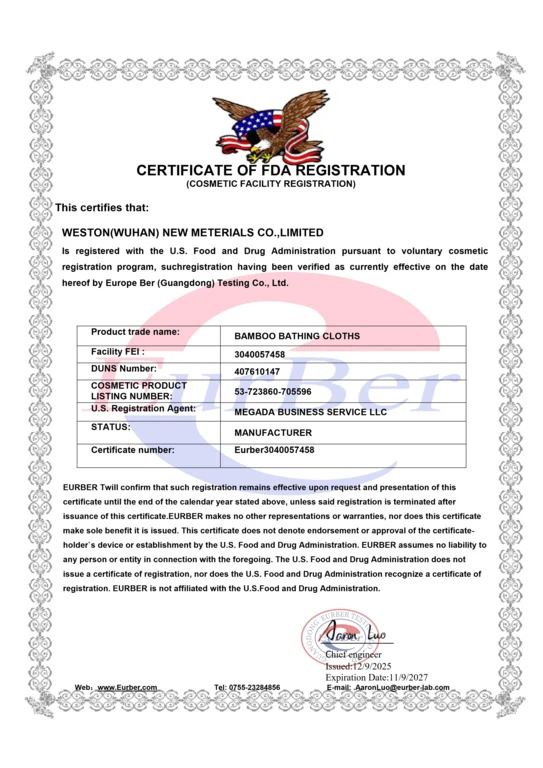
For spunlace nonwoven destined for medical-grade products entering the United States - surgical wipes, wound care components, medical drapes - FDA registration or, where applicable, 510(k) clearance is non-negotiable. This isn't a certification a factory can simply self-declare; it involves a formal regulatory submission and review process. Buyers bringing medical products into the US market should request the specific FDA registration number and confirm it independently through the FDA's database rather than relying on supplier documentation alone.
CE Marking
CE marking serves a similar function for the European market, indicating that a medical product meets the relevant EU health, safety, and environmental protection requirements. Since the EU Medical Device Regulation (MDR) tightened compliance expectations in recent years, CE marking has become more rigorous to obtain - making it a more reliable signal than it once was. If your spunlace fabric is a component of a CE-marked medical device, confirm exactly which regulation and device classification the marking applies to.
GRS (Global Recycled Standard)
As more brands market sustainability claims around recycled fiber content, the Global Recycled Standard has become the credibility check behind those claims. GRS certification verifies the recycled content percentage in the fabric and tracks it through the supply chain via chain-of-custody documentation. If your end product will carry any "made with recycled materials" claim, sourcing from a GRS-certified supplier - or at minimum requesting GRS transaction certificates for the specific batch - protects you from greenwashing accusations.
BSCI / SEDEX: Social Compliance
Increasingly, buyers are held accountable not just for product quality but for labor practices across their entire supply chain. BSCI (Business Social Compliance Initiative) and SEDEX audits assess working conditions, wages, working hours, and worker safety at the factory level. These audits matter most to buyers supplying retailers or brands with their own corporate social responsibility commitments, but they're becoming standard due diligence across the industry regardless of end customer.
How to Verify Certifications Are Real
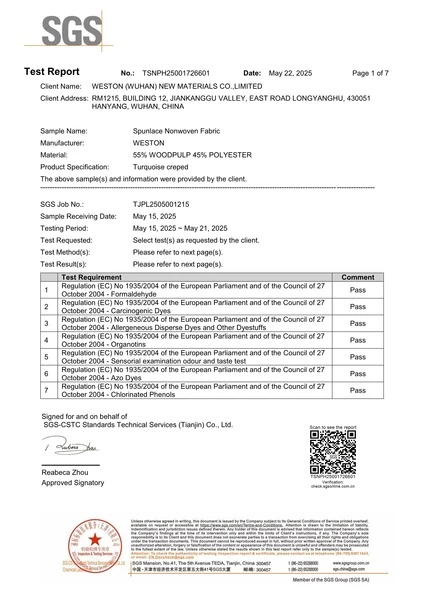
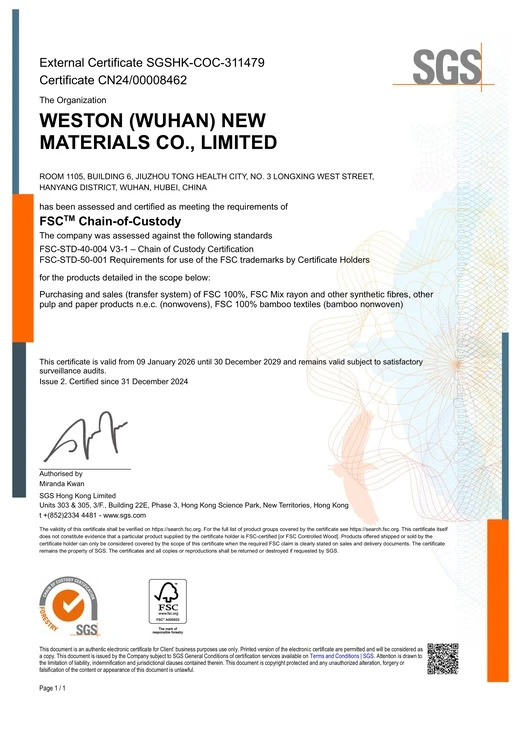
A certificate is only as useful as it is genuine. Before finalizing a supplier, request the actual certificate documents (not just logos), check the certification body's name and accreditation, and where possible, verify the certificate number through the issuing body's public database. Reputable manufacturers will not hesitate to provide this documentation - hesitation or vague answers about certification details is itself a red flag worth taking seriously.
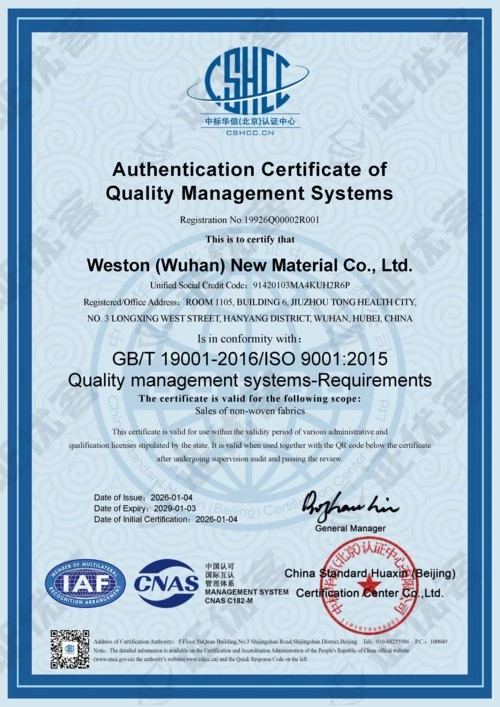
A Note on Weston Nonwoven's Certifications
At Weston Nonwoven, our facility holds ISO 9001 for quality management and ISO 14001 for environmental management, alongside OEKO-TEX Standard 100 certification confirming our spunlace fabrics are free from harmful substances and safe for skin-contact applications. These certifications reflect the systems we've built into daily production - from raw material sourcing through final quality checks - rather than standards we treat as a one-time audit to pass. Full certificate documentation is available upon request for any buyer conducting supplier due diligence.
Final Thoughts
Certifications won't tell you everything about a manufacturer, but they tell you whether the basics - quality consistency, environmental responsibility, and material safety - have been independently verified rather than simply claimed. When evaluating spunlace nonwoven suppliers, treat certification requests as a standard part of due diligence, not an optional extra. The manufacturers worth working with will welcome the scrutiny.