What are the three main types of fabrics?
In materials science and industrial practice, fabrics fall into three primary categories: woven, knitted, and nonwoven. This taxonomy is not merely a manufacturing convenience; it reflects three fundamentally different pathways from fiber to surface, each with distinctive structure–property–application relationships. Understanding why these three dominate-and how they diverge-requires a multi-angle view spanning structural mechanics, fiber chemistry, transport phenomena, hygiene, and sustainability. Below, we build that view in a structured, evidence-driven manner, with a bold but grounded approach that aims to be both scientifically rigorous and practically useful.

I. Structure-first thinking: three distinct pathways from fiber to fabric
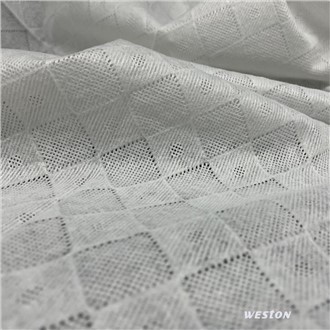
Woven: Interlacing warp and weft yarns yields a two-dimensional, lattice-like network with numerous interlacing points. The result is low extensibility and high dimensional stability. Canonical weave patterns (plain, twill, satin) tune abrasion resistance, drape, and cover.
Knitted: Intermeshing loops form a three-dimensional elastic network (weft-knits and warp-knits). Loop geometry confers high stretch and comfort but risks laddering or snagging unless stabilized by design.
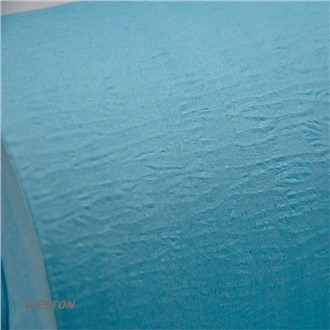
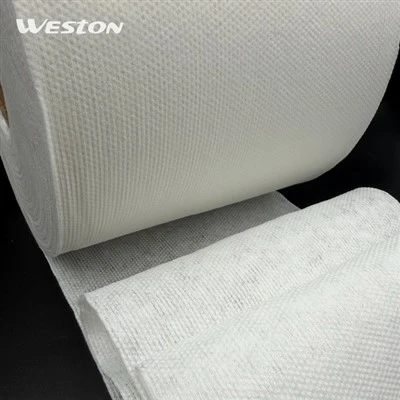
Nonwoven: Fibers are laid into a web and bonded mechanically (needlepunch, hydroentanglement), thermally (calender, hot air), or chemically (binders), creating a random or oriented fibrous mat. This "from fiber to sheet" philosophy enables high tunability in basis weight, porosity, anisotropy, and function-by-design.
These pathways embody three structural logics: interlacing (woven), interlooping (knitted), and interlocking/entangling/bonding (nonwoven). Each logic dictates how loads are carried, how fluids move, and how hygiene and durability are managed.
II. Property coordinates: strength, elasticity, breathability, absorbency, durability, and customizability
Strength and dimensional stability
Woven: High strength from dense interlacing; excellent abrasion resistance; shape retention.
Knitted: Lower snag resistance; failure can propagate via loop unraveling without countermeasures; warp-knits improve stability.
Nonwoven: Governed by fiber fineness/length, bonding method, and basis weight; thermal-bonded and composite structures can deliver high tensile and tear strength.
Elasticity and recovery
Knitted leads due to loop mechanics and low bending stiffness.
Woven relies on yarn crimp and weave tension; limited stretch unless elastic yarns are introduced.
Nonwoven can be engineered for controlled elasticity via crimped fibers, elastomeric blends, or multilayer laminates.
Breathability and liquid management
Knitted fabrics have larger pores, enabling high air permeability.
Woven porosity is tunable via yarn count and weave geometry.
Nonwovens can be architected with precise pore size distributions and hydrophilic/hydrophobic gradients, achieving high absorbency with low rewet-critical in clinical and personal care contexts.
Durability and maintenance
Woven excels in multi-wash, long-term use.
Knitted offers comfort but may need structural stabilization for heavy-duty duty cycles.
Nonwovens span single-use to "quasi-durable" via composites, coatings, and functional fibers.
Customizability
Woven/knitted enable aesthetic and mechanical tuning through yarn and structure choices.
Nonwoven leads in rapid, cost-efficient customization across thickness, pore architecture, multilayer stacks, and surface textures.
III. From molecules to mechanics: how fiber chemistry and processes shape performance
Fiber origin and molecular structure
Natural (cellulosics like cotton, bast fibers): microfibrillar orientation and waxy surfaces control moisture uptake, softness, and friction.
Synthetic (PET, PP, PA, elastomers): strength and thermal stability depend on crystallinity, orientation, and molecular weight distribution.
Regenerated (lyocell and others): closed-loop solvent systems and engineered cross-sections deliver high specific strength and inherent hydrophilicity.
Process–structure–property mapping
Woven/knitted: Yarn twist, evenness, hairiness, and fabric set determine strength and hand; finishing modifies friction, wicking, and handle.
Nonwoven: Web formation (random vs oriented), bonding technology (hydroentanglement, thermal point-bond, hot air), and bicomponent fibers shape tensile, softness, filtration, and absorbency.
Functionalization and layering
Woven/knitted can be coated or laminated for waterproofing, flame retardancy, or antimicrobial functions-often at higher process complexity.
Nonwovens naturally suit multilayer stacks-top sheet, acquisition/distribution layer, absorbent core, and barrier-balancing softness, intake, retention, and strike-through resistance.
IV. Hygiene and medical perspective: contamination control, skin physiology, and biocompatibility
Skin microclimate
Moisture management and water vapor transmission impact pH and barrier function. Knits are comfortable but may permit rewet under fluid-rich use.
Nonwovens can be engineered with one-way flow and fluid locking, reducing maceration risk in prolonged contact.
Microbiology and cross-contamination
Single-use nonwovens minimize residue from repeated laundering and reduce cross-contamination vectors.
Pore engineering and low-lint surfaces lower bacterial penetration risk and particle shedding.
Structural logic in clinical use
Acquisition layers demand high porosity and capillarity; topsheets need low rewet and low friction; barriers need reliability without harsh handfeel. Nonwovens excel under these constraints.
Within bedside hygiene and patient care, the fabric must balance safety, low irritation, wet-state strength, and agreeable tactile performance. Engineered textures-such as herringbone-can disrupt tear propagation and enhance scrubbing efficacy without sacrificing softness.
Visualization 1: Performance radar-relative performance of woven, knitted, and nonwoven

V. Sustainability and circularity: from raw fiber to end-of-life
Feedstock choices
Bio-based and regenerated fibers support renewable sourcing and lower intrinsic toxicity; their hydrophilicity often benefits hygiene products.
Synthetics enable durability and precision engineering; attention is required for microfiber release and recycling streams.
Process energy and water
Nonwovens-especially thermal-bonded and hot-air-avoid spinning-weaving-knitting sequences, shortening the process chain. Hydroentanglement requires robust water recycling and filtration to minimize impact.
Woven/knitted consume more steps and energy but amortize environmental load through long service life in durable segments.
Design-for-recycling
Single-polymer constructions improve mechanical recycling.
Multilayer composites should target compatible melt temperatures or clean delamination strategies.
Regenerated systems (e.g., lyocell) using closed-loop solvents reduce emissions and enable high-purity recovery.
VI. Application matrix: where each fabric type naturally excels
Medical disposables and hygiene: Nonwoven (absorbency, low rewet, low lint, controllable barrier)
Sportswear and base layers: Knitted (elasticity, breathability, conformability)
Workwear, home textiles, and upholstery: Woven (strength, abrasion, shape stability)
Filtration and protective media: Nonwoven (pore engineering, multilayer barriers)
Skin-contact wipes and cleaning: Nonwoven (softness, fluid handling, tear resistance)
The throughline is simple: when the problem is hygiene-critical liquid management with tunable structure, nonwovens offer a uniquely efficient platform.
VII. Future-facing strategies: integrating structure and function
Multiscale fiber engineering: Fineness, crimp, and cross-sections (hollow, trilobal) to steer capillarity and mechanics.
Responsive systems: Thermo/hygro-responsive polymers, phase-change microcapsules, and controlled-release antimicrobial loads.
Green bonding and closed-loop systems: Lower-temperature bonding, solvent recovery, and reduced binder reliance.
Detachable or compatible composites: Interface engineering for both strong use-phase performance and end-of-life separability.
VIII. Practical selection: a scenario-based rubric
If the priority is strength, abrasion, and dimensional stability: choose woven.
If the priority is stretch, drape, and second-skin comfort: choose knitted.
If the priority is hygiene, fluid acquisition/retention, low lint, and fast customization: choose nonwoven.
For edge cases: hybridize-e.g., nonwoven core with functional films or selective fabric reinforcements.
For bedside cleaning, wound-adjacent hygiene, or eldercare, the specification gravitas is on wet strength, low rewet, low lint, and low friction. Texture and pore design directly translate into safer, more efficient care routines.
IX. Engineering subtleties that matter in real use
Texture and tear resistance: Directional web orientation and herringbone embossing raise tear path complexity and energy dissipation, improving wet-handling reliability.
Skin friction and formulation compatibility: Surface energy and chemistry control active retention and release; a low-roughness topsheet can lower irritation.
Linting and cleanliness: Fiber locking via hydroentanglement or controlled thermal point-bond reduces particle shedding, supporting cleanliness standards.
In the context of patient bedside hygiene, these subtle decisions add up to an experience that feels simple but is technically deliberate: stable wet strength, efficient soil removal, and comfortable glide with minimal residue.
X. Representative nonwoven directions and why they matter
Tear-optimized herringbone textures
The alternating V-pattern guides and arrests crack propagation, converting a linear tear into a tortuous path with higher dissipation.
Wet-state reliability improves grip and handling during saturated wiping.
Low-basis-weight eco solutions
Regenerated cellulosic webs can deliver high absorbency and softness at low grammage, supporting skin-friendly use and reduced material mass.
Hydrophilic surfaces facilitate rapid intake and controlled release.
Rational composites
Two-layer and multilayer builds enable fast acquisition, strong retention, and tactile tuning in minimalist stacks.
Thermal or emboss bonding balances interlayer peel strength with desirable hand.
These trajectories directly map to product forms referenced by terms like Tear-Resistant Herringbone Nonwoven Fabric, Eco-Friendly 30gsm Lyocell Nonwoven Material, and Customizable Two-Layer Composite Nonwoven-each pointing to a structural solution for durability, skin affinity, and efficient function-per-weight.
XI. Balanced pros and cons across the three fabric types
Woven
Pros: High tensile/tear strength, abrasion resistance, dimensional stability, durable service life.
Cons: Limited elasticity; longer multi-step processing; complex functionalization; less flexible liquid management without added layers.
Knitted
Pros: High stretch and recovery, excellent breathability, conformal fit, strong comfort credentials.
Cons: Susceptible to snagging and laddering; lower dimensional stability; durability can lag under high-friction, heavy-load conditions without reinforcement.
Nonwoven
Pros: Highly customizable structure; outstanding absorbency with low rewet; efficient high-throughput production; low-lint potential; multilayer composability enables fast iteration for targeted roles.
Cons: Ultra-durable use may require reinforcement or composites; water use and treatment must be engineered in hydroentanglement; recycling favors mono-material strategies or compatible composites.

XII. From science to specification: shaping better choices
Choosing a fabric category is choosing a structural logic. If strength, abrasion, and shape stability dominate, woven is the rational default. If elasticity, drape, and skin-conforming comfort dominate, knitted is the natural choice. If hygiene, fluid control, low lint, and rapid customizability dominate, nonwoven provides the most agile solution. In many real-world products, the most robust answer is hybridization: use nonwoven architectures for fluid and hygiene performance, then apply coatings, films, or selective reinforcements where needed.
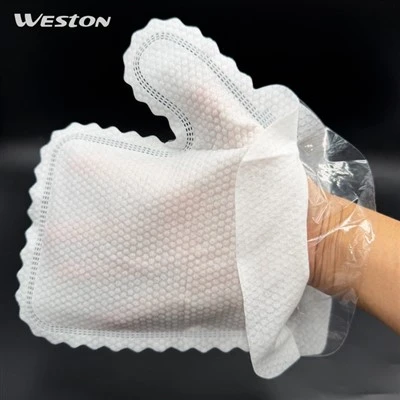
For bedside cleaning and patient care, these principles crystallize into product forms such as bold, skin-friendly pre-moistened wipes, where wet strength, gentle glide, and dependable liquid management define the experience. This is the context in which terms like Pre-Moistened Wipes For Patient Bedside Cleaning become not just marketing language but shorthand for a carefully engineered structure-function balance.
A brief note on Weston Nonwoven
As an engineering-driven pathway reference, Weston Nonwoven focuses on tear-resistant structures, low-lint surfaces, and greener material options across medical and personal care nonwovens, with representative directions including:
Pre-Moistened Wipes For Patient Bedside Cleaning: designed for wet-state strength, softness, and low rewet in bedside care workflows.
Tear-Resistant Herringbone Nonwoven Fabric: engineered texture that raises tear energy and scrubbing efficiency.
Eco-Friendly 30gsm Lyocell Nonwoven Material: regenerated-fiber platform for soft, skin-compatible absorbency at low basis weight.
Customizable Two-Layer Composite Nonwoven: modular two-layer builds balancing acquisition, retention, and tactile preferences.
For technical inquiries or to request a free sample, contact: info@westonmanufacturing.com