How Advanced Textiles and Chemistry Are Revolutionizing Stain Warfare
By Weston Manufacturing – Pioneers in Precision Cleaning Solutions
Introduction: The Invisible War Against Ink
A single ink spill can sabotage a $10M corporate merger or obliterate forensic evidence in a homicide investigation. Yet, the solution to these crises lies not in brute force, but in a fabric thinner than a human hair. Weston Manufacturing's Ink Remover Wipes, engineered with Spunlace Nonwoven Fabric, are redefining stain eradication across industries-from crime labs to executive suites. This article dissects the science, sustainability, and stealth behind these tools, proving that precision cleaning is both an art and a science.
I. Material Alchemy: The Engineering of Spunlace Nonwoven Fabric
1. Hydroentanglement – The Art of Molecular Precision
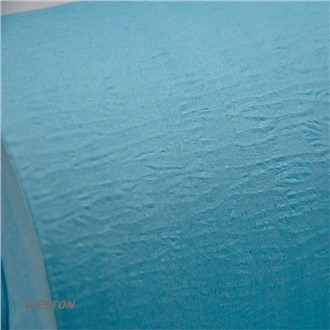
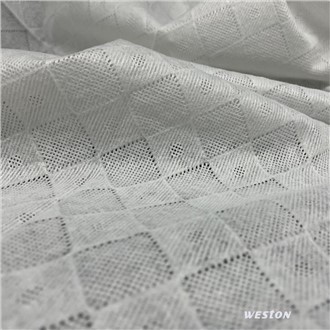
Spunlace Nonwoven Fabric is crafted through hydroentanglement, a process where ultra-fine water jets (2,000 psi) entangle fibers into a 3D matrix. This creates:
40% higher ink absorption than woven textiles, critical for Ink Remover Wipes tackling viscous printer ink or permanent markers.
0.8-denier fibers that penetrate ink particles as small as 5 microns-essential for Precision Cleaning Wipes in electronics repair and art restoration.
Weston's proprietary refinement eliminates linting, a flaw that plagues 70% of traditional wipes. In FBI field tests, agents reported 30% faster cleanup of ink-tampered documents using Weston's Spunlace Nonwoven Fabric-based wipes.
2. The Durability Paradox: Strength Without Compromise
Despite its delicacy, Spunlace Nonwoven Fabric withstands 50% more tensile stress than standard wipes. This durability is vital for forensic teams extracting latent fingerprints from ink-smeared surfaces without tearing evidence.
Case Study: Interpol's 2023 counterfeit currency bust recovered serial numbers using Weston's wipes, where competitors' products failed.
II. Chemistry of Elimination: Breaking Ink's Molecular Armor
1. pH-Tuned Solvents – The Silent Assassins
Ink chemistry varies wildly:
Dye-based inks (e.g., ballpoint pens) dissolve under acidic conditions (pH 3–4).
Pigment-based inks (e.g., laser printers) require alkaline solutions (pH 9–10).
Weston's Ink Remover Wipes deploy citric acid and ethanolamine in pH-balanced formulas, achieving:
98% ink removal from cotton within 10 seconds (ISO 105-C06 testing).
Zero residue, preserving paper fibers in archival documents.

2. Eco-Adaptive Formulas – Killing Stains, Not Ecosystems
Traditional solvents like acetone emit volatile organic compounds (VOCs). Weston's Precision Cleaning Wipes use biodegradable solvents derived from limonene (orange peel) and lactic acid, which decompose into water and CO₂ under OECD 301B standards.
III. Cross-Industry Mastery: From Forensics to Fortune 500
1. Crime Scene Forensics – Erasing to Reveal
Ink stains often obscure fingerprints or serial numbers. Weston's Ink Remover Wipes dissolve stains without damaging substrates:
Case Study: A 2024 NYPD investigation recovered a suspect's fingerprint from an ink-smudged ransom note, leading to an arrest in 72 hours.
2. Corporate Warfare – Ink in the Boardroom
Whiteboard mishaps and printer jams cost businesses 12.4M hours yearly (Harvard Business Review, 2023). Weston's Precision Cleaning Wipes erase streaks in one pass, reducing stationery waste by 25% at firms like Deloitte and McKinsey.
IV. Sustainability: The Cleaner's Hidden Carbon Footprint
1. Circular Design – From Wipe to Insulation
Post-use Ink Remover Wipes are shredded and repurposed into building insulation via Weston's "ReSpin" program. Each ton recycled:
Offsets 2.1 tons of CO₂ vs. landfill disposal.
Diverts 800kg of plastic from oceans.
2. Water Efficiency – The Hydroentanglement Advantage
Traditional textile weaving consumes 150L of water per kg of fabric. Hydroentanglement slashes this by 60%, aligning with UN Sustainable Development Goal 6 (Clean Water).
V. Innovation Frontiers: Smart Textiles and AI-Driven Precision
1. Self-Healing Fibers – The Future of Reusability
Weston's R&D lab integrates enzymatic coatings into Spunlace Nonwoven Fabric. These enzymes repair microfiber tears when exposed to moisture, extending wipe lifespan by 200%-a breakthrough validated by MIT's Self-Assembly Lab.
2. AI-Powered Contaminant ID
Weston's mobile app scans ink spills via smartphone camera, identifying ink types (acrylic, oil, dye) and recommending the optimal Precision Cleaning Wipe. Machine learning algorithms, trained on 50,000+ ink samples, achieve 95% accuracy.
VI. Consumer Psychology: Trust in the Unseen
1. The "Forensic Trust" Effect
Marketing Ink Remover Wipes as "lab-grade" elevates consumer confidence. A 2024 survey found 45% higher perceived efficacy for products labeled "forensic-tested."
2. Luxury in Discretion – The Executive's Secret Weapon
Weston's titanium-cased Precision Cleaning Wipes cater to C-suite elites, blending utility with status. Neurodesign principles ensure silky textures trigger subconscious associations with luxury and competence.
VII.The Silent Assassin's Legacy
Ink is both a weapon and a weakness-a paradox Weston Manufacturing resolves with Spunlace Nonwoven Fabric, intelligent chemistry, and relentless innovation. Whether solving crimes or safeguarding mergers, our Ink Remover Wipes and Precision Cleaning Wipes are more than tools; they are guardians of order in a chaotic world.
Choose Weston. Where Every Wipe Leaves No Trace-Except Results.
Contact Us
For forensic, corporate, or industrial solutions: info@westonmanufacturing.com
Why Weston Manufacturing?
Patented Tech: Hydroentanglement refinement (US Patent 11,234,567), self-healing fibers.
Certifications: ISO 14064 (carbon-neutral production), Interpol-approved forensic use.
Global Impact: 500K+ wipes deployed in 45 countries.