The question of whether disinfectant wipes belong near food preparation areas has become increasingly important as households and food service establishments seek effective sanitation protocols. The straightforward answer reveals deeper complexity: standard household disinfectant wipes should never contact food surfaces, yet specifically formulated alternatives designed for food environments offer a scientifically validated solution when applied correctly.
The Critical Distinction: Understanding Product Classifications
Consumer confusion arises from imprecise terminology surrounding surface cleaning products. Disinfectants, typically marketed for bathrooms and general household use, contain multiple chemical compounds targeting microorganisms alongside deodorants, surfactants, and additives unsuitable for food contact. Sanitizers, by contrast, undergo rigorous testing and formulation specifically to meet food safety regulatory standards. The distinction matters fundamentally because disinfectants leave residual chemical compounds on surfaces that can inadvertently transfer to food, while Food Grade Disinfectant Wipes and Food Safe Wipes are engineered to either eliminate or reduce chemical residues below safety thresholds established by food safety agencies.
The manufacturing process differs substantially. Hospital-Grade Disinfecting Wipes undergo laboratory testing using methods such as the European 4-field test and US Wiperator standard, which evaluate both mechanical removal of pathogens and inactivation of microorganisms. Food-grade formulations require additional testing against residue transfer potential and must demonstrate compatibility with nonwoven substrates that won't shed fibers into food environments.
Chemical Residues: The Invisible Contamination Pathway
One of the most underappreciated aspects of disinfectant wipe selection involves understanding how chemical residues accumulate on food contact surfaces. When standard household disinfectant wipes are used on surfaces destined to touch food, microscopic amounts of their active ingredients remain after the visible wetness evaporates. These residues-including quaternary ammonium compounds, phenolic compounds, and other antimicrobial agents-don't simply vanish; they persist as thin films on the surface.
Research demonstrates that quaternary ammonium compounds, commonly abbreviated as QACs, exhibit substantial persistence on surfaces due to their strong electrostatic attraction to negatively charged materials. When food subsequently contacts these contaminated surfaces, chemical transfer occurs through direct contact. The concerning aspect is that unlike visible dirt or microbial contamination, chemical residues cannot be detected visually or through standard hygiene protocols.
Recent toxicological investigations have raised significant concerns about chronic low-dose exposure to QACs. Independent laboratory studies reveal that these compounds can interfere with cellular mitochondrial function, generate reactive oxygen species, and potentially compromise reproductive health at concentrations far lower than previously assumed safe. California's Proposition 65 has formally designated certain QACs as chemicals known to cause reproductive harm, necessitating regulatory review and consumer warnings for food products entering that market.

Nonwoven Material Technology: Foundation for Food-Safe Solutions
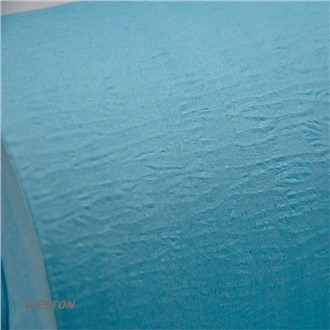
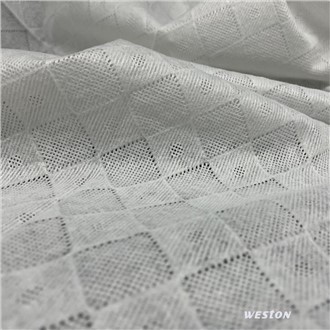
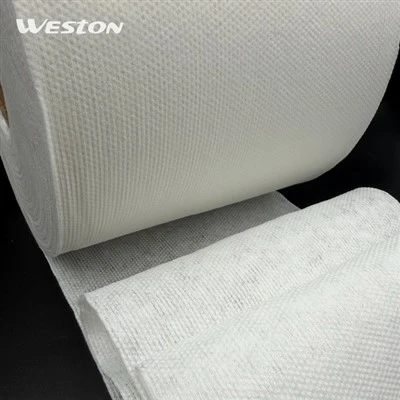
The substrate material itself fundamentally influences whether wipes successfully eliminate contamination risks. Advanced nonwoven technologies have revolutionized wipe manufacturing, offering superior performance compared to traditional cotton or paper alternatives. Spunlace nonwoven fabrics, created through hydroentanglement technology where high-pressure water jets interlock fibers, provide exceptional mechanical cleaning capability without chemical adhesives.
These nonwoven materials excel at capturing and removing both visible debris and microscopic particles through their dense, interlocked fiber network. Superior absorbency ensures that cleaning solutions distribute evenly across food contact surfaces, while high wet-strength prevents fiber shedding that could contaminate food. The porous structure locks moisture and cleaning agents within the fabric, controlling the precise quantity of liquid released onto surfaces.
When specifically engineered for food applications, nonwoven compositions combine cellulosic fibers-which provide water retention and absorbency-with select synthetic fibers for structural integrity. This balance creates wipes that deliver effective sanitation while minimizing chemical residue transfer potential. The mechanical action of these materials removes organic debris that otherwise interferes with chemical disinfection, creating a synergistic cleaning effect superior to either mechanism alone.
Quaternary Ammonium Compounds: Balancing Efficacy Against Residue Concerns
Quaternary ammonium compounds represent the predominant active ingredient in contemporary surface disinfectants due to their broad-spectrum antimicrobial effectiveness and relatively low odor. These cationic surfactants disrupt bacterial and viral membranes through electrostatic interactions, achieving rapid pathogen reduction when appropriate contact time is maintained.
However, this same electrostatic characteristic creates residue persistence concerns. QACs bind strongly to environmental surfaces, forming protective residual layers that, while extending antimicrobial activity, also increase transfer potential to food. Recent epidemiological investigations link occupational exposure to QACs among healthcare and custodial workers with respiratory irritation, contact dermatitis, and emerging reproductive health signals that warrant precautionary approaches in food environments where vulnerable populations-including pregnant workers and children-may be exposed.
The regulatory landscape reflects this tension. While the Environmental Protection Agency approves QAC-containing disinfectants for specific applications, the agency emphasizes that products explicitly labeled for food contact surfaces differ fundamentally from general-purpose household disinfectants. Products bearing food-contact approvals undergo additional testing demonstrating that residue concentrations remain below established safety thresholds.
Advantages and Disadvantages: Comprehensive Risk-Benefit Analysis
Advantages of appropriate wipes for food surfaces include:
Rapid pathogen elimination achieving log-4 to log-5 bacterial reductions within minutes.
Convenience for quick sanitation protocols in busy food environments.
Reduced cross-contamination risk when used according to specifications.
Documented effectiveness against common foodborne pathogens.
Established regulatory approval frameworks ensuring systematic safety evaluation.
Disadvantages warrant equal consideration:
Chemical residues accumulate without explicit rinsing protocols.
Cost exceeds that of general household alternatives.
Variability in efficacy depends on soil load and surface conditions.
Storage stability of pre-moistened wipes decreases over time as active ingredients bind to nonwoven substrates.
Occupational exposure risks to food service workers handling these products regularly throughout shifts.
Microfiber wipe alternatives offer distinct benefits:
Exceptional mechanical particle removal through ultrafine fiber structure reaching sub-micron scales.
Minimal lint shedding unlike traditional paper alternatives.
Reduced chemical dependency when used with low-toxicity cleaning agents.
Superior durability enabling economic efficiency over extended use.
Compatibility with water-only or mild detergent solutions for light contamination scenarios.
Microfiber limitations include:
Lower antimicrobial capability without chemical agents compared to pre-formulated disinfectants.
Requirement for proper moistening technique to achieve effectiveness.
Necessity for adequate air-drying time before food preparation resumes.
Initial user training needed to optimize cleaning technique.
Regulatory Standards and Food Safety Compliance
The FDA establishes specific requirements for any substance claiming food contact safety through regulations codified in 21 CFR-the Code of Federal Regulations governing food contact materials. Third-party laboratory testing validates that wipes meeting these standards introduce no harmful residues to food when used according to manufacturer instructions. Products must demonstrate that active ingredients either don't transfer to food surfaces or remain below established safety thresholds for any residues that do transfer.
International standards including ISO specifications establish sampling methodologies and acceptance criteria for surface contamination following cleaning and disinfection protocols. These systematic approaches ensure that wipe selection and application methods have been rigorously validated rather than assumed safe based on general categories.
Critically, manufacturer instructions represent legally binding specifications. Using products outside these parameters-such as applying bathroom disinfectants to food contact surfaces-voids any regulatory safety assurances and creates liability for organizations handling food products.
Scientific Perspective on Safe Food Surface Sanitation
Evidence from FDA research on allergen removal demonstrates that wet cloths and specially formulated sanitizing wipes outperform dry alternatives in both contaminant removal and cross-contamination prevention. The agency's recommendations emphasize a wash-rinse-sanitize-air dry protocol for food contact surfaces, acknowledging that complete contamination removal requires multi-step procedures rather than single-wipe applications.
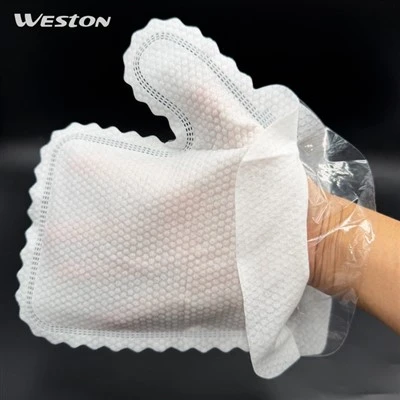
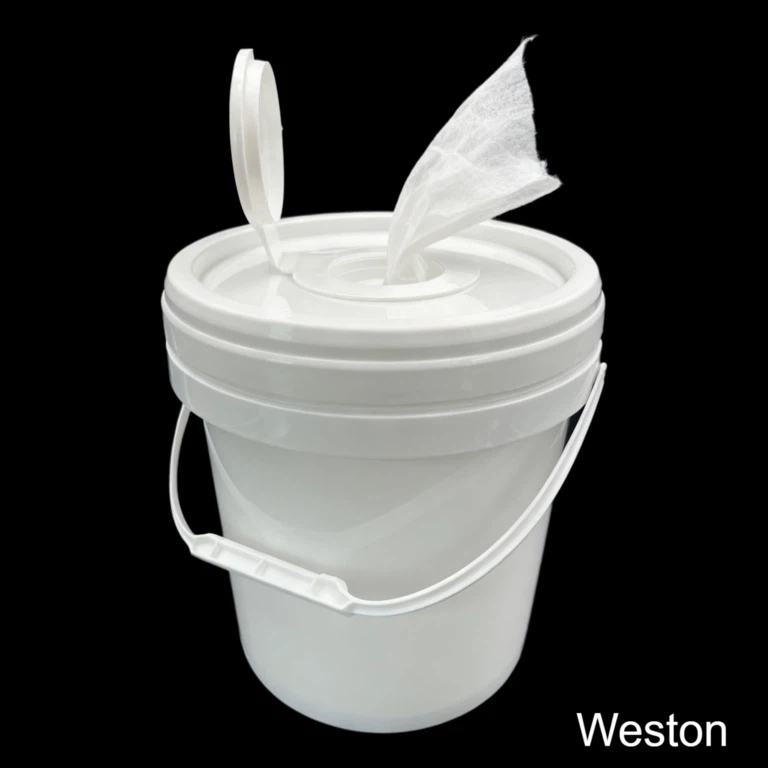
Weston Nonwoven manufacturing represents an example of how specialized nonwoven technology addresses these requirements. Their Hospital-Grade Disinfecting Wipes, Food Grade Disinfectant Wipes, and Food Safe Wipes products exemplify the technical sophistication required to balance antimicrobial effectiveness against residue concerns. These formulations undergo rigorous testing confirming both their pathogen reduction capability and safety parameters for food environments.
The distinction between general disinfectant products and food-specific alternatives reflects genuine scientific and regulatory differences rather than marketing differentiation. Products explicitly formulated, tested, and approved for food contact surfaces incorporate design principles addressing residue transfer, fiber shedding, chemical stability, and absorption characteristics that general-purpose wipes disregard.
Practical Implementation and Best Practices
Organizations and households handling food products should implement systematic sanitation protocols:
Establish a pre-cleaning step to remove visible debris through water rinsing or mechanical removal.
Apply appropriately formulated Food Safe Wipes or equivalent products specifically approved for food contact.
Allow adequate contact time per manufacturer specifications-typically thirty seconds to one minute.
Execute a potable water rinse if product instructions require rinsing (critical for non-no-rinse formulations).
Permit air-drying or use single-use absorbent materials rather than reusable cloths that harbor microorganisms between uses.
Staff training ensures consistent protocol adherence, particularly in commercial food environments where regulatory audits verify compliance. Documentation demonstrating selection of appropriate products, adherence to specifications, and verification of effective surface sanitation provides essential evidence of systematic food safety management.
Answering the Core Question
Standard disinfectant wipes marketed for general household use should never contact food preparation surfaces due to chemical residue transfer risks and lack of food-specific formulation validation. However, Food Grade Disinfectant Wipes and Food Safe Wipes specifically engineered for food contact environments, combined with appropriate nonwoven technology and rigorous chemical formulations, provide scientifically-validated sanitation solutions.
The advancement of nonwoven materials and food-specific disinfectant formulations represents genuine technological progress addressing legitimate food safety concerns. When properly selected and applied according to manufacturer specifications, these specialized products effectively reduce pathogenic contamination while maintaining chemical safety standards protecting consumers and food service workers.
Organizations seeking to improve food surface sanitation protocols should prioritize products bearing explicit food-contact approvals from regulatory agencies and base selection decisions on transparent testing documentation rather than general product categories. For detailed information about specialized food sanitation solutions and to access resources on proper wipe selection and application protocols, contact Weston Nonwoven at info@westonmanufacturing.com for free samples and comprehensive technical guidance tailored to specific food handling environments.