Why Are People Avoiding Polyester?
In the world of textiles, few materials have enjoyed as much dominance-or faced as much recent scrutiny-as polyester. If you pause for a moment to look at the care label on your shirt, the upholstery on your sofa, or the wipes in your kitchen, there is a high statistical probability you will see the word "polyester."
For decades, this synthetic fiber was celebrated as a miracle of modern engineering. It is cheap to produce, incredibly durable, and resists wrinkles better than almost any natural fiber. However, a significant shift is occurring. Consumers, scientists, and environmentalists are increasingly asking: Why are we surrounding ourselves with plastic?
The movement to avoid polyester isn't just a trend; it is a response to a growing body of scientific evidence regarding human health, environmental impact, and the hidden costs of "fast fashion."
The Skin Micro-Climate: Why Polyester Feels "Suffocating"
To understand why people are moving away from polyester, we first have to look at the biology of human skin. Our skin is an active organ that needs to "breathe" to regulate temperature. Natural fibers like cotton, linen, and viscose are hydrophilic, meaning they absorb moisture and allow it to evaporate away from the body.
Polyester is different. As a petroleum-based plastic, it is hydrophobic. It repels water. When you sweat while wearing polyester, the moisture has nowhere to go. It becomes trapped between your skin and the fabric, creating a warm, damp "micro-climate." This isn't just uncomfortable; it changes the way we smell.
Scientific studies have shown that certain odor-causing bacteria, specifically Micrococcus, thrive on synthetic fibers. Because polyester doesn't absorb the oils and sweat produced by our bodies, these secretions sit on the surface of the fiber, providing a feast for bacteria. This is why a polyester gym shirt often develops a permanent "funk" that natural fibers do not.
The Microplastic Crisis in Our Laundry
One of the most powerful reasons for the exodus from polyester is the invisible pollution it creates. Every time a polyester garment or a polyester nonwoven wipe is washed, the friction of the machine causes microscopic fibers to snap off.
These microplastics are so small they bypass most municipal water filtration systems. They end up in our rivers and oceans, where they are consumed by marine life and eventually enter the human food chain. A single load of laundry can release up to 700,000 microplastic fibers. As awareness of this "invisible shedding" grows, people are opting for natural alternatives or high-quality blends that are engineered to be more stable.
A Scientific Comparison: Polyester vs. Alternatives
To see the trade-offs clearly, we can compare standard polyester with natural and semi-synthetic alternatives like viscose.
|
Feature |
Polyester (Pure Synthetic) |
Viscose/Cotton (Natural/Semi-Synthetic) |
Viscose Polyester Spunlace (Hybrid) |
|
Moisture Absorption |
Very Low (Hydrophobic) |
High (Hydrophilic) |
Balanced / Adjustable |
|
Breathability |
Poor (Traps Heat) |
High |
High to Medium |
|
Odor Retention |
High (Bacteria-friendly) |
Low |
Low to Medium |
|
Environmental Impact |
High (Microplastics) |
Biodegradable (usually) |
Partially Biodegradable |
|
Durability |
Very High |
Medium |
High |
|
Common Use |
Fast Fashion, Low-end Wipes |
Luxury Apparel, Medical Gauze |
Professional Cleaning, Industrial Wipes |
The Myth of "Recycled Polyester"
In recent years, many brands have pivoted to "Recycled Polyester" (rPET), often made from plastic water bottles. While this sounds like a perfect solution, it is often criticized as a form of "greenwashing."
Turning a plastic bottle into a t-shirt is a "downcycling" process. A plastic bottle can be recycled back into a bottle multiple times in a closed-loop system. However, once that plastic is turned into a fiber, it can almost never be recycled again. It eventually sheds microplastics during use and ends up in a landfill, where it will take hundreds of years to decompose. People are beginning to realize that the best way to handle plastic is to keep it in a closed-loop (like bottles) rather than wearing it on our backs.
The Shift Toward "Clean" Manufacturing
As people become more conscious of what they touch, the demand for chemical transparency has skyrocketed. This is especially true in the nonwoven industry, where fabrics are used for baby wipes, facial masks, and food preparation.
Traditional polyester manufacturing sometimes involves residual chemicals or stabilizers that can irritate sensitive skin. This has led many to seek out a Polyester Nonwoven Wipes Supplier that prioritizes safety over cost. Modern consumers and industrial buyers are looking for products that are formaldehyde-free and carry a food contact certificate, ensuring that the fabric won't leach harmful substances into the environment or the body.
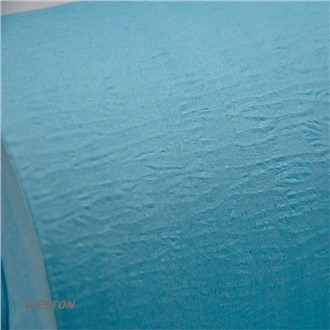
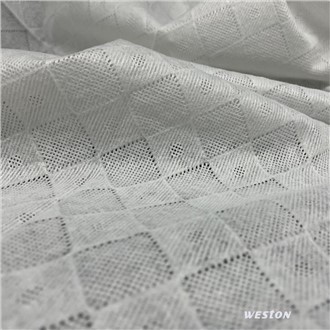
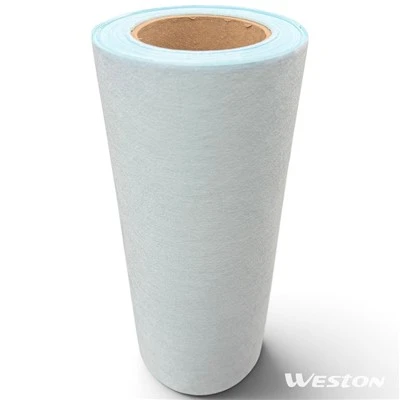
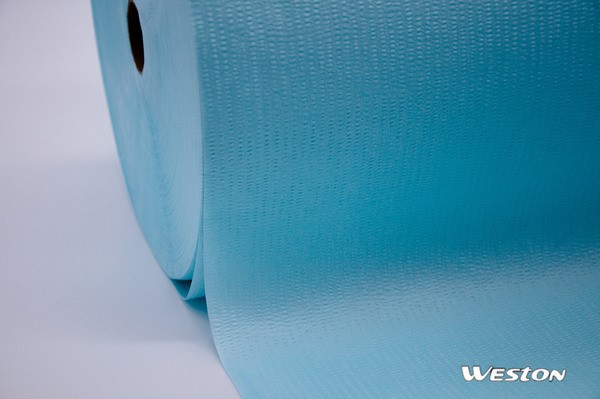
One effective solution that balances the durability of synthetics with the performance of natural fibers is Viscose Polyester Spunlace. By using high-pressure water jets to entangle viscose and polyester fibers (a process called hydroentanglement), manufacturers can create a fabric that is absorbent like cotton but strong like plastic. When produced by a responsible facility like the Weston Nonwoven factory, these materials are processed to be exceptionally clean, meeting strict international safety standards.
The Psychological Shift: Quality Over Quantity
Finally, there is a cultural shift at play. Polyester is the backbone of the "disposable" economy. It allows for the production of a $5 t-shirt or a 99-cent pack of wipes. But we are living through a "Fast Fashion Hangover."
People are tired of items that lose their shape after two washes or wipes that feel like thin plastic. There is a returning respect for "hand-feel" and "integrity." Choosing a fabric that feels natural against the skin is a small but significant act of self-care. It is a move away from the synthetic and a move toward the authentic.
Choosing Wisely for the Future
Avoiding polyester entirely is difficult in our modern world, and in some cases (like high-performance outdoor gear or specific medical applications), its durability is essential. However, for our daily clothing and household products, the tide is turning.
When you do need the strength of a synthetic blend, the key is to look for quality and safety. Professional-grade materials, such as those from the Weston Nonwoven spunlace facility, demonstrate that it is possible to produce industrial fabrics that are both high-performing and safe for human contact. By opting for products that are tested to be formaldehyde-free and certified for food contact, we can mitigate many of the risks associated with low-quality synthetics.
Ultimately, the reason people are avoiding polyester is simple: we are rediscovering that our environment and our health are more valuable than the convenience of cheap plastic. By checking labels, asking for chemical transparency, and choosing fibers that work with our biology rather than against it, we are all contributing to a cleaner, more breathable future.