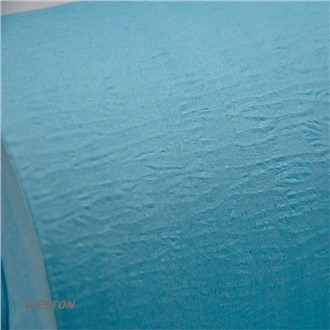
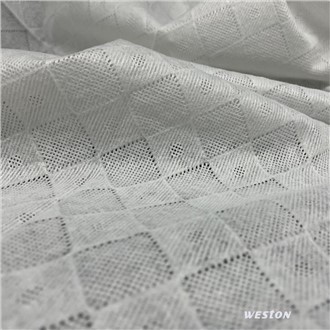
For professional buyers in industries like semiconductor manufacturing, pharmaceuticals, and precision automotive engineering, cleanroom contamination control is not just an operational requirement-it is a scientific imperative. Wholesale cleanroom wiper rolls, often overlooked as a "basic supply," are critical tools that bridge material science and industrial precision. Their performance directly impacts product yield, regulatory compliance, and long-term operational efficiency. To truly leverage their value, buyers must move beyond surface-level assessments of "lint-free" or "absorbent" and dive into the scientific mechanisms that define effective cleanroom wiping. This article unpacks the core principles, performance metrics, industry-specific adaptations, and common misconceptions surrounding wholesale cleanroom wiper rolls-with a focus on how evidence-based selection drives success.
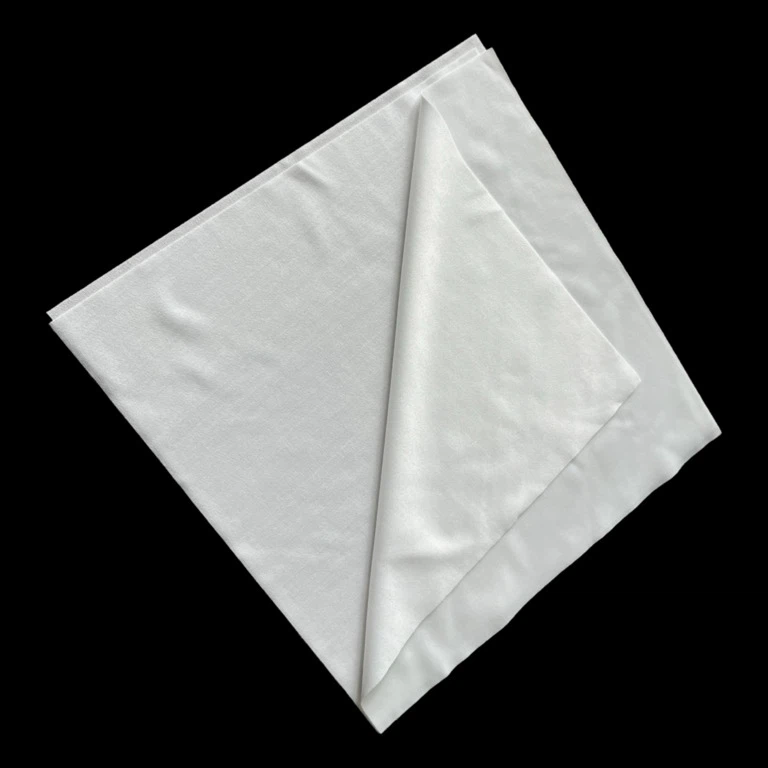
The Scientific Fundamentals of Cleanroom Wiper Rolls: Beyond Surface Cleaning
Cleanroom contamination control hinges on managing two invisible threats: particulate matter (PM) and molecular contaminants (MC). Wholesale cleanroom wiper rolls are engineered to address both, but their efficacy starts with understanding the physics of particle adhesion and the chemistry of material interaction.
1.1 The Physics of Particle Capture: Why Fiber Structure Matters
Particles as small as 0.1 microns (1/1000th the width of a human hair) can cripple precision processes-for example, a single 0.5-micron particle on a semiconductor wafer can render a microchip non-functional. These particles adhere to surfaces via Van der Waals forces, electrostatic attraction, and capillary action-forces that standard "household" wipes cannot overcome. Effective cleanroom wiper rolls must do more than "wipe": they must capture and retain particles without releasing new ones.
This is where fiber structure becomes critical. Low-Lint Viscose Polyester Spunlace Nonwoven Fabric-a material engineered by leaders in cleanroom textiles-excels here. The spunlace process uses high-pressure water jets to entangle fibers, creating a three-dimensional matrix with controlled porosity. Unlike woven fabrics (which have loose weave structures that trap and release particles) or meltblown fabrics (which are too delicate for repeated use), spunlace nonwovens offer:
Uniform fiber distribution to minimize particle "escape routes."
Mechanical entanglement that eliminates loose fibers (the primary source of lint).
A balance of softness (to avoid scratching sensitive surfaces) and durability (for multiple wipes per sheet).
In contrast, low-quality nonwoven fabrics often use adhesive bonding to hold fibers together-adhesives that can degrade over time, releasing molecular contaminants (e.g., volatile organic compounds, VOCs) into the cleanroom environment. This is a hidden risk professional buyers must mitigate: even "lint-free" wipes can fail if their manufacturing process introduces unintended contaminants.
1.2 The Chemistry of Material Compatibility: Avoiding Secondary Contamination
Cleanroom wiper rolls rarely work alone-they are often used with solvents (e.g., isopropyl alcohol, acetone) or disinfectants to remove oil, grease, or biological residues. The wrong wipe material can react with these chemicals, leading to two critical issues:
Material degradation: Fibers break down, releasing lint or microplastics into the environment.
Chemical leaching: Additives (e.g., softeners, dyes) in the wipe dissolve into the solvent, creating new molecular contaminants.
Viscose-polyester blends (like those in Low-Lint Viscose Polyester Spunlace Nonwoven Fabric) address this through chemical inertness. Viscose (a regenerated cellulose) offers high absorbency (critical for solvent-based cleaning), while polyester adds chemical resistance. Together, they resist degradation in most cleanroom solvents and do not leach additives-a key advantage over 100% cotton wipes (which retain moisture and promote microbial growth) or 100% polyester wipes (which have lower absorbency).
Critical Performance Metrics for Wholesale Cleanroom Wiper Rolls: A Professional Buyer's Technical Framework
Professional buyers cannot rely on marketing claims like "ultra-clean" or "high-performance." Instead, they need a data-driven framework to evaluate wholesale cleanroom wiper rolls. Below are the four non-negotiable metrics, grounded in cleanroom standards (e.g., ISO 14644 for cleanroom classification), that separate effective products from subpar ones.
2.1 Particle Release: The Gold Standard for Cleanliness
The most critical metric for any cleanroom wipe is its particle release rate-measured as the number of particles (per square meter) released during use. For ISO Class 4 cleanrooms (the strictest classification for industries like semiconductor lithography), wipes must release fewer than 10 particles of 0.1 microns per square meter.
ISO Class 4 Cleanroom Wipes-designed for these high-stakes environments-undergo rigorous testing to meet this standard. Testing involves:
Pre-cleaning the wipe in a Class 1 cleanroom (the purest possible environment) to eliminate residual particles.
Using a laser particle counter to measure particle release during simulated wiping (e.g., 10 back-and-forth strokes on a stainless steel surface).
Verifying no particles exceed the ISO Class 4 threshold.
The tradeoff here is clear: wipes that meet ISO Class 4 standards require more precise manufacturing (e.g., spunlace processing in a controlled environment, edge sealing to prevent fiber fraying), which can mean a higher upfront cost. However, the long-term savings-avoiding product defects, rework, or regulatory fines-far outweigh this investment.
2.2 Absorbency and Retention: Efficiency Without Compromise
Absorbency (how much liquid a wipe can hold) and retention (how well it holds liquid without dripping) are equally critical, especially in wet-cleaning processes. A wipe with low absorbency requires more sheets to complete a task, increasing waste and contamination risk (each new sheet is a potential source of particles). A wipe with poor retention drips solvent, which can damage equipment or spread contaminants.
Low-Lint Viscose Polyester Spunlace Nonwoven Fabric delivers on both fronts. The viscose component's hydrophilic (water-attracting) properties enable it to absorb up to 8x its weight in solvent, while the polyester's structural integrity ensures minimal dripping. In contrast, cheaper wipes often use recycled fibers or inconsistent fiber bonding, leading to uneven absorbency-some areas soak up too much solvent (causing dripping), while others absorb too little (requiring more wipes).
2.3 Mechanical Durability: Performance Across Multiple Uses
While some cleanroom processes require single-use wipes (e.g., pharmaceutical sterile rooms), others allow for limited reuse (e.g., automotive component cleaning). In both cases, durability matters: single-use wipes must not tear during use (which releases lint), and reusable wipes must maintain their structure after sterilization (e.g., autoclaving, gamma irradiation).
Weston Nonwoven's Microfiber Towels For Cars-a specialized subset of cleanroom wiper rolls-exemplify this durability. Designed for automotive precision cleaning (e.g., sensor lenses, electronic control units), these microfiber towels use ultra-fine (0.1-1 micron) polyester-viscose fibers woven into a dense matrix. This structure resists tearing during wiping and retains its lint-free properties after 5-10 autoclave cycles-far more than standard microfiber towels, which often pill or fray after 2-3 cycles.
2.4 Electrostatic Dissipation (ESD): Protecting Sensitive Electronics
In semiconductor and electronics manufacturing, electrostatic discharge (ESD) can destroy microchips or damage sensitive components. Cleanroom wiper rolls must either be ESD-dissipative (to neutralize static charges) or anti-static (to prevent charge buildup).
While not all wholesale cleanroom wiper rolls require ESD properties, buyers in electronics industries must prioritize this metric. ISO Class 4 Cleanroom Wipes for electronics often include a small percentage of carbon fibers or conductive additives in the spunlace matrix, enabling them to dissipate static charges within 2 seconds (per ANSI/ESD S20.20 standards). Without this feature, a wipe can transfer static charges to a wafer or component-leading to costly failures.
Application-Specific Adaptations: How Material Science Drives Wiper Roll Efficacy Across Industries
No two cleanroom environments are the same. A wipe that works in a pharmaceutical sterile room will not perform in a semiconductor fab, and a wipe for automotive cleaning will fail in a biotech lab. Professional buyers must select wholesale cleanroom wiper rolls tailored to their industry's unique challenges-and material science is the key to this customization.
3.1 Semiconductor Manufacturing: ISO Class 4 Precision
Semiconductor manufacturing requires ISO Class 4 cleanrooms, where even a single particle can ruin a $10,000 wafer. ISO Class 4 Cleanroom Wipes are non-negotiable here, as they are engineered to:
Release fewer than 5 particles of 0.1 microns per square meter.
Be compatible with harsh solvents (e.g., acetone, methyl ethyl ketone) used to remove photoresist.
Be ESD-dissipative to protect microchips.
Weston Nonwoven's ISO Class 4 wipes are manufactured in a Class 2 cleanroom (even purer than the environments they serve), with every batch tested for particle release and ESD performance. This level of precision ensures that semiconductor manufacturers can maintain yield rates above 95%-a critical benchmark in an industry where even 1% of defects translates to millions in lost revenue.
3.2 Pharmaceutical and Biotech: Sterility and Inertness
In pharmaceutical manufacturing, cleanroom wiper rolls must not only be lint-free but also sterile and chemically inert. Any microbial contamination (e.g., bacteria, fungi) or chemical leaching can compromise drug safety, leading to regulatory recalls.
Lint-Free Cleanroom Wipes for pharmaceuticals are often gamma-irradiated (to achieve sterility levels of 10⁻⁶, meaning a 1 in 1,000,000 chance of microbial survival) and made from 100% viscose-polyester spunlace fabric (to avoid leaching). Unlike wipes with added dyes or softeners, these wipes are "neutral"-they do not react with drug compounds or cleaning agents. The tradeoff? Sterile wipes have a shorter shelf life (typically 24 months) than non-sterile ones, so buyers must manage inventory carefully to avoid waste.
3.3 Automotive Precision Engineering: Durability Meets Cleanliness
Automotive manufacturing has evolved beyond "dirty" assembly lines-modern cars include over 100 electronic control units (ECUs), sensors, and displays that require cleanroom-level cleaning. Microfiber Towels For Cars are designed for this niche, balancing:
Lint-free performance (to avoid scratching sensor lenses or display screens).
Durability (to withstand repeated use on metal and plastic components).
Solvent compatibility (to remove oil and grease from ECU connectors).
Weston Nonwoven's microfiber towels for cars use an 80/20 polyester-viscose blend-80% polyester for durability, 20% viscose for absorbency. This blend is ideal for automotive applications: it cleans without scratching, retains oil without dripping, and resists fraying after multiple washes. For buyers in automotive supply chains, this means fewer defects (e.g., faulty sensors) and lower replacement costs.
Navigating Myths and Realities: The Science Behind "Lint-Free" and Performance Claims
Professional buyers face a flood of marketing jargon when evaluating wholesale cleanroom wiper rolls. Terms like "100% lint-free" or "ultra-clean" are often misleading-rooted in vague testing or cherry-picked data. Below are three common myths, debunked with science, to help buyers make informed decisions.
4.1 Myth: "Lint-free" means zero fiber release.
Reality: No wipe is 100% lint-free-even the best Lint-Free Cleanroom Wipes release a tiny number of fibers. The key is whether these fibers fall below cleanroom standards. For ISO Class 4 environments, "lint-free" means fewer than 10 fibers (≥0.5 microns) per square meter. Any wipe claiming "zero lint" is either using flawed testing (e.g., measuring in a non-cleanroom environment) or misleading buyers.
4.2 Myth: Thicker wipes are more effective.
Reality: Wipe thickness has no direct correlation to performance. A thick wipe with a loose fiber structure can release more particles than a thin, dense wipe. Low-Lint Viscose Polyester Spunlace Nonwoven Fabric is a perfect example: it is thin (typically 0.2-0.3mm) but dense, so it captures particles without releasing them. Thicker wipes may feel "more substantial," but they often have higher particle release rates-especially if they use layered or bonded fibers.
4.3 Myth: Reusable wipes are always cheaper than disposable ones.
Reality: The cost of reusable wipes depends on sterilization and replacement cycles. A reusable wipe that costs 2butrequires2 but requires 2butrequires0.50 in sterilization per use and lasts 10 cycles costs 0.70peruse.Adisposablewipethatcosts0.70 per use. A disposable wipe that costs 0.70peruse.Adisposablewipethatcosts0.50 per use may be cheaper-especially if sterilization requires downtime or specialized equipment. For ISO Class 4 environments, disposable ISO Class 4 Cleanroom Wipes are often more cost-effective: they eliminate sterilization costs and reduce the risk of cross-contamination from reused wipes.
Leveraging Science for Informed Buying: The Weston Nonwoven Difference
Weston Nonwoven, a leader in cleanroom textile manufacturing, integrates these scientific principles into every batch of wholesale cleanroom wiper rolls. The factory's approach is rooted in three core commitments:
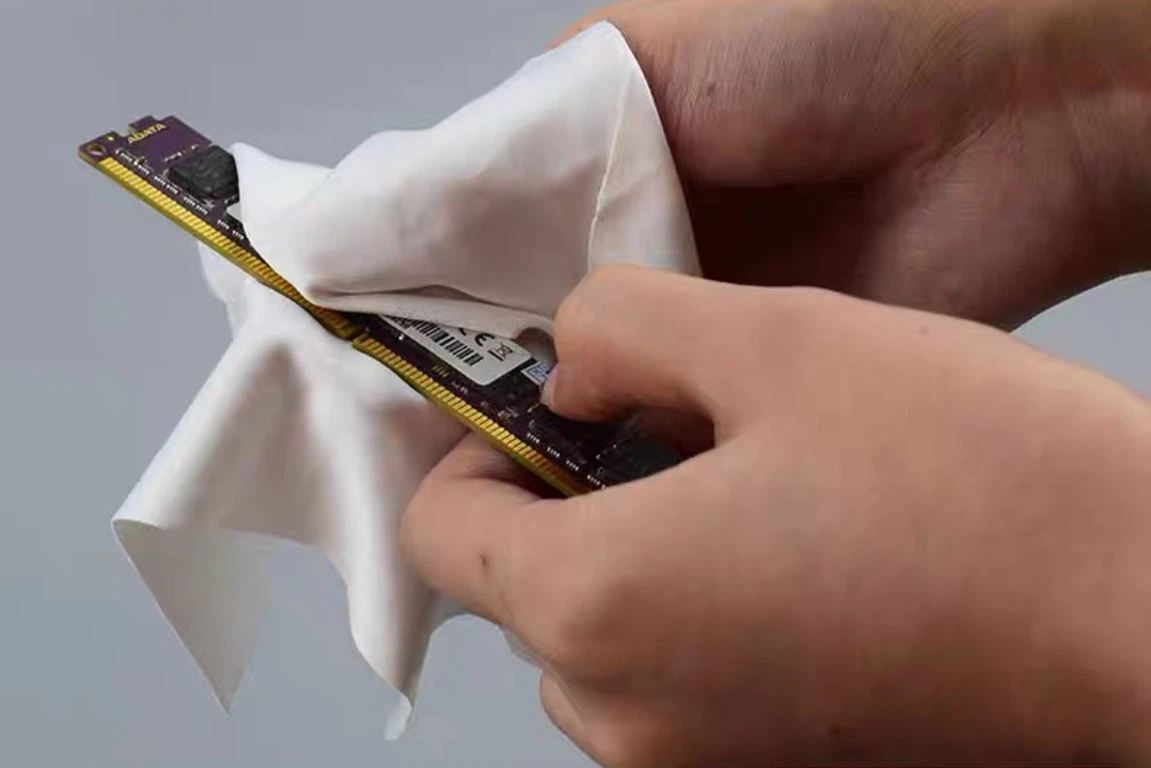
Material science first: Every fabric-from Low-Lint Viscose Polyester Spunlace Nonwoven Fabric to specialized Microfiber Towels For Cars-is engineered for a specific cleanroom need, not just "one-size-fits-all" performance.
Rigorous testing: All products, including ISO Class 4 Cleanroom Wipes and Lint-Free Cleanroom Wipes, undergo testing in an in-house Class 1 cleanroom lab, with results documented for buyers to verify.
Transparency: Weston Nonwoven shares detailed spec sheets (including particle release rates, absorbency data, and chemical compatibility charts) with professional buyers-no hidden claims, no vague jargon.
For professional buyers seeking to verify these performance attributes firsthand, Weston Nonwoven offers free samples of its wholesale cleanroom wiper rolls. To request a sample and discuss your specific cleanroom requirements-whether for semiconductor manufacturing, pharmaceutical sterile rooms, or automotive precision cleaning-contact info@westonmanufacturing.com.
The success of your cleanroom operations depends on the science behind your supplies. Wholesale cleanroom wiper rolls are not just a "cost item"-they are an investment in precision, compliance, and long-term efficiency. By focusing on material science, performance metrics, and application-specific needs, you can select wipes that drive value far beyond their price tag.