Every kitchen tells a story - not only of what's cooked, but of how carefully we protect what we eat. The glossy counter, the cutting board that's seen a thousand meals, the tools we trust - all can look clean while harboring invisible threats. So, what truly defines clean in a food-safe environment? The question is no longer about appearance; it's about science.
The best food safe disinfectant is one that eliminates harmful microorganisms without leaving residues that could compromise food safety. But to find it, we must go beyond marketing promises and understand the chemistry, microbiology, and material safety that shape the modern hygiene landscape.

The Science of "Food Safe" Cleaning
To call a disinfectant food safe means it can neutralize dangerous bacteria, viruses, and fungi without leaving toxic traces that migrate into food. It's a delicate balance between potency and purity.
From a scientific standpoint, food safety disinfection involves three key layers of action:
Cleaning – removing visible soil and organic matter that shield microorganisms.
Sanitizing – reducing pathogens to levels deemed safe by health science.
Disinfecting – destroying nearly all microorganisms on nonporous surfaces.
In food preparation areas, these actions overlap. The real challenge is to achieve microbiological control while ensuring that no chemical residues remain to interfere with human health or food integrity.
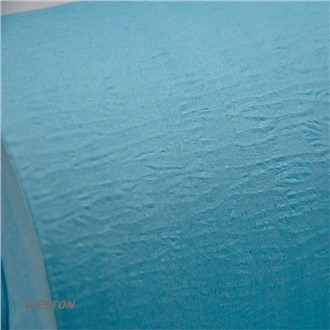
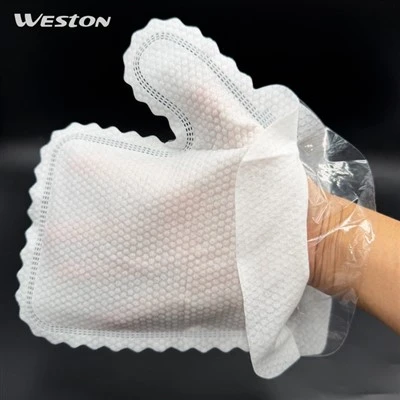
This is where advanced materials and surface science come into play. Modern nonwoven wipes, such as those used in Restaurant Supply Food-Safe Wipes, are designed to hold disinfecting agents evenly, release them precisely, and avoid fiber shedding that could contaminate food.
Why Ordinary Cleaners Fall Short
Household cleaners often rely on aggressive solvents or synthetic surfactants that work wonders on grime but are unfit for surfaces in direct food contact. Some may contain volatile compounds that linger invisibly after evaporation.
More importantly, many of these cleaners focus on cosmetic cleanliness - shining surfaces - rather than microbial safety. Laboratory studies consistently show that even spotless-looking countertops can host colonies of E. coli or Listeria after contact with raw ingredients.
Food-safe disinfectants must therefore be formulated to break down completely after doing their job. They should not corrode utensils, alter food smell, or interfere with taste. That requirement narrows the field to a few scientifically sound options.
The Chemistry Behind Safe Disinfection
Every disinfectant relies on a mechanism - oxidation, denaturation, or membrane disruption - to deactivate microbes. Yet not every chemical reaction is suitable where food is involved.
1. Alcohol-Based Formulas
Ethanol and isopropyl alcohol are fast-acting and evaporate cleanly. They're widely used in no-rinse sanitizers because they leave minimal residue. However, their effectiveness depends on concentration (typically above 60%) and surface contact time.
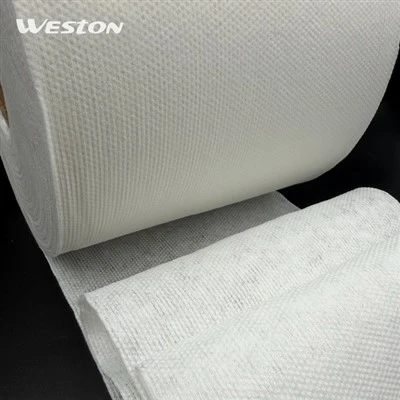
The limitation: alcohols lose potency in the presence of organic matter and are unsuitable for porous surfaces. For wiping cutting boards or prep counters, they can work well when paired with absorbent materials like Biodegradable Kitchen Paper Towel that ensure even distribution and rapid drying.
2. Hydrogen Peroxide
A strong oxidizer that decomposes into water and oxygen - making it environmentally benign. Its reactive oxygen species destroy microbial cell walls efficiently.
Hydrogen peroxide's versatility lies in its clean breakdown, but it can degrade quickly when exposed to light or heat, requiring stable packaging and short-term storage. It's ideal for stainless steel or glass prep areas.
3. Hypochlorous Acid (HOCl)
A naturally occurring compound in the human immune response, HOCl is among the most effective and gentle food-safe disinfectants known today. It neutralizes pathogens through oxidative stress without forming harmful residues.
What makes HOCl exceptional is its compatibility with food-contact surfaces and even produce. Its neutral pH and biodegradable nature make it a cornerstone of sustainable hygiene innovation - a direction many factories, including Weston Manufacturing, have invested in when developing No-Rinse Sanitizing Wipes for industrial kitchens.
4. Quaternary Ammonium Compounds (Quats)
Effective in low concentrations, quats are common in industrial cleaning. They offer long-lasting antimicrobial protection but can leave surface residues that require rinsing before contact with food. Their controlled use is crucial - strong against pathogens, but not ideal for environments where direct food exposure occurs.
5. Plant-Based and Biodegradable Alternatives
Recent advances in biochemistry have produced organic acid blends and naturally derived surfactants capable of moderate disinfection. While gentler, they typically act slower and are less effective against viruses. Their advantage lies in sustainability - an important value in the evolution of Biodegradable Kitchen Paper Towel and eco-conscious cleaning supplies.

Evaluating What Makes "The Best"
The best food-safe disinfectant isn't defined by one ingredient but by how well it aligns with three critical dimensions:
Efficacy: It must achieve a 99.9% or higher microbial reduction within realistic contact time.
Safety: It must not introduce residues, odors, or corrosive byproducts that could affect food.
Sustainability: It should minimize environmental burden and promote renewable material cycles.
From a systems perspective, the "best" choice depends on context.
In home kitchens, a fast-evaporating alcohol formula paired with No-Rinse Sanitizing Wipes might suffice.
In restaurants or processing facilities, stabilized HOCl or controlled peroxide solutions ensure consistent microbial defense.
For food packaging zones, wipes built from spunlace nonwoven substrates, like Weston's, provide precision cleaning with minimal waste.
The Role of Material Science in Food Safety
Behind every disinfectant, the delivery medium matters. A high-performance formula can fail if applied with a poor-quality cloth that releases lint, absorbs too much liquid, or tears easily.
This is where nonwoven technology - engineered fiber webs designed for strength, absorption, and purity - plays a transformative role.
Factories like Weston Manufacturing specialize in creating materials that are safe for food-contact applications, ensuring both hygiene and efficiency. Their product lines - including Restaurant Supply Food-Safe Wipes and Biodegradable Kitchen Paper Towel - embody the principle that cleaning tools should never compromise cleanliness.
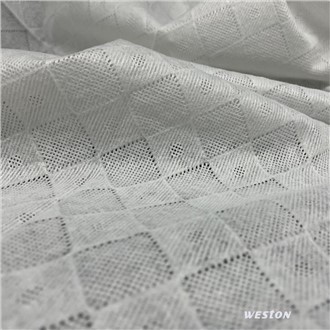
Unlike ordinary paper, spunlace nonwoven fabrics are produced through high-pressure water entanglement rather than chemical bonding, ensuring no adhesive residue remains. They're durable, soft, and compatible with various disinfectant formulas, including HOCl and hydrogen peroxide - making them a preferred choice in both household and commercial environments.
The Misconceptions That Hinder Food Hygiene
Even the most effective disinfectant can fail through misunderstanding.
Let's debunk a few common myths:
"Vinegar or lemon juice is enough."
Acids can reduce odor and loosen grime but cannot reliably destroy viruses or resistant bacteria.
"All disinfectants are safe after drying."
Some leave invisible residues that can migrate into food or react with cooking vapors.
"More is better."
Excess concentration doesn't mean greater safety. Overuse can damage surfaces or harm skin.
"One product fits all."
Food-safe disinfection requires contextual understanding - what works on metal tools may be unsuitable for cutting boards or plastic trays.
Science emphasizes that contact time, mechanical action, and material compatibility matter as much as chemical strength. That's why the best results often come from pre-saturated No-Rinse Sanitizing Wipes - they ensure consistent dosing and even coverage, eliminating user error.
The Human Factor: Habit, Hygiene, and Awareness
No disinfectant, no matter how advanced, can replace responsible human behavior.
Cross-contamination often occurs not because of poor products but because of rushed cleaning routines. Food safety is a sequence - from proper hand hygiene to using separate wipes for raw and cooked areas.
In professional kitchens, structured protocols ensure timing, surface order, and wipe replacement frequency. Weston's Restaurant Supply Food-Safe Wipes are engineered for repeated, controlled use, aligning with these standards while reducing waste through biodegradable substrates.
Sustainability and the Future of Food Disinfection
The next generation of food-safe disinfectants leans toward biotechnology and green chemistry. Instead of relying on harsh compounds, scientists are exploring electrolysis-based HOCl generation, enzyme-assisted sanitizers, and recyclable cleaning media.
Factories focusing on closed-loop hygiene systems - where materials like Biodegradable Kitchen Paper Towel return safely to the environment - are setting new industry benchmarks. Weston Manufacturing has aligned with this direction, leveraging nonwoven innovations to balance performance, safety, and environmental responsibility.
As awareness of chemical impact deepens, the market is shifting toward minimal-residue, no-rinse solutions - not as trends, but as necessities. The safest disinfectant is not only the one that kills germs efficiently but the one that respects what we eat and where we live.
The Practical Takeaway
To answer the question - what is the best food safe disinfectant? - we must acknowledge that "best" depends on harmony:
Between chemistry and ecology,
Between power and gentleness,
Between safety and practicality.
A truly food-safe disinfectant destroys pathogens, leaves nothing behind, and supports sustainable cleaning practices.
For those seeking reliable, residue-free options in both home and professional settings, the combination of No-Rinse Sanitizing Wipes, Biodegradable Kitchen Paper Towel, and Restaurant Supply Food-Safe Wipes offers an intelligent balance of performance and safety - developed by Weston Manufacturing, a specialist in nonwoven materials for hygiene-critical industries.
To explore customized solutions or request a free sample, you can reach Weston's product team at info@westonmanufacturing.com.
Because in the end, true cleanliness is not only about removing what's harmful - it's about leaving behind what's right.