The Rise of Viscose Spunlace Nonwovens
Over the last decade, the demand for eco-friendly, high-performance nonwovens has shifted dramatically. As global markets push for biodegradable and skin-safe materials, viscose spunlace nonwoven fabric has become a defining material for wipes, beauty care, and hygiene applications.
The magic of this fabric lies in its balance: natural absorbency from viscose (wood pulp–derived fiber) and soft, cloth-like texture from hydroentangling (spunlace) technology. Whether used in baby wipes, cosmetic pads, or disposable towels, this substrate combines softness, tensile strength, and biodegradability.
In 2025, several suppliers continue to advance this material, introducing more custom GSM ranges, embossing patterns, and viscose-blend innovations to meet diverse market needs.
Understanding the Science Behind Viscose Spunlace
|
Component |
Function |
Performance Benefit |
|
Viscose Fiber (Regenerated Cellulose) |
Derived from wood pulp; highly absorbent |
Provides natural softness and fluid management |
|
Polyester / Lyocell Blends |
Adds strength and texture |
Improves durability and fabric integrity |
|
Spunlace Process |
Hydroentanglement using high-pressure water jets |
Creates uniform bonding without adhesives |
|
Finishing |
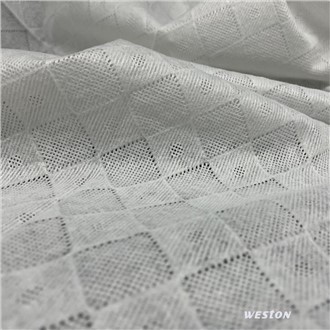
Embossing, aperturing, or hydrophilic treatments |
Enhances appearance and wiping performance |
Hydroentanglement avoids chemical binders, making the resulting nonwoven both eco-friendly and dermatologically safe - a key reason brands now favor it over synthetic alternatives.
Global Supply Trends in 2025
In 2025, the viscose spunlace market continues to expand across four main dimensions:
Sustainability Focus:
Manufacturers are switching to 100% viscose or viscose/lyocell blends to meet compostability standards and plastic-free claims.
Customization Demand:
Buyers now expect control over GSM, thickness, pattern embossing, and absorbency level for brand differentiation.
Regional Expansion:
Asia-particularly China-is scaling up large-volume spunlace lines, while Europe emphasizes quality and biodegradable certifications.
End-Use Diversification:
Beyond wet wipes, viscose spunlace is finding use in medical drapes, disposable bedding, kitchen wipes, and salon towels.

Key Players Driving Innovation
Instead of focusing on single brand names, it's helpful to group suppliers by their core specialization areas.
1. Sustainability-Driven Producers
These companies are investing heavily in biodegradable fibers and water-efficient hydroentanglement systems. Their focus is on reducing microplastic release while ensuring product softness. Expect innovation in lyocell-viscose hybrids and additive-free wet wipes substrates.
2. High-Volume OEM Manufacturers
Large-scale factories in Asia continue to dominate bulk roll supply. Their advantage lies in high-speed production lines, competitive pricing, and GSM flexibility (30–120 gsm) suitable for both wet and dry wipes.
Many have added inline embossing and slitting systems, making them ideal for converters who need semi-finished or branded materials.
3. Specialty Converters & Private-Label Experts
Regional converters with cleanroom facilities specialize in cosmetic pads, dry towels, and hair wraps made from viscose spunlace. Their innovation lies in surface finishing, softness control, and the integration of skin-friendly treatments such as aloe or chamomile finishes.
The Growing Role of Weston Nonwoven
Within this evolving market, Weston Nonwoven and Weston Manufacturing represent a new generation of direct-from-factory spunlace producers.
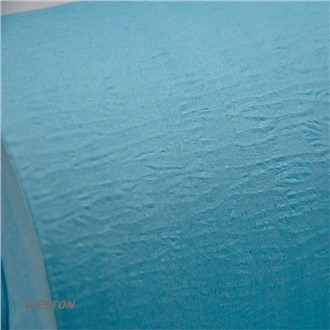
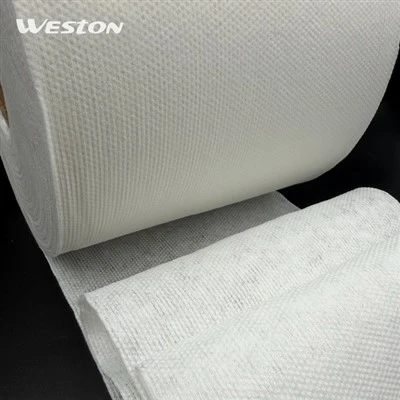
Their operations focus on viscose-based spunlace bulk rolls, offering precise control over fiber blending, web uniformity, and embossing patterns.
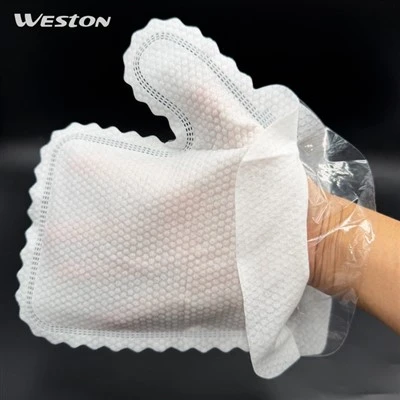
By vertically integrating hydroentangling, drying, and converting, Weston delivers both roll goods and finished disposable items such as:Cotton Spunlace Hair Towels,Pearl-Embossed Makeup Remover Pads,Disposable Hair Drying Caps
These end-products showcase how viscose spunlace can be adapted for personal care and beauty sectors - combining softness, durability, and hygiene in one sustainable material.
Technical Performance Snapshot
|
Property |
Viscose Spunlace Range (Typical) |
Industrial Significance |
|
GSM |
35–120 g/m² |
Defines product weight and durability |
|
Tensile Strength (MD/CD) |
40–80 N/5cm |
Ensures resistance to tearing when wet |
|
Absorption Rate |
>8x own weight |
Critical for wet wipes and towels |
|
Biodegradability |
90–100% cellulose-based |
Enables compostable certification |
|
Custom Embossing |
Dot, pearl, mesh, logo |
Improves texture & brand identity |
Environmental Impact & Future Outlook
A key advantage of viscose spunlace lies in its closed-loop fiber sourcing and chemical-free bonding process. When paired with biodegradable viscose or lyocell, the resulting nonwoven decomposes naturally - aligning with EU plastic bans and global sustainability frameworks.
As automation and precision water-jet control improve, the next generation of spunlace lines will achieve:
Lower energy and water consumption
Enhanced fiber alignment for greater tensile strength
Finer pattern detailing for cosmetic and medical wipes
Fully compostable substrates that meet international biodegradability standards