Over 250,000 Units to be Updated within Three Years, Driving an Investment of 250 Billion Yuan
On September 25, 2024, the Ministry of Industry and Information Technology (MIIT) released the "Guidelines for Equipment Renewal and Technological Transformation in Key Industrial Sectors," outlining equipment renewal targets, policy frameworks, and standards for 27 key industries.
For the textile sector, the equipment renewal goal emphasizes the replacement of outdated machinery and the green upgrading of production processes. Key focus areas include the modernization of new spinning, weaving, and knitting equipment, as well as the acceleration of automation, continuous processing, and energy-efficient technology applications. The guidelines aim to promote the upgrading of complete sets of equipment for polymerization, spinning, and stretching, thereby enhancing the intelligence level of the chemical fiber industry. Furthermore, the initiative will support the automation of dyeing and finishing processes, including the installation of automated systems for the distribution of dyes and auxiliaries, aiming to improve energy conservation, emission reduction, and digitalization within the dyeing and finishing sector.
By 2027, remarkable improvements in production efficiency are expected in the cotton spinning industry, with an increased rate of equipment renewal for polyester filament in the chemical fiber sector. The comprehensive production costs in the dyeing and finishing industry are anticipated to decrease by 5% to 10%. Overall, the industry targets the renewal of over 250,000 pieces (sets) of equipment, which is projected to stimulate an investment of 250 billion Yuan.
The policies and standards governing equipment renewal include, but are not limited to, the following:
GB/T 37393-2019: General Technical Requirements for Digital Workshops
GB/T 41257-2022: Functional Safety Requirements for Digital Workshops
GB/T 43018.1-2023: Interoperability and Interconnectivity of Textile Equipment – Part 1: General Technical Requirements
FZ/T 01002-2010: Calculation Methods and Basic Quotas for Comprehensive Energy Consumption in Dyeing and Finishing Enterprises
The guidelines further clarify key focus areas for equipment renewal in the textile industry:
Cotton Spinning Equipment:
This includes ring spinning frames, blowroom equipment, draw frames, and automatic winder machines, as well as short-process spinning equipment such as cup spinners and various weaving machines.
Chemical Fiber Filament Equipment:
Focused on high-speed spinning machines, texturing machines, stretching machines, shaping machines, dryers, water-jet looms, and beaming machines, with plans to upgrade 15 production lines for chemical fiber short filament.
Fabric Dyeing and Finishing Equipment:
This encompasses washing machines, dyeing machines, digital printing machines, shaping machines, circular knitting machines (including sock machines), warp knitting machines, and computer flat knitting machines, with the intention to upgrade 1,500 production lines.
Industrial Operating Systems:
Following the principle of "advancing the renewal of mature and available products comprehensively, and progressively updating those that are basically usable," the guidelines advocate for the modernization of programmable logic controllers (PLCs), data acquisition and supervisory control systems (SCADA), embedded software, and industrial protocols.
Industrial Software:
The guidelines promote replacing outdated software with more advanced versions in research and design, production management, business operations, and maintenance services.
Earlier, the MIIT and six other departments issued the "Implementation Plan for Promoting Equipment Renewal in the Industrial Sector," emphasizing the significance of large-scale equipment updates in expanding effective investment and enhancing the proportion of advanced production capacity. This initiative is crucial for accelerating the establishment of a modern industrial system. By leveraging large-scale equipment renewal as a key strategy, the plan aims to implement technological upgrades in manufacturing, with a focus on digital transformation and green upgrades, thereby promoting high-end, intelligent, and sustainable development in the manufacturing sector. This will provide robust support for enhancing new productive forces and improving the quality and level of the national economic cycle.

The key tasks for equipment renewal include:
- Implementing advanced equipment renewal actions
- Promoting digital transformation initiatives
- Advancing the adoption of green equipment
- Enhancing fundamental safety levels across the industry
Recommendation: Weston Spunlace for Enhanced Equipment Maintenance
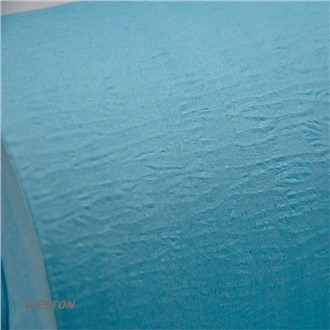
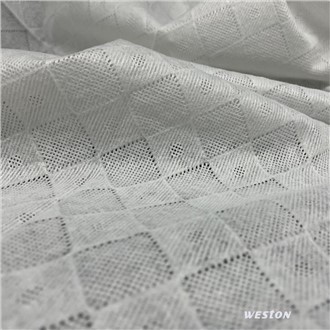
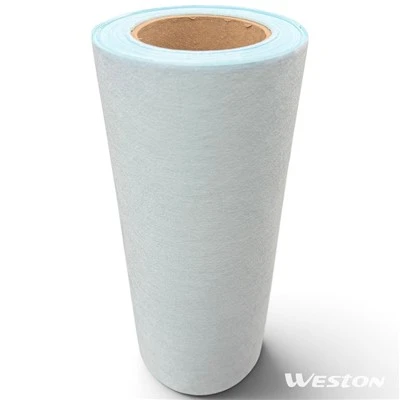
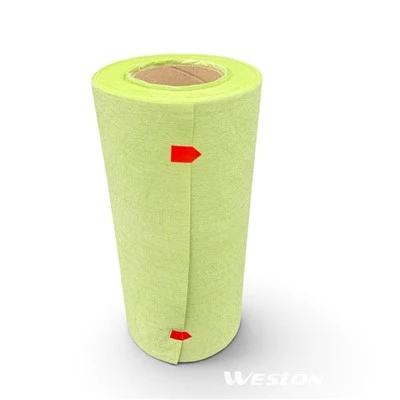
As part of your equipment upgrade and maintenance efforts, consider incorporating Weston Spunlace fabric into your cleaning routines. Known for their superior absorbency and non-abrasive properties, Weston Spunlace Wipers are ideal for maintaining the cleanliness of your advanced textile equipment, especially during the transition to newer, more automated systems.

These wipers are designed to efficiently remove ink, dust, and other residues without leaving fibers behind, ensuring that sensitive components, such as the intricate parts of weaving and spinning machines, remain free of debris. Whether for wiping down machinery after production runs or for routine maintenance during machine upgrades, Weston Spunlace offers a durable and reliable solution that enhances the longevity of your equipment.

Additionally, Weston's Polyester Spunlace offers a range of disposable wipes that are well-suited for industrial settings, where high performance and reliability are critical. Their strong, consistent cleaning action is perfect for use on both delicate and high-speed textile machines, ensuring that your equipment operates at its peak performance, while reducing the risk of downtime and mechanical failure.