Lint-Free vs. Low-Lint Wipes: Which One Does Your Electronics Line Need?
Choose lint-free wipes where one stray fiber can ruin the part and the surface will be sealed, bonded or coated afterward: bare die, image-sensor windows, optical lenses, display cover glass before lamination, and ISO Class 5 or cleaner areas. Choose low-lint wipes everywhere else: PCBA flux cleanup, fixtures, benches, housings and finished-product wipe-downs in ISO Class 7–8 or general assembly areas. Decide by workstation risk, not by the package label, and approve any wipe only after test data and a trial with your own solvent.
How do I decide in 30 seconds which type a workstation needs?
Ask three questions about the workstation:
Will the surface be sealed, encapsulated, bonded, laminated or coated right after wiping, so a stray fiber can no longer be removed?
Can a single fiber, or a particle of a few microns, cause a functional or optical defect?
Does the room class, customer specification or audit require wiper test data?
Two or more "yes" answers: specify a lint-free wipe backed by test data. No "yes" answers: a low-lint wipe is normally enough and usually costs less. One "yes": run a side-by-side trial and let the result decide.
Why do I still find fibers on parts when my wipes are labeled "lint-free"?
"Lint-free" does not mean zero lint
No wiper sheds nothing. "Lint-free" is a relative term: under a stated test method, very few fibers and particles are released. Without a method, batch data and a stated use environment, the label cannot be compared between suppliers.
What "lint-free" usually means
Continuous-filament knit or woven construction, commonly polyester.
Laser- or ultrasonically sealed edges that limit loose fibers at the cut.
Cleanroom laundering and cleanroom packaging.
A higher price, typically accepted on critical cleanroom surfaces.
What "low-lint" usually means
Spunlace (hydroentangled) nonwoven, with fibers locked together by high-pressure water jets.
Far less shedding than paper towels, cotton cloth or general industrial rags.
Cut edges that can still release short fibers.
Fast absorption, high solvent capacity and a lower unit cost for high-volume use.
Lint-free vs. low-lint at a glance
These are common industry patterns, not a standard. Verify each product against its own data.
|
Dimension |
Lint-free (common meaning) |
Low-lint (common meaning) |
|
Typical construction |
Continuous-filament knit or woven, often polyester |
Spunlace nonwoven, fibers entangled into a web |
|
Edge finish |
Usually laser- or ultrasonically sealed |
Usually cut; sealed edges sometimes offered |
|
Cleaning and packing |
Often cleanroom laundered and packed |
Electronics- or industrial-grade packing; cleanliness treatment varies by product |
|
Shedding and particles |
Lower and more consistent under cleanroom test methods |
Well below paper towels; cut edges may release short fibers |
|
Absorbency and solvent capacity |
Depends on the fabric; usually below cellulosic spunlace |
Fast absorption, high capacity |
|
Cost |
Higher |
Lower; suited to high volume |
|
Typical use |
Critical cleanroom surfaces, optics, high-cleanliness stations |
General assembly, fixtures, housings, finished products |
Fibers are only one part of wiper contamination
Particles: small debris that harms optics and fine-pitch bonding.
Non-volatile residue (NVR) and extractables: released by solvent and left behind as haze or film.
Ionic contamination: raises leakage and corrosion risk in humid conditions.
Static charge: attracts airborne particles, a concern near ESD-sensitive parts.
Judging a wipe by visible fibers alone misses the last three.
What does wipe shedding actually cost an electronics line?
Five common defects traced to wipe lint
|
Defect |
Typical cause |
Process affected |
|
More AOI/AVI false calls and manual re-inspection |
Fibers read as foreign material |
PCBA visual inspection, module inspection |
|
Poor solder joints or intermittent contact |
Fibers trapped in paste or between connector contacts |
SMT, connector assembly |
|
Bubbles, bright spots or foreign material in the bond line |
Fibers left on the surface before lamination |
Display, touch panel, OCA lamination |
|
Dark or white spots on a lens or sensor |
Fiber or particle on the optical surface |
Camera module, optical assembly |
|
Pinholes or poor adhesion in coatings |
Fibers or residue under the film |
Conformal coating, dispensing |
Rework and re-inspection cost more than the wipe
Wipers are a small share of line consumable spend. One lot held for rework, repeated inspection or a customer complaint can outweigh the price difference many times over. Grade wipes by workstation risk: not the top grade everywhere, and not the lowest price everywhere.
Which workstations need lint-free, and where is low-lint enough?
Where lint-free is justified
Bare die, sensor windows and optical lenses before sealing.
ISO Class 5 or cleaner operating areas.
Display cover glass in the final clean before lamination.
Any station where the customer or an audit requires wiper cleanliness data.
Where low-lint is enough and cheaper
Flux residue wipe-down after rework, with a compatible solvent.
Fixtures, stencil surroundings, equipment and benches.
Housings, screen exteriors, and fingerprint and oil removal on finished products.
Rooms at ISO Class 7–8 and general assembly floors.
Cosmetic cleaning before packing.
Workstation-by-workstation table
|
Workstation |
Main risk |
Suggested grade |
What to verify |
|
Bare die, sensor windows, optical lenses (before sealing) |
One fiber or particle is a defect |
Validated lint-free |
Fiber and particle data, NVR, sealed edge |
|
Display cover glass (before lamination) |
Bubbles, bright spots |
Validated lint-free, or a low-lint grade proven by trial |
Raking-light inspection, solvent residue |
|
Camera-module exterior and assembly area |
Lens spots |
Higher grade near optical surfaces; low-lint for the surroundings |
Shedding, residue, ionic content |
|
PCBA flux residue wipe-down |
Fibers in joints, incomplete cleaning |
Low-lint |
Solvent compatibility, absorbency, shedding |
|
Pre-coating cleaning |
Pinholes, poor adhesion |
Low-lint, or one grade up if the customer requires it |
Residue, shedding |
|
Fixtures, stencil surroundings, benches |
General soil |
Low-lint |
Absorbency, durability, cost |
|
Housings, screen exteriors, finished product |
Fingerprints, oil |
Low-lint; microfiber types suit fingerprint removal |
Cleaning effect, scratching |
Room-class references are a working rule of thumb. Set the final grade from your process window, product sensitivity and customer requirements.
How can I tell whether a supplier's "lint-free" claim is credible?
Five questions to ask
Do you have particle, fiber and residue data from a recognized method (for example, the wiper evaluation methods covered by IEST-RP-CC004), and a certificate of analysis for each lot?
Are the edges cut or sealed, and how are they sealed?
Is there extractables, NVR or ionic data, especially for use with solvents?
Is the wipe laundered or cleaned, and how is it packaged and stored after opening?
Which exact product, solvent and test conditions does the data cover?
If a supplier cannot answer all five, treat "lint-free" as a marketing term.
Three low-cost comparison tests for the line
These tests compare candidates against each other. They do not replace formal cleanliness testing.
Dry wipe under raking light: wipe a clean glass slide or mirror with the same pressure and number of strokes, then look for fibers and particles under strong low-angle light or magnification.
Solvent wipe and dry-down: wet the wipe with your actual solvent, wipe, air-dry, and look for haze, water marks or film.
Solvent soak check: agitate the wipe gently in solvent, let it settle, and look for loose fibers or cloudiness.
Why do some low-lint wipes work on one line and fail on another?
Solvent compatibility: will the wipe hold up to your IPA, ethanol, acetone or flux cleaner?
Fiber types react differently to solvents and release different amounts of extractables. Test with the solvent you actually use, not one named in a datasheet example.
Absorbency: too wet floods, too dry drags
Absorbent capacity and release rate set how consistently a wipe performs. A wipe that is too wet pushes contamination onto neighboring areas; one that is too dry drags and streaks.
Edge finish: shedding usually starts at the cut
In spunlace the body of the fabric is locked together, but the cut edge is where fibers still come off. For sensitive stations, ask about edge finish and train operators not to drag the cut edge across critical surfaces.
Static and packaging: contamination starts when the bag opens
Packaging, storage after opening and handling all affect cleanliness at the point of use. Use small packs, issue whole packs to each station, and use up opened packs within a set period.
Which westonNonwoven wipe fits which electronics workstation?
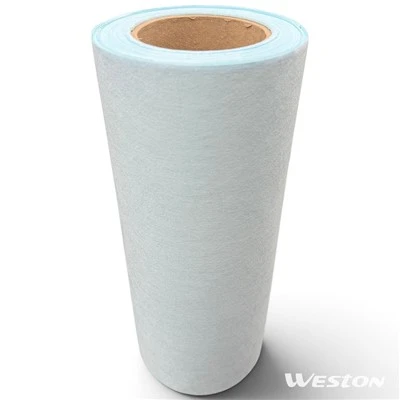
Both products below are spunlace nonwoven low-lint solutions that cover most electronics assembly and precision cleaning stations. For stations that need ISO Class 5 or cleaner validation, request the datasheet and test data from westonNonwoven and verify on your own line before approving.
Need low lint, fast absorption and a soft hand? Pulp Lyocell Low Lint Wipes
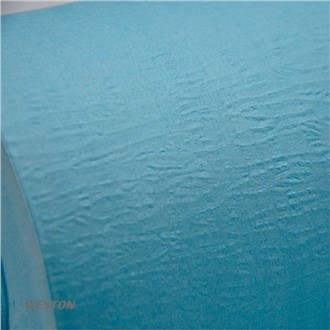
Pulp Lyocell Low Lint Wipes are made from wood-pulp-based lyocell, a cellulosic fiber. Material of this type is typically soft, absorbs quickly and keeps its strength when wet, which suits solvent-wet general-purpose stations.
Typical uses:
Flux residue wipe-down and post-rework cleaning on PCBA.
Fixtures, equipment surfaces and benches.
Cosmetic wipe-down of housings and finished products.
High-volume stations where absorbency and solvent capacity matter.
Need to pick up fine particles, fingerprints and oils? Microfiber Spunlace Cleaning Cloths
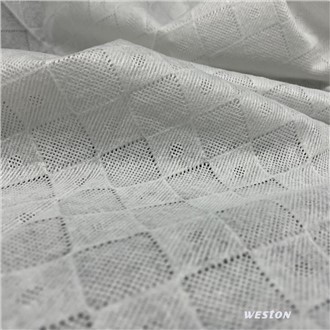
Microfiber Spunlace Cleaning Cloths use an ultrafine-fiber spunlace structure. Microfiber typically picks up fine particles, fingerprints and oils well and leaves a clean surface. It can be used dry or slightly damp.
Typical uses:
Fingerprints and oil on screens, cover glass and optical housings.
Cosmetic cleaning of metal and plastic housings.
Perimeter cleaning around camera-module assembly areas.
Finished-product stations where cleaning effect and appearance both matter.
Which one should I pick? Side-by-side comparison
|
Dimension |
Pulp Lyocell Low Lint Wipes |
Microfiber Spunlace Cleaning Cloths |
|
Material |
Wood-pulp-based lyocell cellulosic fiber |
Ultrafine-fiber spunlace |
|
Main strengths |
Low lint, fast absorption, soft hand |
Fine-particle pickup, fingerprint and oil removal, clean finish |
|
Typical method |
Solvent-wet wiping |
Dry or slightly damp wiping |
|
Typical stations |
PCBA cleaning, fixtures, benches, finished-product wipe-downs |
Screens, cover glass, optical housings, metal and plastic housings |
|
Test before adopting |
Solvent compatibility and shedding comparison |
Surface scratch and residue comparison |
For basis weight, sizes, pack formats and test data, use the current westonNonwoven datasheet.
When should I not rely on these two alone?
Request cleanliness test data, and evaluate a sealed-edge, cleanroom-laundered and cleanroom-packed lint-free wipe in parallel, if any of these applies:
- The surface is sealed or encapsulated right after wiping, with no later chance to remove foreign matter.
- The area is ISO Class 5 or cleaner.
- The customer or an audit requires wiper test data under a cleanroom wiper standard.
How do I control cost without taking on contamination risk?
Three-tier wipe strategy
|
Tier |
Area |
Material |
Control points |
|
A |
Critical cleanroom areas, optics, surfaces before sealing |
Validated lint-free |
Lot-by-lot COA, sealed edge, cleanroom packaging |
|
B |
Regular assembly, PCBA, cosmetic cleaning |
Low-lint spunlace, such as the two westonNonwoven products above |
Solvent compatibility, trial lot, SOP |
|
C |
Equipment maintenance, support areas |
General industrial wipes |
Kept out of tier A and B areas |
Three habits that prevent mix-ups
Use a different color or pack label for each tier.
Issue whole packs to each station; never repack between stations.
Write the wipe model and solvent for each station into the SOP.
What steps should I follow before approving a new wipe?
Define the station and the contaminant: fingerprint, flux residue, oil or particles, and whether the wipe touches an optical surface.
Request the datasheet, test data, lot COA and solvent compatibility statement.
Run the three comparison tests above on the candidate and on your current wipe.
Run a small trial lot and track AOI foreign-material calls, rework rate and lamination defects.
Lock the SOP: solvent quantity, wiping direction, one fresh face per pass and change interval.
Re-verify at every lot change or supplier change.
Quick answers to common questions
Can I flip or reuse a wipe?
No. Fold to a clean face, wipe in one direction and discard after use. Reuse carries captured contamination back onto the surface.
Dry wipe or wet wipe?
It depends on the contaminant. Start with dry or slightly damp wiping for particles and light fingerprints; use solvent-wet wiping for flux residue and oils. Fix the solvent type and amount in the SOP either way.
Does wiping technique affect shedding?
Yes. Wipe in one direction rather than in circles, use even pressure, keep the cut edge off critical surfaces, and move from cleaner to dirtier areas.
Can paper wipes and low-lint wipes be mixed?
No. Shedding, residue and strength differ widely. Store and issue wipes by tier.
Need help matching a wipe to your line?
Send Weston your workstation, solvent, room class and main defect type. We will help match a specification and provide samples for validation on your line.