Driving Innovation in Sustainable Products
During the COVID-19 pandemic, the demand for household disinfecting solutions surged as consumers sought effective and convenient cleaning methods. As the world emerges from the crisis, the household wipes market continues to evolve, reflecting shifting consumer behaviors, a growing focus on sustainability, and advancements in technology.
According to a recent market report by Smithers, titled The Future of Global Wipes 2029, the total sales value of global household wipes is projected to reach $7.9 billion by 2024, consuming 240,100 tons of nonwoven fabric. This positions household wipes as a significant segment within the global nonwoven wipes market, which Smithers estimates will reach $23.1 billion in sales and consume 1.7 million tons of nonwoven fabric by 2024.

Phil Mango, a nonwoven consultant at Smithers, noted that while the demand for household wipes remains high post-pandemic, it has not reached the unprecedented levels seen in 2020-2021, when demand soared by as much as 200% compared to historical standards. Smithers estimates that demand in North America is still approximately 10% higher than pre-COVID levels in 2023.
"COVID-19 introduced many new consumers to disinfecting wipes," Mango stated. "Many of them continue to purchase these products, although the volume may not be as high as during the peak of the pandemic."
As the incidence of diseases and microbial contaminants rises, public sensitivity to such events has also increased. Mango expressed hope that consumers will continue to prioritize disinfection. "Avian flu in beef? Disinfect! New viruses in Southeast Asia? Disinfect! Flu season, measles outbreaks, food contamination? Disinfect!" he emphasized. "In North America, wipes provide a simple and effective means of reassurance in disinfection."
Dr. Julie McKinney, Global Director of Microbiology and Virology at Reckitt, the manufacturer of Lysol disinfecting wipes, commented on the heightened awareness of bacteria since the pandemic, highlighting the importance of regular cleaning and disinfection to prevent the spread of viruses and bacteria. "Consumers are maintaining consistent cleaning and disinfection habits to protect their families, making Lysol disinfecting wipes a top priority," she noted.
Reducing Plastic, Increasing Plant-Based Materials
As governments worldwide strive to limit or ban certain fossil fuel-based single-use plastic products, reducing or eliminating synthetic fibers while increasing plant-based fibers has become a top priority for wipe manufacturers.
EDANA, the global trade association for the nonwoven industry, stated, "Reducing plastic content in the environment is an extremely important goal. At the same time, it is essential to ensure that parents, caregivers, businesses, and the UK's National Health Service (NHS) can continue to benefit from the invaluable functions that wipes provide in hygiene, post-COVID antiviral measures, caregiving, child-rearing, and industrial processes." The association emphasized that reducing plastic must occur without sacrificing manufacturing jobs in communities across the UK, which could lead to losses in investment, competitiveness, and innovation.
What's Inside Wipes?
While convenience remains a primary driver for household wipe demand, consumers are increasingly prioritizing sustainability in their purchasing decisions. Recognizing the environmental impact of disposable wipes, nonwoven fabric manufacturers are introducing eco-friendly alternatives.
According to Mango, the nonwoven fabrics used for cleaning and disinfecting wipes are primarily spunbond/polymer (SP) and standard carded (CC) water-jet nonwovens for brand-name and private-label products, respectively. "However, even in North America, there is a push to reduce or eliminate plastics from consumer wipes, as both types of nonwovens contain plastic (SP typically has one or two layers of spunbond polypropylene, while CC is usually based on viscose/polyester fibers)," he explained.
Similar trends are observed in other categories of household wipes, such as glass and furniture cleaners, as well as floor wipes. He added, "In the floor wipe segment, Glatfelter has developed a potentially useful plastic-free air-laid equipment; some optimization may be necessary."
Sustainability remains a significant consideration for consumers when selecting wipes. A recent "Attitudes and Usage Study" conducted by Nice-Pak, a wipes manufacturer, revealed several sustainability-related motivations influencing consumer purchasing habits. Alec Frisch, Executive Vice President and Chief Commercial Officer at Nice-Pak, stated, "At Nice-Pak, we are continually seeking ways to provide sustainable options for our retail partners across every wipe category."
Frisch emphasized, "As consumers seek quick and effective cleaning and disinfection solutions, convenience will always be a growth driver. They do not want to rely on a roll of paper towels and a bottle of disinfectant each time they clean. Natural formulations and plant-based materials are also important-these are two areas where we continue to focus on innovation."
KTP's Halstead noted that nonwoven suppliers are continuing to develop substrates that utilize more natural ingredients, including pulp and other plant fibers, to meet sustainability standards. "These natural wiping substrates are becoming increasingly robust and fabric-like, leading to greater consumer acceptance," she added.
In the nonwoven sector, Suominen recently launched Biolace, featuring a Nubtex micro-dot pattern specifically designed for applications requiring enhanced cleaning performance. This unique pattern combines sustainable fibers for fluid management, providing superior material design for demanding cleaning tasks. The product is 100% biodegradable and compostable, making it ideal for personal care, home, and workplace use.

Andrew Charleston, Manager of Product Category at Americas, explained, "Compared to standard dot patterns, the Nubtex design offers a larger wear surface area, which helps dislodge dirt and debris, effectively drawing them away from surfaces and skin."
Meanwhile, Turkish nonwoven manufacturer Teknomelt has recently launched a complete neXline wipe production line, provided by Andritz, for producing biodegradable, plastic-free wipes from nonwoven fabric rolls. The carded-carded-pulp (CCP) production line combines the advantages of both water jet and wet-laid technologies, enabling the production of high-performance sustainable wipes using bio-based fibers (such as viscose and wood pulp) that match the technical characteristics and performance of traditional synthetic fiber wipes while protecting the environment. Teknomelt will also benefit from the flexible configuration of this production line, as it can produce pure water-jet, Wetlace CP, or Wetlace CCP, allowing for a variety of different wipes to be manufactured.
Spunlace Fabric
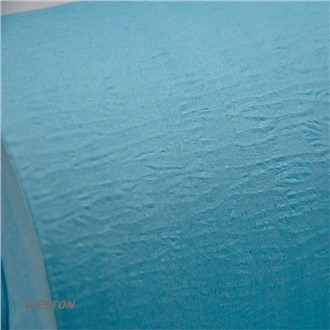
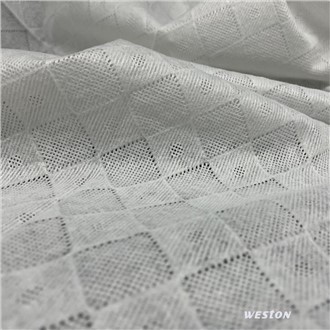
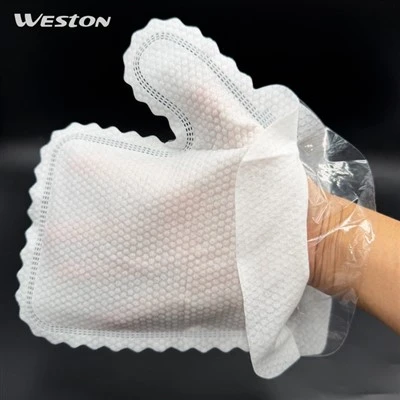
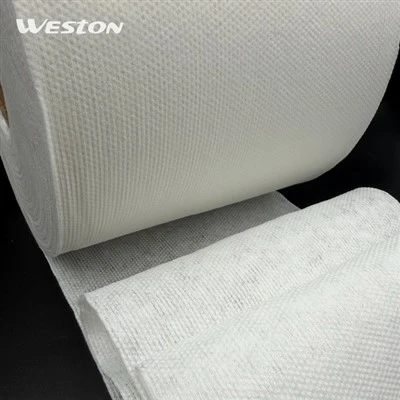
Weston Nonwovens specializes in high-quality spunlace fabric, known for its softness and durability. This innovative material is created through a unique process that entangles fibers, resulting in a versatile product suitable for various applications. From personal care to industrial uses, spunlace fabric stands out for its ability to provide both comfort and strength.