Do Your Kitchen Wipes Leave a Spotless Finish or Sticky Residue?
A kitchen surface can look clean at first glance. But once you run your fingers across it, the truth becomes obvious. Is it smooth and dry, or slightly sticky? This small detail says a lot about how effective your kitchen wipes really are.
Many people assume that if a wipe removes visible dirt, it has done its job. In reality, cleaning is not just about what you see. It is also about what is left behind.

Clean Surface or Hidden Residue?
A spotless finish is more than visual clarity. It reflects how well the wipe removes both dirt and cleaning liquid.
Key signs of a truly clean surface:
No streaks under natural or direct light
No tacky or dragging feeling when touched
Even drying without patches
No lingering chemical or artificial smell
Common signs of residue left behind:
Slight stickiness on contact
Dull or smeared appearance
Faster re-accumulation of grease or dust
This difference often comes from factors users rarely think about: material structure and liquid balance.
Why Do Some Kitchen Wipes Leave Residue?
The issue is not random. It usually comes down to three core causes.
1. Excess or Poorly Balanced Cleaning Agents
Some wipes rely on higher concentrations of surfactants to improve cleaning power. When these agents are not properly balanced, they remain on the surface after wiping.
2. Low Absorption Capacity
If the wipe cannot absorb and lock in liquid effectively, it simply spreads the solution across the surface instead of removing it.
3. Additives That Do Not Fully Evaporate
Fragrance and conditioning agents may improve user experience, but they can leave a thin film. Over time, this film builds up and creates that familiar sticky feeling.
Material Matters More Than Most People Expect
The performance of a kitchen wipe depends heavily on the nonwoven material used.
A well-designed wipe does three things at once:
Lifts dirt from the surface
Absorbs liquid efficiently
Prevents re-deposition
Poor-quality materials fail in at least one of these steps.
What Makes a High-Performance Wipe Material
Uniform fiber distribution for even contact
High absorbency to capture both dirt and liquid
Low linting to avoid secondary contamination
Clean, additive-free fiber composition
This is where advanced nonwoven technologies, especially spunlace, show clear advantages.
A Practical Detail Often Overlooked: Moisture Balance
It is easy to assume that wetter wipes clean better. In practice, the opposite is often true.
Over-saturated wipes:
Leave excess liquid on the surface
Dilute cleaning efficiency
Increase the chance of residue formation
Well-balanced wipes use just enough liquid to clean, without leaving a trace behind.
Simple Ways to Check Your Wipes at Home
You do not need lab tools to evaluate performance. A quick test can reveal a lot.
Try this:
Wipe a clean glass or stainless steel surface
Let it air dry naturally
Observe under light and touch
Results interpretation:
Clear and smooth → good absorption and formulation
Streaks → uneven material or excess solution
Sticky feel → residue left behind

Material Innovation in Kitchen Wipes
Modern kitchen hygiene is moving toward safer and more efficient materials. This is especially important for surfaces that come into contact with food.
Some of the most widely used nonwoven materials include:
Wood pulp + PP blends for strength and absorbency
Viscose + polyester for softness and durability
Bamboo fiber for natural antibacterial properties
Lyocell for high cleanliness and uniform structure
PLA (polylactic acid) for biodegradable solutions
These materials are used in both dry wipes and pre-moistened wipes, depending on application needs.
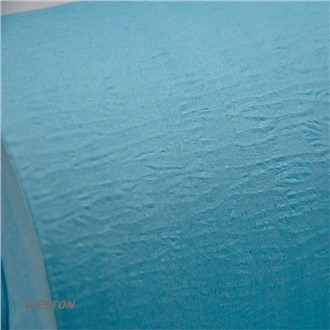
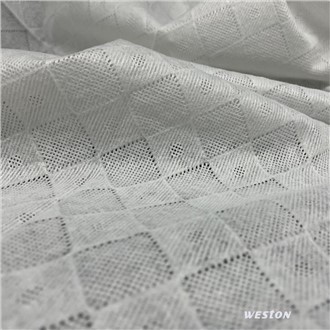
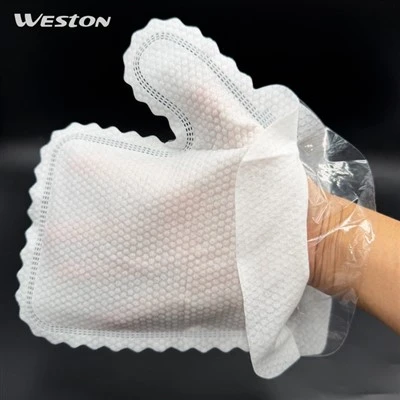
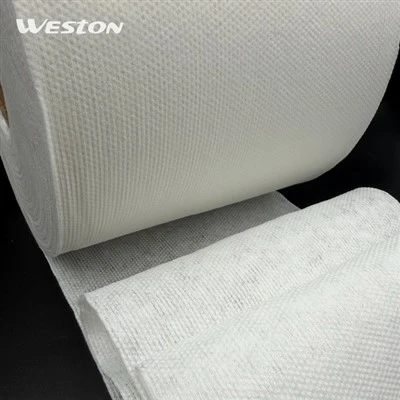
It is worth noting that Weston Nonwoven focuses on producing Hygienic Kitchen Wipes Material using spunlace technology. Their materials are designed with food-contact safety in mind and are available in multiple fiber combinations such as wood pulp PP, viscose polyester, bamboo fiber, lyocell, and PLA, with flexible basis weights for different kitchen cleaning and floor wiping applications. This type of material design helps reduce residue risk by improving absorption and fiber purity.
Common Misunderstandings That Lead to Poor Choices
Some widely held beliefs can actually lead to worse cleaning results.
"More foam means better cleaning"
Foam often indicates excess surfactants, which may leave residue
"Strong fragrance means cleaner surfaces"
Fragrance masks odors but does not improve cleaning performance
"Thicker wipes are always better"
Structure and fiber quality matter more than thickness
What Should a Kitchen Surface Feel Like After Cleaning?
After proper wiping, the surface should feel:
Smooth and dry
Free from any film or resistance
Neutral, without artificial scent
A clean surface should stay clean longer. If it quickly becomes sticky or attracts dust, the wipe may be part of the problem.
In everyday kitchen cleaning, the difference between spotless and sticky is subtle but important. It is not just about removing dirt, but about leaving nothing behind. That result depends less on marketing claims and more on the balance between material quality and formulation.