Do Gynecologists Recommend Feminine Wipes?
Gynecologists do not generally recommend feminine wipes as a necessary part of everyday intimate hygiene, and they do not recommend wiping or washing inside the vagina. The vagina is self-cleaning, while the vulva-the external genital area-can be cleaned gently without aggressive products. The main concern with feminine wipes is therefore not simply whether a wipe is "wet" or "dry," but what the wipe contains, what it is made from, how it is used, and how often it is used.
This distinction matters because a feminine wipe is not automatically harmful just because it is a wipe. At the same time, a product marketed as "gentle," "natural," or "for sensitive skin" is not automatically suitable for every woman. For manufacturers, the goal should be to reduce unnecessary ingredients and mechanical irritation while clearly defining the intended use as external cleansing rather than vaginal cleansing.
1. First, What Are Gynecologists Actually Concerned About?
The first misunderstanding to clear up is that the vagina and vulva are different anatomical areas.
The vagina is the internal muscular canal. It naturally maintains its own environment, and normal vaginal discharge helps remove dead cells and maintain vaginal health. Routine internal cleaning or douching is not necessary.
The vulva is the external genital area, including the labia, clitoris, vaginal opening, and surrounding skin. This is skin that can become irritated by friction, moisture, fragrances, soaps, and other personal-care ingredients.
That means an external cleansing wipe and a product intended to "clean the vagina" should never be treated as the same thing.
A wipe for external hygiene is one category. Vaginal cleansing is another.
This is the foundation for understanding why gynecologists may be cautious about feminine wipes without saying that every wipe is inherently unsafe.

2. Why Are Feminine Wipes Sometimes Discouraged?
The concern is usually related to irritation rather than the physical concept of wiping itself.
Fragrance and Botanical Ingredients
Fragrance is one of the most common concerns because scented personal-care products may irritate sensitive vulvar skin.
A 2022 study examined 34 commercially available feminine hygiene wipes and found that every product reviewed contained at least one potential contact allergen. Fragrances, botanical ingredients, and tocopherol were among the frequently identified ingredients. The study also found that labels such as "natural," "sensitive," or "fragrance-free" did not necessarily mean that a product contained no potential allergens.
This does not mean every woman will react to these ingredients. It means that marketing language alone cannot determine skin compatibility.
Preservatives and the Wet Formula
A wet wipe needs a liquid formulation that remains stable during storage and use. Depending on the formula, this may involve preservatives, surfactants, humectants, fragrances, botanical extracts, or other functional ingredients.
The more ingredients a product contains, the more factors need to be considered for sensitive external skin.
This is why formulation design is important for intimate-care wipes. The objective is not to create the most complicated formula, but to create a formula appropriate for its intended purpose.
Mechanical Friction
Ingredients are only part of the picture.
The vulvar skin can also be irritated by repeated rubbing. NHS vulval-care guidance commonly advises gentle washing and avoiding rough fabrics or vigorous rubbing because friction can aggravate sensitive skin.
Therefore:
A wipe can be chemically gentle but mechanically irritating, or mechanically soft but contain unnecessary ingredients.
Good product design needs to consider both.
3. Wet Does Not Automatically Mean Unsafe, and Dry Does Not Automatically Mean Better
Women sometimes assume that dry wipes are safer because they contain no cleansing liquid. That can reduce some formulation-related concerns, but it does not make every dry wipe automatically suitable for intimate care.
The same principle applies to wet wipes.
Wet Wipes
A wet wipe offers convenience because the cleansing solution is already applied to the substrate.
Its performance depends on two parts:
The nonwoven substrate
The liquid formulation
Both need to be considered separately.
Dry Wipes
A dry wipe generally has fewer formulation-related variables because there is no pre-added wet lotion or cleansing solution.
However, the substrate itself still matters. Surface roughness, fibre structure, lint, absorbency, softness, and wet strength can all affect the wiping experience.
Therefore, the more useful comparison is not:
Wet = bad / Dry = good
but:
|
Consideration |
Wet Wipe |
Dry Wipe |
|
Ready-to-use convenience |
High |
Depends on use |
|
Added formulation |
Yes |
Usually no |
|
Preservative considerations |
Relevant |
Much lower |
|
Fragrance considerations |
Depends on formulation |
Usually easier to avoid |
|
Substrate softness |
Important |
Important |
|
Mechanical friction |
Needs attention |
Needs attention |
|
Intended use |
Should be clearly defined |
Should be clearly defined |
The product format is only one part of the safety and comfort equation.
4. Are Feminine Wipes Necessary for Daily Hygiene?
For most healthy women, no.
Everyday external hygiene does not require repeatedly wiping the vulva throughout the day. ACOG advises gentle vulvar care and specifically advises against baby wipes, feminine sprays, deodorants, and douching. For mild irritation, ACOG states that clear water may be adequate.
Several NHS vulval-care resources similarly advise avoiding wet wipes, scented products, and excessive washing because these can irritate the vulval skin.
This does not mean a wipe has no practical purpose.
There is an important difference between medical necessity and convenience.
A woman may want an external cleansing wipe when:
- travelling
- using a public bathroom
- changing menstrual products
- exercising
- when water is temporarily unavailable
- during other situations where quick external cleanup is convenient
The wipe is being used as a convenience product, not as a replacement for the body's natural vaginal cleaning process.
5. What About Feminine Wipes During Menstruation?
Menstruation is one situation in which external cleansing products may seem particularly useful.
Blood, sweat, moisture, and prolonged contact with menstrual products can make external cleaning more convenient. However, the purpose should remain simple:
Clean the external skin when necessary.
It should not become an attempt to remove every natural secretion or odor.
Normal vaginal discharge is common, usually clear to white, and changes during the menstrual cycle. A certain amount of vaginal odor is also normal. A strong or unusual odor, particularly when accompanied by changes in discharge or discomfort, can indicate a condition that requires medical assessment rather than more aggressive cleaning.
This is an important consumer message because repeated wiping cannot treat the underlying cause of unusual odor, itching, burning, or abnormal discharge.
6. Can Feminine Wipes Prevent Vaginal Infections?
No wipe should be presented as a treatment for a vaginal infection.
The vagina has its own microbial environment, and routine vaginal cleansing is not necessary. Douching can disrupt the vaginal environment, which is why major clinical guidance advises against it.
A wipe also should not be used to cover up symptoms such as:
- persistent itching
- burning
- unusual discharge
- significant changes in odor
- swelling
- sores
- persistent vulvar pain
These symptoms have multiple possible causes, including infections and dermatological conditions, and require proper assessment when they persist.
The right message for consumers is therefore:
A wipe can provide external cleaning convenience, but cleanliness is not the same as medical treatment.
7. What Makes a More Suitable Feminine Wipe?
For products designed for external feminine or intimate care, product development should focus on reducing unnecessary exposure and friction.
1. A Simple and Purpose-Driven Formula
A formulation should contain ingredients for a defined functional reason.
For external intimate-care applications, manufacturers may consider factors such as:
- fragrance-free options
- appropriate cleansing systems
- controlled moisturizing properties
- preservation requirements
- compatibility with the intended skin-contact application
The exact formula should depend on the intended use, regulatory requirements, target market, and testing results.
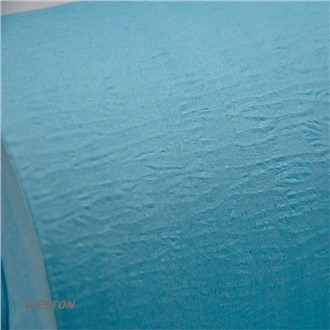
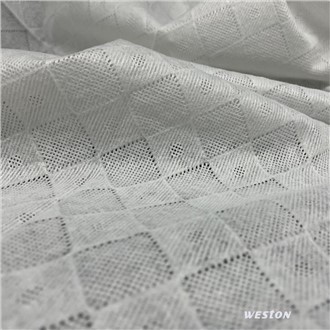
2. Soft Nonwoven Substrate
A soft substrate can help reduce the mechanical discomfort associated with wiping.
The substrate should be evaluated for:
- softness
- surface structure
- absorbency
- wet strength
- lint level
- thickness
- basis weight
This is where nonwoven engineering becomes relevant.
3. Appropriate Absorbency
More absorbency is not automatically better.
A wipe intended for external cleansing needs a balance between liquid retention, controlled release, softness, and wiping performance.
The ideal structure depends on the application and the formulation.
4. Low-Lint Performance
Low lint can be particularly useful for personal-care products because consumers generally expect the material to remain clean and intact during use.
However, low lint should be evaluated together with softness and surface feel rather than treated as an independent marketing claim.
8. Can the Nonwoven Material Be Customized?
Yes. For manufacturers developing feminine wipes and other personal-care wipes, the nonwoven substrate can be customized according to the required performance.
Different fibres offer different characteristics, so the material should be selected according to the final application rather than simply choosing the most "natural" or "plant-based" fibre.
Potential options include:
|
Nonwoven Material |
Possible Development Considerations |
|
PLA |
Plant-derived fibre option; biodegradability and processing requirements should be considered |
|
Bamboo Fiber |
Can provide a plant-fibre option with a soft hand feel depending on construction |
|
Lyocell |
Known for softness and liquid management characteristics |
|
Viscose |
Common option where softness and absorbency are important |
|
Polyester/Cellulose Blends |
Can balance strength, absorbency, and cost depending on the ratio |
The most appropriate fibre is determined by the intended product specifications, production process, regulatory requirements, and performance testing.
Importantly, a fibre being plant-derived or biodegradable does not automatically make a finished wipe medically suitable for intimate use. Skin-contact suitability still depends on the complete substrate, formulation, manufacturing process, packaging, and applicable testing.
9. Wet Wipe and Dry Wipe Formulations Can Be Developed Differently
A major advantage of custom manufacturing is that the substrate and the formulation do not have to be treated as a fixed combination.
For wet wipes, the development process can consider:
- fibre composition
- fibre ratio
- basis weight
- nonwoven pattern
- softness
- absorbency
- lotion or cleansing solution
- preservation system
- packaging format
- dispensing design
For dry wipes, development may focus more heavily on:
- fibre selection
- fibre blending ratio
- basis weight
- softness
- surface texture
- absorbency
- lint control
- sheet dimensions
- folding configuration
- packaging
This allows product developers to build a wipe around a specific application instead of simply putting a standard nonwoven into a different package.

10. Custom Feminine Wipes Need More Than a Customized Formula
The finished product is the result of several connected decisions.
For example:
Fibre → Nonwoven Structure → Basis Weight → Sheet Size → Folding → Liquid Formula → Packaging → Dispensing → Final Use
Changing one part can affect the others.
A higher basis weight may change absorbency and hand feel. A different fibre ratio may change strength and liquid management. A different lotion may change how the wipe releases liquid. A new folding format may affect how consumers pull the next sheet from the pack.
This is why intimate-care wipe development is better viewed as a system rather than a single material choice.
11. Weston Nonwoven's Customization Approach
With more than 20 years of experience in nonwoven customization and manufacturing, Weston Nonwoven works across both nonwoven substrates and finished wipe products.
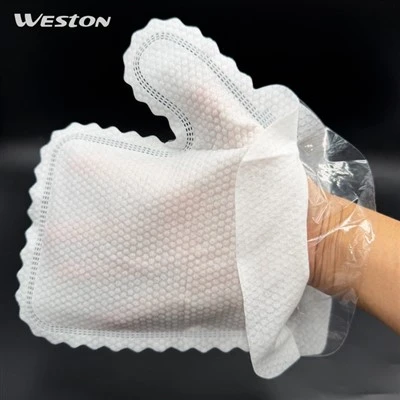
For customers developing external feminine-care or other personal-care applications, Weston can customize wet wipes and dry wipes according to the required product specifications, including the nonwoven material, fibre ratio, basis weight, sheet dimensions, packaging format, and logo printing.
Depending on the application, material options can include PLA, Bamboo Fiber, Lyocell, viscose, and other fibre combinations.
The formulation can also be developed according to the customer's requirements. For wet wipes, the cleansing or moisturizing solution can be specified alongside the substrate. For dry wipes, the focus can be placed on the fibre composition, softness, absorbency, thickness, surface structure, and other physical properties.
Customers looking for broader personal-care wiping solutions can also explore Hygienic Wipes as part of a customized nonwoven product development program.
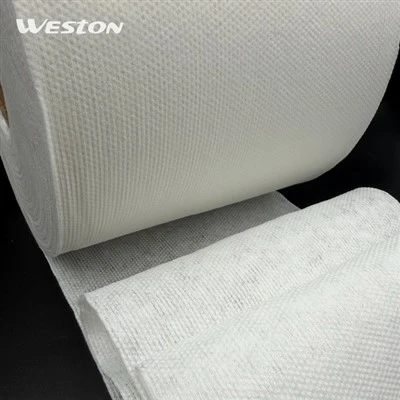
For projects that require more flexibility in downstream converting, Weston can also supply Personal Care & Hygiene materials in different forms, from customized nonwoven substrates and uncut jumbo rolls to converted finished wipes.
The objective is not to assume that one material or one formulation works for every intimate-care product. Instead, the material, formula, construction, and packaging can be developed around the specific application.
12. What Should Buyers Ask a Feminine Wipe Manufacturer?
Before selecting a supplier, buyers can ask several practical questions.
About the Substrate
What fibre composition is used?
What is the basis weight?
How soft is the finished nonwoven?
What is the lint performance?
What is the absorbency and wet strength?
Can the fibre ratio be customized?
About the Wet Formula
Is the formulation fragrance-free?
What is the purpose of each major functional ingredient?
What preservation system is used?
Can the formula be customized?
What testing supports the intended application?
About the Finished Product
What folding format is available?
Can the sheet size be customized?
What packaging formats are available?
Can the package include customer branding and logo printing?
Can the supplier provide both jumbo rolls and converted finished wipes?
These questions are more useful than simply asking whether a product is labeled "feminine," "natural," or "sensitive."
13. Feminine Wipes: The Practical Takeaway
The question "Are feminine wipes safe?" is too broad to have one answer.
For routine vaginal hygiene, wipes are unnecessary because the vagina naturally cleans itself. For external vulvar care, medical guidance generally emphasizes gentle cleaning and avoidance of irritants, particularly fragranced and other potentially irritating products.
For manufacturers, this does not mean there is no place for wet wipes or dry wipes.
It means the product should be designed around the actual use case:
external use, appropriate ingredients, soft nonwoven materials, controlled friction, suitable absorbency, and clear product positioning.
Wet wipes and dry wipes can also be developed differently. There is no need to assume that one format is universally better.
The more important question is whether the complete product-from fibre and nonwoven structure to formulation and packaging-has been designed for its intended application.
Frequently Asked Questions
Do gynecologists recommend feminine wipes?
Gynecologists do not generally recommend feminine wipes as a necessary part of routine intimate hygiene. ACOG advises against baby wipes, feminine sprays, vaginal deodorants, and douching, while emphasizing gentle vulvar care.
Can feminine wipes be used on the vulva?
A wipe intended specifically for external use is different from a product intended to clean inside the vagina. External use should follow the product instructions, while internal vaginal cleansing should not be treated as routine hygiene.
Are dry wipes safer than wet wipes?
Not automatically. Dry wipes eliminate many formulation-related considerations, but the physical properties of the nonwoven-especially softness and friction-still matter.
Are fragrance-free wipes always safe?
No. "Fragrance-free" does not guarantee that every ingredient will be suitable for every person. A study of 34 feminine hygiene wipes found potential contact allergens in all products analyzed, and product labels did not reliably indicate the absence of potential allergens.
Can feminine wipes prevent vaginal infections?
No. Wipes are cleansing products, not treatments for vaginal infections. Persistent itching, unusual discharge, strong odor, burning, or pain should be evaluated rather than repeatedly cleaned with wipes.
Can a nonwoven wipe be customized for intimate-care applications?
Yes. Depending on the intended application, a manufacturer can customize fibre type and ratio, basis weight, softness, absorbency, sheet dimensions, folding, packaging, logo printing, and other specifications. The final product still needs to be evaluated according to its intended use and applicable requirements.
What materials can be used for customized feminine wipes?
Possible nonwoven materials include PLA, Bamboo Fiber, Lyocell, viscose, and different fibre blends. The right choice depends on the required softness, absorbency, strength, lint performance, sustainability objectives, and manufacturing specifications rather than on fibre type alone.
What should I do if a wipe causes burning or itching?
Stop using the product and avoid other potential irritants. Persistent or significant symptoms should be discussed with a healthcare professional because vulvar irritation can have several causes.