Why pH 6.5–7.5 and Xylitol-Free Formulas Matter for Pet Wipe Brands
Pet wipes look simple: a nonwoven cloth, a lotion and a resealable pack. Yet the products that survive repeat purchases, buyer audits and veterinary scrutiny share three traits: a formula that respects pet skin pH, an ingredient list that stays safe when a pet licks it, and a fabric that does not shed lint or tear in use. This guide explains why pH 6.5–7.5 and xylitol-free formulation matter, how to verify both, and why the nonwoven carrier decides whether a good formula actually reaches the customer intact.
Quick Answers for Busy Product Teams
- Target pH: Pet skin is more neutral than human skin, which makes pH balanced pet wipes 6.5-7.5 a practical formulation window for dog and cat wipes.
- Xylitol: Harmless to people, dangerous to dogs. A claim of xylitol-free dog wipes needs ingredient declarations and batch records behind it, not just a line on the label.
- Alcohol: Pets lick paws, legs and coats after wiping. An alcohol-free lick-safe pet formula removes a drying, stinging and ingestible ingredient from the equation.
- Standard: The GB/T 27728.1-2024 testing standard has a dedicated pet wipe section, but it does not screen for xylitol or define "lick-safe". You have to add those checks yourself.
- Carrier: The best formula still fails if the nonwoven sheds fibers, tears on a muddy paw, or arrives without a compliance report.
Why Does pH Matter So Much in a Pet Wipe?
How Is Pet Skin Different from Human Skin?
Human skin is slightly acidic. Dog skin sits closer to neutral, is thinner than ours and renews faster, so it reacts sooner to products tuned for people. Published pH figures vary by source, breed, body site and skin condition, but they consistently place pet skin on the more neutral side.
|
Skin type |
Commonly reported surface pH |
What it means for wipe design |
|
Human |
Roughly 4.0–6.0 |
Human "mild" and baby wipes are tuned to this acidic range |
|
Dog |
Roughly 5.5–7.5 (veterinary sources often cite 6.2–7.5) |
Neutral to slightly alkaline formulas fit better |
|
Cat |
Commonly grouped with dogs at about 6.2–7.5 |
Same neutral window; ask a veterinary dermatologist about sensitive cats |
Reference ranges as reported by the American Kennel Club and VCA Animal Hospitals.
What Goes Wrong When a Pet Wipe Is Too Acidic or Too Alkaline?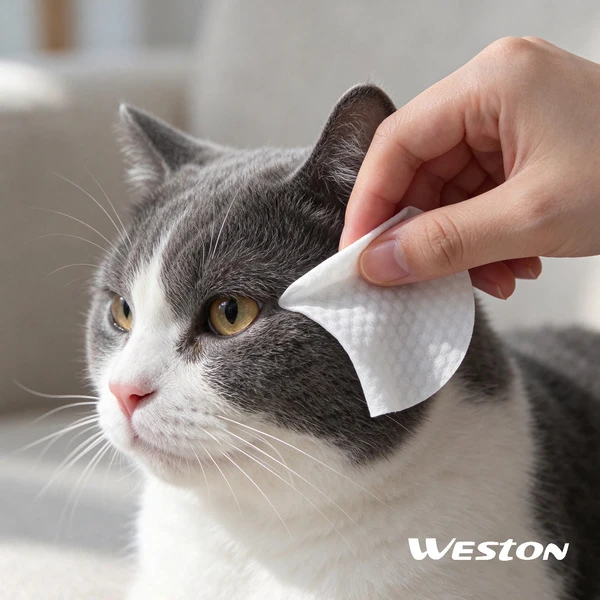
A wipe is a rinse-free product. Whatever is in the lotion stays on the coat and skin after wiping, and may be licked off later. That makes pH more important than it is for a shampoo that gets rinsed away. A mismatched pH is typically associated with:
Dry, flaky skin and a dull coat after repeated use
Itching, redness and extra paw licking that owners blame on the wipe
A weakened skin barrier and a friendlier environment for yeast and bacterial overgrowth
Stinging on skin that is already irritated, such as hot spots or sore paw pads
Complaints, returns and negative reviews that are hard to trace back to "just pH"
Is pH 6.5–7.5 the Right Target for pH Balanced Pet Wipes?
For most dog and cat wipes, yes, as a formulation design window. It sits inside the neutral range reported for pet skin, leaves margin for small pH drift during storage, and avoids the acidic territory that suits human skin. Three honest caveats:
It is a design target, not a legal limit. The public summaries of GB/T 27728.1-2024 we reviewed cite a 4.0–8.5 range for adult wipes but do not give a fixed pH range for pet wipes. Always confirm against the official text.
Once it is printed on the pack, it becomes a testable claim. The standard measures pH with a pH meter (GB/T 1545-2008), and products that declare a pH are assessed against it.
Pets with skin conditions need a veterinary view. Medicated or therapeutic wipes belong to a different regulatory category.
How Do You Keep pH Stable from Factory to Shelf?
Buffer the lotion. A mild buffer system stops small changes in water quality, preservatives or fabric from shifting the pH.
Measure the finished wipe, not only the bulk lotion. Fibers and finishing agents can nudge the pH once the lotion has equilibrated with the nonwoven.
Test aged samples. Check pH at release and again after stability or accelerated-aging storage.
Protect it with packaging. A well-sealed lid limits evaporation and contamination that would shift pH and liquid content.
Record it. Put the batch pH, method and date on every certificate of analysis.
Why Is Xylitol a Deal-Breaker for Dog Wipes?
What Does Xylitol Actually Do to Dogs?
Xylitol is a sugar alcohol used in sugar-free gum, candy and oral-care products. In most mammals it barely affects insulin, but in dogs it triggers a rapid, dose-dependent insulin release that can cause profound hypoglycemia. According to the Merck Veterinary Manual, doses above roughly 100 mg/kg have been associated with low blood sugar, and some dogs that ingest more than about 500 mg/kg develop severe liver injury. Signs can appear within 30 minutes. The same source reports dogs are the only domestic species in which xylitol toxicosis has been documented, and cats are not at risk of these effects.
One wipe on a large dog is a very different exposure from a small dog tearing into a whole pack, and a brand cannot control which scenario happens. That is why the safe design decision is to exclude xylitol entirely rather than to argue about thresholds.
Why Does Xylitol Show Up in Wipe Formulas at All?
Xylitol is used in human personal care as a humectant and moisturizer, and veterinary references list cosmetics, deodorants, skin gels and hair-care products among its non-food uses. Pet wipe brands usually inherit it by accident:
Borrowing a human-care or baby-wipe formula as a starting point
"Natural moisturizing complexes" blended by raw-material suppliers, where xylitol is not obvious on the spec sheet
Contract formulation done without a pet-specific exclusion list
Reusing a legacy lotion across several product lines
How Do You Prove a Wipe Is Truly Xylitol-Free?
Collect full ingredient disclosure for every raw material, including pre-blended complexes.
Get a signed supplier declaration that no xylitol is present.
Write xylitol into your purchase specification as a prohibited ingredient, with change control so no one swaps a humectant later.
Ask a veterinary toxicologist to review xylitol derivatives and similar-sounding humectants before approving them.
Add an analytical test of the finished lotion, per batch or at regular intervals, for the strongest evidence.
Make sure the label wording matches the evidence you actually hold.
What Makes an Alcohol-Free, Lick-Safe Pet Formula?
Why Is Alcohol a Problem in Wipes Pets Will Lick?
Ethanol and isopropanol give a quick-drying, "clean" feel that suits human hands. On pets they dry the skin and strip surface lipids, sting on hot spots or cracked paw pads, carry a sharp smell animals dislike, and end up in the mouth because pets groom themselves after wiping. An alcohol-free lick-safe pet formula avoids all of this and lets you combine the pH 6.5–7.5 window with gentle humectants instead of drying solvents. One clarification worth putting in your specification: "alcohol-free" should mean no ethanol or isopropanol. Fatty alcohols such as cetyl alcohol are emollients, not drying solvents, and should be treated separately.
How Do You Back Up a "Lick-Safe" Claim?
"Lick-safe" is a marketing term. In the national standard summaries we reviewed, we did not find a definition for it. A defensible claim rests on a documented dossier:
A written exclusion list (see the table below)
A review by a veterinary toxicologist or qualified safety assessor
A preservative system suited to pets that avoids methylisothiazolinone and methylchloroisothiazolinone, which public summaries of GB/T 27728.1-2024 list among controlled items
Test reports covering heavy metals, microbial limits and chemical residues
Clear label guidance: how to use the wipe, which areas to avoid (eyes, open wounds) and when to see a vet
Which Ingredients Belong on Your Exclusion List?
|
Ingredient |
Concern |
Recommended approach |
|
Xylitol |
Toxic to dogs: hypoglycemia and liver injury |
Exclude; confirm pre-blends and derivatives |
|
Ethanol, isopropyl alcohol |
Drying, stinging, ingestion when licked |
Exclude for lick-safe positioning |
|
Essential oils (for example tea tree) |
Widely flagged by veterinary poison-control services, especially for cats |
Avoid; keep any fragrance very mild and pet-tested |
|
Phenolic compounds |
Cats are particularly sensitive |
Avoid, especially for dog-and-cat products |
|
Methylisothiazolinone / methylchloroisothiazolinone |
Sensitizing preservatives; controlled in GB/T 27728.1-2024 |
Exclude; choose a pet-appropriate preservative system |
|
Heavy fragrance and dyes |
Skin irritation and licking-related ingestion |
Minimize or omit |
Treat this as a starting point, not a complete safety assessment. Have your final formula reviewed by a qualified professional.
How Does GB/T 27728.1-2024 Apply to Pet Wipes?
What Is the Standard, and Is It Mandatory?
GB/T 27728.1-2024, "Wet wipes and similar products – Part 1: General requirements", was published on 29 September 2024 and took effect on 1 October 2025, replacing the 2011 wet wipes standard. It covers wipes made from nonwoven fabric, dust-free paper or other materials. Section 5.3 sets out special requirements for pet wipes: intrinsic quality, microbial limits and appearance. Baby wipes and disinfecting wipes are handled in Part 2 and Part 3.
The "GB/T" prefix marks a recommended national standard, so it is not compulsory by itself. It does become a commitment once you cite it on your label, contract or test report, and buyers often ask for it.
Which Pet Wipe Parameters Does It Test?
The table below is based on public technical summaries. Confirm exact limits and exceptions in the official standard text.
|
Parameter |
What is checked |
Why it matters to a pet wipe brand |
|
Appearance |
Clean surface; no damage, foreign matter or stains |
Lint and contamination complaints |
|
Dimensions |
Length and width deviation not worse than –10% |
Consistent sheet size across batches |
|
Liquid content |
At least 1.7 times the dry weight (check exceptions for certain pulp-based substrates) |
Enough lotion to clean without dripping |
|
pH |
Measured by pH meter (GB/T 1545-2008); assessed when a pH is declared |
Supports your 6.5–7.5 claim |
|
Heavy metals |
Lead, arsenic, cadmium, mercury |
Pets lick coats and paws |
|
Chemical residues |
Benzene, toluene, xylene, formaldehyde, methanol, phthalates |
Residual solvents and process chemicals |
|
Fluorescent substances |
Migratable fluorescent substances not detected |
Avoids whitening-agent residues |
|
Restricted preservatives |
Methylisothiazolinone and methylchloroisothiazolinone |
Sensitizing preservatives |
|
Microbial limits |
Total bacteria up to 200 CFU/g, fungi up to 100 CFU/g; E. coli, S. aureus and P. aeruginosa not detected |
Skin and digestive safety |
|
Packaging seal |
Seal and leak performance |
Prevents drying out and contamination |
|
Transverse tensile strength |
Strength of the sheet (general requirement) |
Tearing during use |
What Does the Standard Not Tell You?
- It does not screen for xylitol. None of the parameter lists we reviewed include it.
- It does not define "lick-safe" or, as far as we have seen, ban ethanol in pet wipes.
- It does not set a pet-specific pH target. It tests the pH you declare.
- It does not replace the rules of your destination market (for example the EU, UK or US), where claims, labeling and ingredient rules can differ.
So treat the GB/T 27728.1-2024 testing standard as your baseline, and write xylitol-free, alcohol-free and pH 6.5–7.5 into your own purchase specification on top of it.
How Do You Read a Test Report Before You Order?
- It cites GB/T 27728.1-2024, not the superseded 2011 edition.
- It was run on the finished product (lotion and fabric together), not on the lotion alone.
- It states the pH method and result, with the lot number.
- It covers the pet wipe items: microbial, heavy metals, chemical residues and fluorescent substances.
- It was issued by an accredited laboratory, with sample ID and report date.
- It is supplemented by your own xylitol and alcohol declarations or analytical results.
Why Can a Perfect Formula Still Fail? The Nonwoven Carrier Problem
Why Do Some Pet Wipes Shed Lint or Tear on First Use?
Brands often discover carrier problems only after launch: fibers on dark coats, wipes shredding on rough paw pads, sheets drying out in the pack. A lotion is only as good as the cloth that carries it. Common causes:
Weak bonding leaves loose fibers that detach in use or get licked off, which is both a cosmetic and an ingestion concern
Basis weight too low for muddy paws and thick coats
A fiber blend that does not match the lotion's absorbency and release needs
Finishing agents or binders that react with the lotion or push the pH out of range
Inconsistent roll quality between batches, causing variable thickness, strength and liquid pickup
A supplier who cannot produce compliance reports, so your purchasing team cannot sign off
Which Nonwoven Technology Suits Pet Wipes?
|
Technology |
How it is bonded |
Typical behavior in pet wipes |
|
Spunlace (hydroentangled) |
High-pressure water jets entangle the fibers; no chemical binder required |
Soft, drapable, generally low-linting, good wet strength |
|
Chemical-bonded |
Fibers held together with a binder |
Binder residue and stiffness can be concerns |
|
Thermal-bonded |
Heat fuses the fibers |
Usually stiffer and less absorbent, rarely ideal for skin contact |
|
Airlaid |
Fluff pulp web, usually bonded with binder |
Very absorbent but bulky; wet strength and linting need attention |
What Should You Ask a Nonwoven Supplier Before Placing an Order?
- Which bonding process do you use, and is any chemical binder involved?
- What is the fiber composition, and are any finishing agents applied?
- Can you share lint and wet-strength data under realistic use conditions?
- Does the substrate stay neutral after soaking in a buffered, alcohol-free lotion?
- Have you tested compatibility with pH 6.5–7.5 formulas?
- Can you provide test reports or supporting data aligned with GB/T 27728.1-2024?
- How do you ensure batch traceability and consistent roll specifications?
- Can you supply samples and customize the substrate before bulk orders?
How Does Weston Nonwoven Help Pet Wipe Brands Close the Gap?
Why Is Spunlace a Strong Carrier for Pet Wipes?
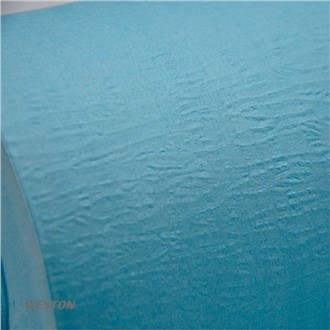
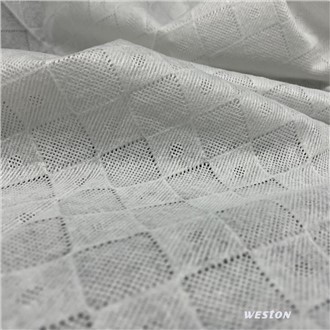
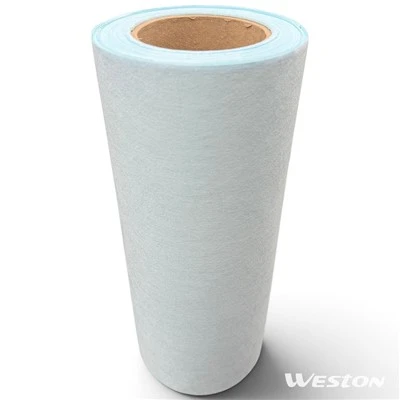
Spunlace nonwoven is formed by entangling fibers with high-pressure water jets, so the web holds together without chemical binders. For pet wipes that translates into practical advantages: a soft hand on skin, low fiber shedding, strong wet performance on rough surfaces, even absorption and release of water-based, alcohol-free lotions, and no binder residue to interfere with your pH target. Weston Nonwoven produces spunlace nonwoven fabric as the carrier for wet wipes, so the cloth can be matched to the formula rather than the other way around.
The same spunlace base also supports other wipe formats. Disposable Rinse-Free Bathing Wipes Gloves show how a larger, hand-shaped wiping surface can deliver whole-body, rinse-free cleaning, a format pet brands can adapt for bath-free coat cleaning.
What Can Be Customized for Your Brand?
Typical points to discuss with Weston's technical team include:
Fiber blend (for example viscose, polyester or blends) chosen for absorbency, softness and strength
Basis weight, matched to the wiping task and lotion loading
Surface pattern, such as plain, mesh or embossed textures for scrubbing action
Color and whiteness requirements, kept in line with fluorescent-substance limits
Roll width, length and core size to fit your converting line
Technical documentation and sample support for your compliance file
Whether you are choosing a private label pet wipes manufacturer or sourcing fabric for your own converting line, ask for samples and a written test plan up front.
What Does the Path from Concept to Compliant Product Look Like?
Define your target markets and claims: pH 6.5–7.5, xylitol-free, alcohol-free, lick-safe positioning.
Write the purchase specification, including the exclusion list and the test items from GB/T 27728.1-2024.
Select the substrate: fiber blend, basis weight and pattern.
Run samples with your lotion and test pH, lint, tensile strength and liquid content on the finished wipe.
Verify stability with aged samples and a packaging seal check.
Send finished-product samples to an accredited lab for the full report.
Move to pilot and production with batch records and certificates of analysis.
Frequently Asked Questions
Can I Use Baby Wipes on My Dog?
It is not ideal. Baby wipes are formulated for human skin pH and may contain fragrance, essential oils or humectants that were never reviewed for pets. A wipe designed for pets is the safer choice, especially for paws and faces that get licked.
Is Xylitol Also Dangerous for Cats?
Veterinary references report that cats are not at risk of xylitol-induced hypoglycemia or liver injury. For any brand that sells to dog owners, or to mixed-pet households, a single xylitol-free policy is still the simplest and safest rule.
Does the 6.5–7.5 pH Range Apply to Cats Too?
Reported cat skin pH is commonly grouped with dogs in the neutral range, so the same window is a reasonable starting point. For sensitive or medical cases, confirm with a veterinary dermatologist.
Does "Alcohol-Free" Mean No Alcohol-Based Ingredients at All?
Not necessarily. In pet wipes it should mean no ethanol or isopropanol. Fatty alcohols used as emollients are chemically different. State your definition in the specification so suppliers and customers read it the same way.
Is GB/T 27728.1-2024 Required to Sell Pet Wipes?
As a recommended national standard, it is not compulsory on its own. It becomes binding in practice when you cite it on labels or contracts, and buyers often request test reports against it. Your destination market may have separate legal requirements.
How Can I Check the pH of a Wipe Myself?
Extract liquid from a finished wipe and measure it with a calibrated pH meter, which is the method the standard references (GB/T 1545-2008). For commercial claims, use an accredited laboratory and keep the report on file.