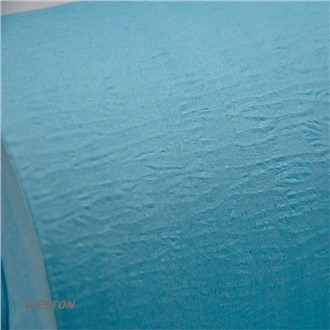
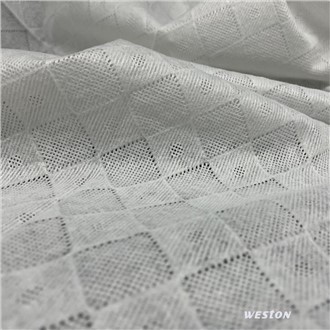
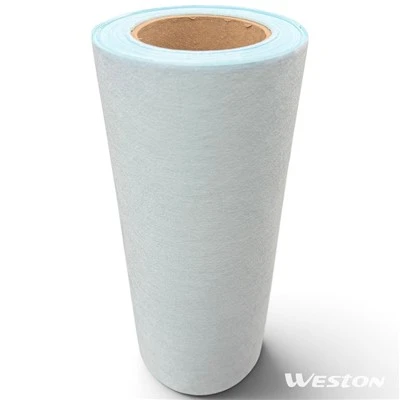
A high-quality plain pattern woodpulp nonwoven fabric should not be judged by appearance, GSM, or softness alone. The most reliable evaluation combines fiber composition, surface uniformity, absorbency, wet strength, lint control, dimensional consistency, converting performance, and batch stability. A good sample should not only look clean and even; it should also deliver stable performance during actual wiping, cutting, folding, rewinding, or other converting processes.
Why High Quality Is Harder to Identify Than It Looks
Woodpulp nonwoven fabric can look very similar from one supplier to another, even when the actual performance is quite different. This creates a common purchasing problem: a sample may look acceptable during initial inspection but perform poorly after wetting, repeated wiping, or large-scale conversion.
Several common assumptions can lead buyers in the wrong direction:
Higher GSM does not automatically mean better absorbency.
A whiter surface does not automatically mean cleaner material.
Softer hand feel does not guarantee better durability.
A smooth surface does not prove uniform internal structure.
A good sample does not guarantee consistent bulk production.
For this reason, quality evaluation should move from visual inspection to physical testing and finally to real application trials.
1. Start With the Raw Material
The first question should be simple: What exactly is in the fabric?
Woodpulp is valued for its ability to absorb and hold liquids, but the final performance depends on more than simply stating that woodpulp is present. Buyers should understand the fiber composition, material ratio, and consistency of the raw materials used in production.
A supplier should be able to clearly explain the fabric composition and the intended performance of the material. If the exact fiber ratio is unclear, it becomes difficult to compare products from different manufacturers or understand why performance changes between batches.
Raw material consistency is equally important. Even when the nominal specification remains the same, changes in raw material quality can affect absorbency, strength, softness, and fiber release.
2. Check Fibre Distribution and Surface Uniformity
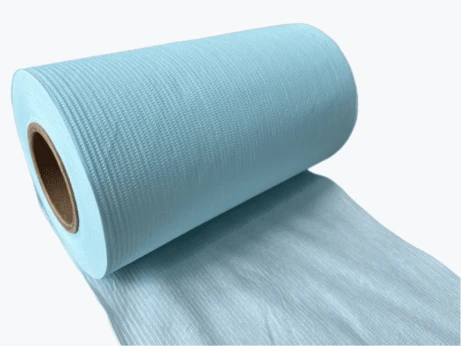
Plain pattern materials are useful for inspection because the relatively simple surface makes irregularities easier to see.
A high-quality fabric should have a relatively uniform surface without obvious:
Fibre clumps
Thin spots
Holes or pinholes
Dark or pale streaks
Loose fibres
Uneven edges
Noticeable thickness differences
The key point is that surface appearance is only the first layer of inspection. The real concern is whether fibers are distributed consistently throughout the web.
Uneven fiber distribution can create weak areas, inconsistent absorbency, and variations during wiping. A roll may feel perfectly acceptable at one location while another section behaves differently.
That is why buyers should inspect samples from different positions instead of judging an entire roll from one small piece.
3. Do Not Judge Quality by GSM Alone
GSM is one of the easiest specifications to measure, which is why it often receives too much attention during purchasing.
However, two materials with the same GSM can have noticeably different performance. Fiber type, fiber distribution, bonding structure, thickness, porosity, and hydroentanglement all influence how the material behaves.
A useful purchasing approach is to stop asking only:
"What is the GSM?"
and also ask:
"What performance does this GSM provide?"
For example, a lightweight material with good fiber distribution and effective structure may absorb liquid efficiently while remaining easy to convert. A heavier material may not necessarily provide the same practical benefit for a particular application.
GSM should therefore be treated as a basic specification, not a final quality judgment.
4. Test Absorbency, Not Just Water Uptake
Absorbency is one of the most important reasons woodpulp nonwoven materials are selected, but "absorbs water quickly" is not a complete quality statement.
There are several different aspects to consider:
Wetting speed indicates how quickly liquid spreads into the material.
Absorption capacity indicates how much liquid the material can take up.
Liquid retention shows how well the material holds the absorbed liquid.
Wet handling performance reveals whether the fabric remains usable after saturation.
A simple comparison can begin with a controlled drop test. Place the same amount of liquid on samples with the same dimensions and observe how quickly the liquid penetrates and spreads.
For more demanding applications, laboratory testing should be used to establish repeatable performance data.
5. Check Wet Strength Under Real Use Conditions
One hidden weakness of absorbent materials is that they may behave well when dry but become fragile after absorbing liquid.
This is why wet strength deserves separate attention.
After wetting, a good material should maintain sufficient integrity for the intended wiping or cleaning process. It should not immediately tear, break apart, or release excessive loose fibers.
A practical test is to wet the same-size samples and manually handle them under controlled conditions. For industrial purchasing, wet tensile strength testing provides a more objective reference.
The right balance depends on the application. Kitchen cleaning, general wiping, industrial maintenance, and converting operations may each require different levels of wet strength.
6. Look for Lint and Fibre Release
Many buyers focus on softness and forget about lint until complaints appear.
A wiping material can feel pleasant to the touch while still releasing fibers during wiping, cutting, or converting. This can become a major problem when the cleaned surface must remain free from visible residue.
Pay attention to:
- Dry lint
- Wet lint
- Loose fibers at the edges
- Fiber release during tearing
- Fiber release during cutting or converting
Lint performance becomes particularly important when the finished wipe is used on smooth surfaces, equipment, painted components, or products where visible residue is unacceptable.
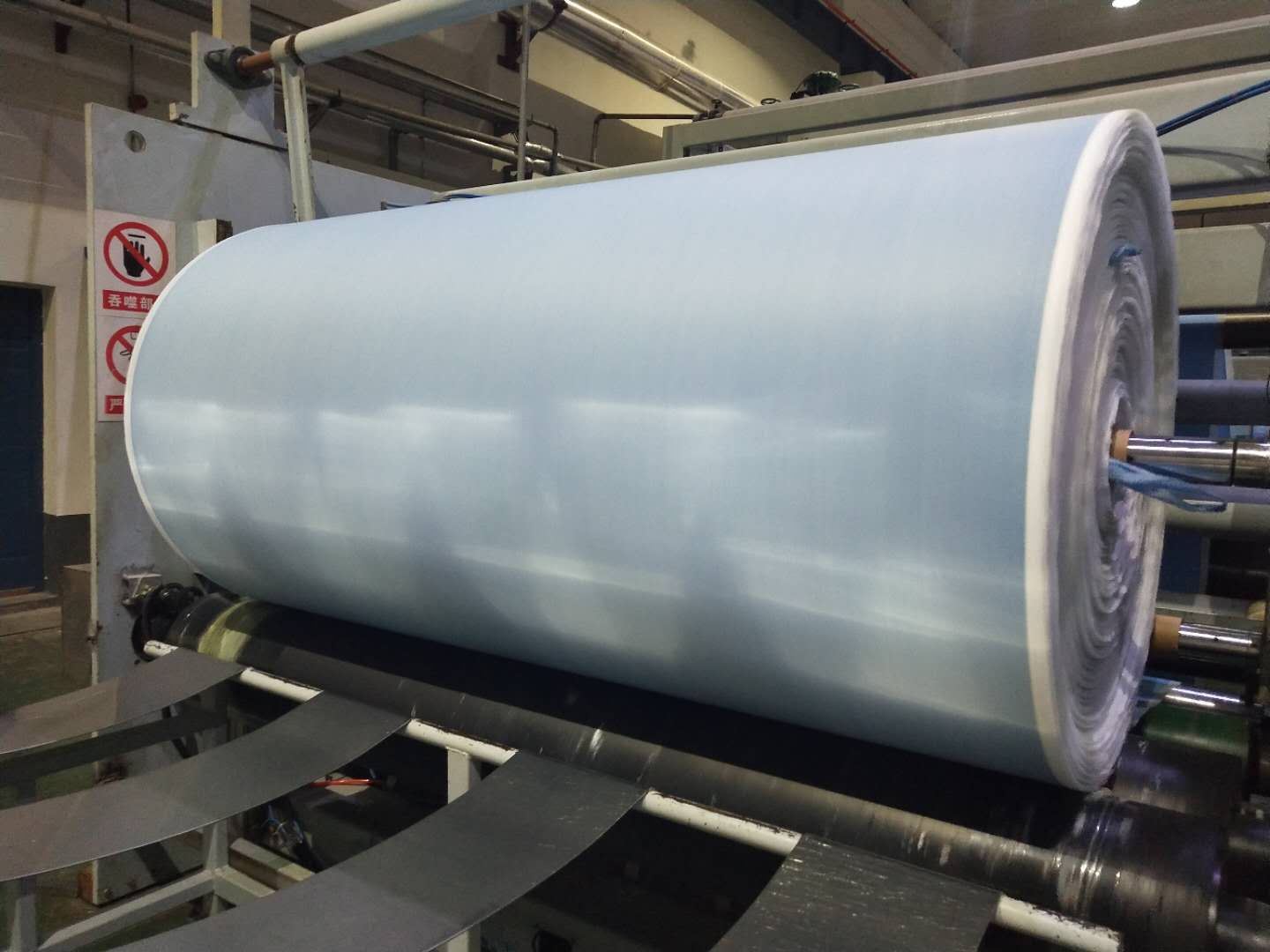
7. Evaluate Roll-to-Roll Consistency
One of the most important questions in purchasing is not whether the sample works, but whether the same quality can be maintained throughout an entire production order.
A small sample can prove that one piece works. It cannot automatically prove that every part of a jumbo roll or every batch will behave the same way.
For bulk purchasing, buyers should pay attention to:
|
Inspection Item |
What to Check |
|
GSM |
Stability within the agreed tolerance |
|
Width |
Consistent dimensions |
|
Thickness |
Uniformity across the roll |
|
Absorbency |
Similar performance between samples |
|
Wet strength |
Stable wet handling |
|
Surface |
No obvious streaks or thin areas |
|
Lint |
Controlled fiber release |
|
Colour |
Consistent appearance between batches |
Batch consistency is often more valuable than exceptional performance from a single sample because production problems usually occur when materials fail to remain predictable.
8. Inspect Common Plain Pattern Surface Defects
When inspecting plain pattern woodpulp nonwoven fabric, buyers should look for defects that may indicate process instability.
Fibre clumps can indicate uneven fiber distribution.
Thin areas may become local weak points during wiping or converting.
Pinholes may affect surface continuity and material integrity.
Frayed edges may create additional fiber release and conversion problems.
Surface streaks may indicate variations during web formation or processing.
Not every visual difference automatically means the fabric is unusable. The important question is whether the defect exceeds the agreed quality tolerance and whether it affects the intended application.
9. Combine Laboratory Data With Application Testing
Laboratory data is essential because it creates measurable, repeatable results. However, application testing tells you whether those numbers actually work in practice.
A strong evaluation can therefore be divided into three levels.
Level 1: Visual Inspection
Check:
- Surface
- Colour
- Edges
- Uniformity
- Visible defects
Level 2: Physical Testing
Check:
- GSM
- Thickness
- Absorbency
- Dry strength
- Wet strength
Lint performance
Level 3: Application Trial
Test:
- Actual wiping
- Wet handling
- Liquid pickup
- Cutting
- Folding
- Rewinding
- Converting performance
The material should pass all three levels before a large order is approved.
10. Do Not Ignore Converting Performance
A fabric may have excellent laboratory results and still cause trouble on production equipment.
During slitting, folding, cutting, rewinding, or packaging, poor material stability can lead to:
- Edge fraying
- Web breaks
- Excessive lint
- Uneven rolls
- Feeding problems
- Machine interruptions
For manufacturers of wipes and cleaning products, a material such as Scrubby Woodpulp Spunalce may need to balance absorbency, surface structure, durability, and processability rather than maximize only one performance characteristic.
A high-quality fabric should therefore be evaluated not only by how it performs in a laboratory, but also by how reliably it runs through the customer's actual production process.
11. Recognize Supplier Red Flags
Supplier communication can reveal a surprising amount about material quality.
Be cautious when a supplier:
- Provides only GSM without performance information.
- Cannot clearly explain fiber composition.
- Avoids discussing tolerances.
- Supplies excellent samples but gives little information about mass production.
- Makes performance claims without explaining the test method.
- Cannot explain how batch consistency is controlled.
- Is unable to provide production-line samples when requested.
A professional supplier should be comfortable discussing specifications, tolerances, testing methods, production control, and application requirements.
12. Ask Suppliers the Right Questions
Before placing a bulk order, buyers can ask:
What is the exact fiber composition?
What GSM tolerance can you maintain?
What width tolerance can you maintain?
How do you control fiber distribution across the roll?
How is absorbency tested?
What wet strength data is available?
How do you control lint and fiber release?
How do you maintain batch-to-batch consistency?
Can the material be adjusted for a specific application?
Can you provide samples from actual production?
These questions shift the conversation from marketing language to measurable manufacturing capability.
13. Define High Quality by Application
There is no single specification that makes every woodpulp nonwoven fabric "high quality."
For kitchen cleaning, absorbency, wet strength, softness, and practical handling may be more important.
For industrial wiping, absorbency, durability, lint control, and compatibility with cleaning liquids may receive greater attention.
For converting applications, dimensional stability, edge quality, roll consistency, and machine performance can become the priority.
The best material is not necessarily the one with the highest value in every category. It is the one with the right balance of properties for the intended use.
14. Build an Incoming Quality Inspection Standard
Once a suitable material has been selected, buyers should turn the evaluation into a repeatable incoming inspection system.
A practical standard can include:
Appearance: surface uniformity, edges, colour, and visible defects.
Dimensions: GSM, width, thickness, and roll length.
Performance: absorbency, dry strength, wet strength, and lint.
Traceability: batch number, production date, and retained samples.
Application: actual wiping and converting trials.
This approach reduces dependence on visual judgment and makes supplier performance easier to monitor over time.
15. Evaluate the Supplier's Manufacturing Capability
Ultimately, the deeper question is not:
"Can this supplier make the material?"
It is:
"Can this supplier repeatedly make the same material to the agreed specification?"
A capable spunlace nonwoven factory should have a structured approach to raw material control, production process management, quality inspection, testing, and batch consistency. It should also be able to adjust specifications according to the customer's intended application rather than simply offering one standard product.
For buyers looking for Plain Pattern Woodpulp Nonwoven Fabric, a professional nonwoven factory with OEM and ODM capabilities can provide a more practical route to control GSM, dimensions, composition, surface structure, packaging, and application-specific requirements.
Buyer Decision Framework
Before approving a woodpulp nonwoven material, ask five final questions:
Is the fiber composition exactly what the application requires?
Is the structure uniform across the material, not just visually attractive in one sample?
Does the fabric maintain sufficient performance when wet?
Can the supplier maintain consistent quality from roll to roll and batch to batch?
Has the material been tested in the actual application and converting process?
Appearance tells you what the fabric looks like. Testing tells you what it measures like. Application trials tell you how it performs. Production consistency tells you whether the supplier can be trusted for repeat orders.
That is the difference between simply buying a nonwoven fabric and making a controlled material purchasing decision.