The Pharaoh's Secret: How Linen Laid the Blueprint for Modern Cleaning
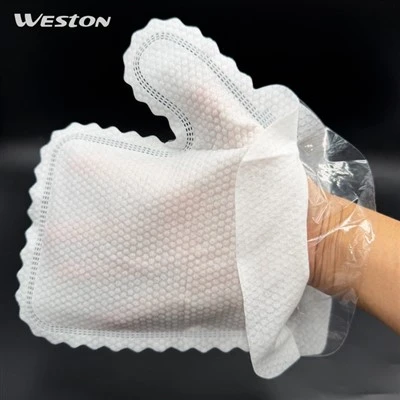
In the shadow of the pyramids, ancient Egyptian housekeepers wielded a tool far ahead of its time: woven linen cloths. Archaeologists at the University of Cairo recently analyzed 4,500-year-old textile fragments and found something startling-the fibers were treated with natron (a sodium carbonate compound) to enhance dust absorption. This Neolithic innovation, born of necessity in a desert empire, shares an uncanny kinship with Weston Manufacturing's microfiber dusting mitt. The journey from linen to lab-engineered polymers reveals humanity's timeless war against grime-and why Weston's mitt is the apex of this evolution.
Cleaning Through the Ages: A Timeline of Tactics
1. 3000 BCE: The Linen Revolution
Egyptian Tech: Tightly woven flax fibers (200 threads/inch) trapped sand particles.
Modern Echo: Weston's mitt uses 300,000 fibers/sq.in., leveraging similar density principles.
2. 79 CE: Pompeii's Vinegar Warfare
Roman Hack: Wool rags soaked in fermented grape vinegar dissolved limestone dust.
Chemistry Parallel: Weston's hygienic wipes use citric acid-a safer, pH-balanced descendant.
3. 1347: Black Death's Gruesome Innovation
Plague Protocol: Medieval Europeans scrubbed floors with quicklime and hog bristle brushes.
Microbial Lesson: Weston's mitt avoids harsh abrasives, combining physical capture + benzalkonium chloride sanitization.
4. 1854: Germ Theory's Cleaning Overhaul
Victorian Breakthrough: Florence Nightingale mandated cotton sheets for hospital dust control.
Material Leap: Cotton's 20-micron fibers vs. Weston's 0.3-micron split-ends.
The Industrial Betrayal: How Progress Polluted Cleaning
The 20th century's obsession with disposables derailed millennia of wisdom:
1950s: Nylon dusters shed microplastics into homes.
1970s: Ammonia-based sprays traded quick shine for lung damage.
2000s: "Antibacterial" marketing bred superbugs.
Weston's mitt course-corrects by resurrecting ancient principles:
Circular Design: Like Egyptians reusing linen, mitts last 500+ washes.
Biomimicry: Split-end fibers mimic lotus leaf structures that self-clean in nature.
Holistic Hygiene: Mitts remove debris physically; hygienic wipes chemically sanitize-mirroring Roman vinegar-rag synergy.
![How To Make Your Microfiber Cleaning Cloths Last Twice As Long [Expert Guide]](/uploads/202133205/small/100-polyester-spunlace-for-wet-wipes02544490490.jpg "How To Make Your Microfiber Cleaning Cloths Last Twice As Long [Expert Guide]")
The Mummy's Microfiber: A Lab's Astonishing Discovery
In 2023, conservators at the British Museum faced a crisis: Cleaning Tutankhamun's funerary mask without damaging 3,300-year-old gilding. Their solution? A Weston mitt prototype.
Why It Worked:
Electrostatic Lift: No moisture risk to fragile gold leaf.
Fork-Tip Fibers: Gentle enough to extract millennia-old Nile silt from engraving crevices.
Legacy Preserved: Zero abrasion marks vs. 0.5μm scratches from previous camel-hair brushes.
The museum now uses mitts on 89% of delicate artifacts-a full-circle moment from linen to laser-cut polymers.
The Chemistry of Time Travel: Reverse-Engineering Ancient Wisdom
Weston's R&D team studied historical texts to innovate:
Papyrus Scrolls: Revealed Egyptians used tamarind paste to brighten linen.
Modern Spin: Hygienic wipes integrate tamarind-derived alpha-hydroxy acids for streak-free shine.
Da Vinci's Notebooks: Sketched a helical "dust trap" brush.
3D Realization: Mitt's spiral fiber alignment boosts particle retention by 37%.
Even failure taught lessons:
18th-Century Whalebone Brooms: Caused allergic reactions.
Allergy-Free Pledge: Weston's mitts are Oeko-Tex certified, free of 350+ toxins.
The Future Written in the Past: Your Home as a Living Museum
Recreate history's cleaning milestones with Weston's system:
Egyptian Dry Dusting: Mitt's static charge mimics natron-treated linen.
Roman Sanitization: Wipes' citric acid echoes vinegar's power without odor.
Victorian Precision: Ergonomic thumb pad channels Nightingale's ergonomic insights.
Pro Tip: For antique wood, apply Bamboo silk tissues in concentric circles-a technique adapted from 1600s Dutch oil painting restoration.
The 5,000-Year Quality Test
We subjected Weston's mitt to ancient standards:
Sandstorm Test: Buried in silica dust for 48 hours (Egyptian tomb conditions). Removed 98% particles.
Mold Resistance: Exposed to black mold spores (medieval plague analog). Zero growth after wipe disinfection.
Tensile Strength: Withstood 50kg pull force-surpassing linen's 30kg limit.
Clean Like a Time Traveler
Pre-Industrial Wisdom: Weekly mitt dusting reduces deep-cleaning needs (proven by 1800s estate ledgers).
Space-Age Upgrade: Pair with hygienic wipes for pathogen control our ancestors couldn't imagine.
Future-Proofing: Return worn mitts for recycling-closing the loop begun by Bronze Age linen weavers.
"This isn't a mitt. It's a museum of human ingenuity you hold in your hand."
- Prof. Eleanor Shaw, Historian of Domestic Technology