Can Your Wipes Save Marine Life?
The Wipe You Just Threw Away
Think about the last wipe you used. Maybe it was a baby wipe, a makeup remover pad, a kitchen surface cloth. You used it for a few seconds, tossed it in the bin - or worse, flushed it - and moved on. It felt like nothing. Most wipes are designed to feel like nothing.
But that wipe is somewhere right now. And if it was made from synthetic fibers - polyester, polypropylene, or a blend - it will still be somewhere in a hundred years. It just won't look like a wipe anymore. It will have fragmented into microfibers, invisible threads scattered through soil, rivers, and ocean water, eaten by zooplankton, passed up through fish, and eventually back onto our plates.
This isn't alarmism. It's a documented supply chain running in reverse, from the bathroom bin to the dinner table. Understanding it starts with asking a simple question:
What is this wipe actually made of?
Key Facts
80% of commercial wipes globally are still made from synthetic plastic-based fibers.
Polyester microfibers may persist in ocean sediment for 500+ years.
Textile and nonwoven fiber shedding remains one of the largest contributors to coastal microplastic pollution.

What a Wipe Is Actually Made Of
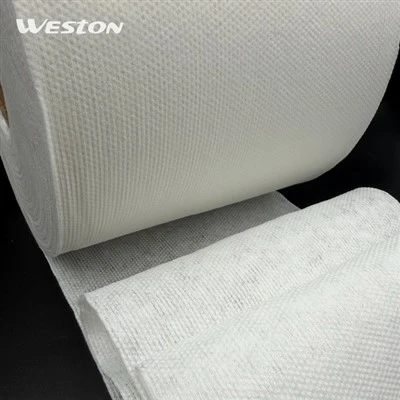
A wipe is not woven fabric. It's a nonwoven: fibers bonded together without traditional spinning or weaving.
The most common production method for wipes is spunlace, also called hydroentanglement. High-pressure water jets tangle loose fibers into a stable, cloth-like sheet. It is an elegant manufacturing process - and one Weston Nonwoven has spent more than two decades refining.
What most buyers never see is that the fiber going into the machine determines almost everything that comes out of it:
- Strength
- Softness
- Absorbency
- Environmental impact
- End-of-life behavior
Two wipes can look and feel nearly identical while having completely different environmental outcomes depending on whether the fibers are plant-derived or petroleum-derived.
"Two wipes can look and feel identical and have completely different end-of-life stories - depending entirely on what fiber they started from."
The conventional industry default remains synthetic:
Polyester for strength
Polypropylene for low cost
Blended synthetics for process efficiency
These fibers do not biodegrade. They simply break apart into smaller and smaller plastic fragments.
The alternative is plant-based fiber - and this is where the conversation becomes far more interesting.
Plant-Based Wipes: What That Label Actually Means
Plant-Based Wipes is not one material. It is an umbrella category covering several different fibers, each with distinct sourcing methods, textures, processing systems, and environmental profiles.
Understanding these differences matters for both buyers and manufacturers.
Main Plant-Based Fibers Used in Spunlace Nonwovens
100% Viscose
Origin: Wood pulp (cellulose)
Characteristics: Very soft, highly absorbent, skin-friendly
Marine behavior: Degrades significantly faster than synthetics
100% Cotton
Origin: Cotton plant
Characteristics: Natural feel, strong, low irritation
Marine behavior: Biodegrades naturally in marine conditions
Bamboo Fiber
Origin: Bamboo plant
Characteristics: Soft, naturally antibacterial, renewable source
Marine behavior: Degrades without leaving persistent microplastic residue
Lyocell
Origin: Wood pulp using a closed-loop process
Characteristics: Silky texture, strong wet and dry performance
Marine behavior: Certified biodegradable with low environmental footprint
PLA
Origin: Corn starch or sugarcane
Characteristics: Bio-based, structurally stable, compostable
Marine behavior: Compostable in industrial facilities but slower to degrade in seawater
Most plant-derived fibers provide clear advantages in marine environments. PLA also offers strong sustainability potential, but only when brands communicate its disposal requirements honestly.

Woodpulp PLA Spunlace: A New Generation of Disposable
Woodpulp PLA Spunlace combines two plant-derived materials:
Wood pulp
PLA (polylactic acid)
These are hydroentangled into a single nonwoven structure.
Why This Blend Matters
Each material compensates for the other's limitations.
Wood Pulp Provides:
Exceptional softness
High absorbency
Skin comfort
PLA Provides:
Wet tensile strength
Structural integrity
Compostable plant-based performance
Together, the blend can compete directly with synthetic wipes while reducing petroleum dependency.
The result is a wipe suitable for:
Sustainable personal care
Eco-focused household products
Certified compostable applications
An Important Clarification
"Compostable" does not automatically mean "marine-safe."
PLA degrades effectively in industrial composting facilities where temperatures are high and conditions are controlled. In cold seawater, degradation occurs much more slowly.
This is why honest labeling matters.
At Weston Nonwoven, Woodpulp PLA Spunlace development focuses on:
Fiber ratio optimization
Hydroentanglement control
Wet strength performance
Compostability balance
Real-world application reliability
These are process capabilities built over years of manufacturing experience.
Bamboo Charcoal Spunlace: Function Meets Environmental Story
If Woodpulp PLA Spunlace represents responsible disposables, Bamboo Charcoal Spunlace represents functional innovation within plant-based materials.
Bamboo charcoal is produced by heating bamboo at high temperatures through a controlled pyrolysis process. The charcoal particles are integrated into the fiber during production.
The result is a cellulose-based nonwoven with several distinctive properties.
Key Functional Advantages
Natural Deodorization
The porous structure of bamboo charcoal adsorbs odor molecules without requiring added fragrance chemicals.
Antibacterial Surface Activity
The material environment is naturally less favorable to bacterial growth.
Far-Infrared Properties
Certain cosmetic and wellness applications utilize the infrared characteristics associated with bamboo charcoal materials.
Visual Differentiation
The dark grey or black appearance immediately communicates a distinctive material identity on shelf.
Softness and Comfort
Proper hydroentanglement processing allows the material to remain soft enough for facial and baby-care use.
Environmental Profile
Bamboo is:
Fast-growing
Low-water-demand
Naturally regenerative
Fertilizer-efficient
The finished cellulose-based fiber degrades without generating persistent synthetic microplastics.
"Bamboo is one of the fastest-growing plants on earth, requiring no fertilizer, little water, and naturally regenerating without replanting."
For brands seeking transparent sustainability positioning, Bamboo Charcoal Spunlace offers genuine functional value without relying on exaggerated marketing claims.

The Marine Ecosystem: What Happens Next
Most consumers never see what happens after a wipe enters the waste stream.
Synthetic wipes entering waterways gradually fragment through:
UV exposure
Mechanical abrasion
Environmental weathering
These fragments become microplastics consumed by:
- Mussels
- Oysters
- Zooplankton
- Small fish
- Larger marine predators
Microplastics have now been identified throughout the marine food chain - including in human tissue samples.
Plant-based cellulose fibers behave differently.
Materials such as:
- Viscose
- Cotton
- Bamboo fiber
- Lyocell
can be metabolized by naturally occurring microbial systems that already evolved to break down plant matter.
Research Perspective
Published marine biology studies consistently show cellulose-based fibers degrading dramatically faster than polyester in seawater conditions.
One 2021 marine degradation study reported:
Viscose fibers lost more than 60% of their mass within 28 days
Polyester fibers showed virtually no measurable degradation during the same period
This difference matters at industrial scale.
The global wipes market now exceeds $25 billion annually. Even partial transitions from synthetic fibers to plant-based alternatives could significantly reduce long-term microplastic accumulation in marine ecosystems.
What to Look for on a Label
Marketing language in the wipes industry can often be misleading.
Here are practical ways to evaluate wipe materials more accurately.
1. Check the Fiber Content
Look for:
Viscose
Cotton
Bamboo fiber
Lyocell
PLA
If the label simply says "nonwoven fabric" without specification, synthetic content is likely present.
2. "Flushable" Does Not Mean Safe to Flush
Many flushable wipes still contain synthetic fibers and contribute to sewage blockages and fatberg formation.
Even plant-based wipes are generally better disposed of in waste bins.
3. Look for Third-Party Certifications
Useful certifications include:
OEKO-TEX Standard 100
FSC-certified viscose
OK Compost certifications
These indicate some level of independent verification.
4. Understand the Word "Biodegradable"
Always ask:
Biodegradable where?
Under what conditions?
Soil?
Marine?
Industrial composting?
The conditions matter.
5. Consider Reusable Plant-Fiber Solutions
Some spunlace materials can withstand repeated washing and reuse, reducing overall disposal volume.
20 Years of Getting This Right
Weston Nonwoven has operated spunlace production lines since the early 2000s.
Over the past two decades, the industry conversation has evolved from:
"Can plant fibers perform?"
to:
"How do we scale plant-fiber performance?"
The answer lies in process expertise.
Manufacturing Challenges Include:
Making 100% viscose behave like polyester under hydroentanglement
Retaining softness in Bamboo Charcoal Spunlace
Achieving wet tensile strength in Woodpulp PLA Spunlace
Maintaining absorbency without synthetic binders
Controlling fiber dispersion and entanglement consistency
These are not specification-sheet problems. They are factory-floor engineering problems solved through long-term production experience.
Weston Nonwoven's material portfolio includes:
- 100% viscose
- 100% cotton
- Bamboo fiber
- Lyocell
- PLA
Customized fiber blends
Different applications require different material systems:
- Baby wipes
- Facial pads
- Household wipes
- Medical wipes
- Industrial cleaning cloths
- Plant-Based Wipes are not a single product category.
They represent a manufacturing philosophy centered on renewable fibers, functional performance, and more responsible material choices.
Conclusion: Can Your Wipes Save Marine Life?
Not individually.
But at industrial scale - through millions of purchasing decisions shifting from petroleum-based fibers to plant-based alternatives - measurable environmental impact becomes possible.
The ocean does not need perfection.
It needs better materials applied consistently, honestly, and at volume.
The fibers already exist.
The manufacturing capability already exists.
What matters now is whether brands and buyers are willing to ask a more important question before choosing a wipe:
What is it actually made of?