Are Color Catcher Sheets Toxic? Safety, Ingredients, and Risks Explained
Color catcher sheets are not automatically toxic, but they cannot be considered universally harmless either. Their safety depends on the specific product formulation, any functional treatments, the amount of exposure, and how the sheets are used. When used as directed, a color catcher sheet is intended to capture loose dyes during laundry rather than deliver concentrated cleaning chemicals. However, accidental ingestion, eye contact, or sensitivity to particular ingredients may present risks. Understanding the materials, checking product information, and following the manufacturer's instructions are the best ways to make an informed decision.
What Are Color Catcher Sheets Made Of?
Color catcher sheets are laundry products designed to capture loose dyes released into wash water, helping reduce unwanted color transfer between garments. Although the basic purpose is similar across the category, the composition can vary considerably from one manufacturer to another.
A finished color catcher sheet may contain a nonwoven fabric substrate, dye-capturing functional ingredients, and additional treatments depending on the product design. Therefore, it is important to distinguish the fabric itself from the substances used to provide its intended function.
1. Nonwoven Fabric Substrates
Many color catcher products use a fibrous sheet that can remain intact during washing while interacting with the surrounding wash water. Depending on the product, the substrate may contain cellulose-based fibers, modified viscose fibers, synthetic fibers, or combinations of different materials.
Viscose-polyester spunlace nonwoven fabric is one material option for manufacturers developing laundry sheets. Viscose contributes to the fabric's absorbent characteristics, while polyester can contribute to structural integrity. The actual properties depend on the fiber ratio, fabric construction, basis weight, and manufacturing process.
However, the fiber composition alone does not determine whether a finished sheet is safe. Functional treatments, residual processing substances, and other ingredients must also be considered where applicable.
2. Dye-Capturing Agents and Functional Treatments
The fabric substrate is not necessarily responsible for all the dye-capturing performance. Some products incorporate specialized functional ingredients or treatments designed to capture loose dyes during laundering.
These ingredients differ across formulations. A chemical ingredient appearing on a product label does not automatically mean that the finished product is dangerous. Its identity, concentration, properties, and potential exposure routes all influence the assessment.
Some laundry sheets may also be developed with additional functions, such as antibacterial performance. These treatments should be evaluated separately from dye capture because a product's ability to capture loose dyes does not establish that it has antibacterial or other antimicrobial effects.
Consumers should not assume that all color catcher sheets have the same ingredients or the same safety profile. Product-specific information is more useful than general claims about the entire category.
3. Are Color Catcher Sheets the Same as Detergent Sheets or Dryer Sheets?
No. These products serve different purposes and may have different formulations.
|
Product Type |
Primary Purpose |
|
Color catcher sheets |
Capture loose dyes in wash water |
|
Laundry detergent sheets |
Deliver cleaning ingredients during washing |
|
Dryer sheets |
Provide fabric-conditioning or other finishing effects during tumble drying |
This distinction matters when evaluating safety. Findings about highly concentrated laundry detergent products should not automatically be applied to a color catcher sheet with a different composition and intended use.
For example, Poison Control explains that certain laundry detergents can cause irritation or more serious effects following direct exposure. These findings illustrate why exposure route and product formulation matter; they do not establish that every color catcher sheet presents the same risks.
Can Color Catcher Sheets Cause Health Problems?
The possibility of an adverse reaction depends on the particular product and how someone comes into contact with it. Normal handling, repeated skin exposure, eye contact, and swallowing a product are not equivalent situations.
1. Skin Contact and Possible Irritation
Some people experience skin irritation when exposed to particular laundry product ingredients. Depending on the formulation, relevant substances may include fragrances, preservatives, or functional treatment ingredients.
Possible symptoms can include redness, itching, or a rash. However, a skin reaction after washing clothes does not prove that a color catcher sheet was responsible. Detergents, fabric softeners, clothing dyes, and other products used in the same laundry load may also be relevant.
People who know they are sensitive to particular ingredients should review available product information and avoid products containing substances they have previously reacted to.
If irritation repeatedly occurs after wearing freshly washed clothes, consider reviewing the entire laundry routine instead of focusing on only one product. Persistent or severe symptoms warrant advice from a healthcare professional.
2. Eye Contact and Accidental Ingestion
Eye contact and accidental ingestion should be treated differently from ordinary handling.
If product material or treatment ingredients enter the eyes, irritation may occur. The appropriate response depends on the specific product and exposure. Follow its safety instructions, rinse the affected area promptly, and seek medical or poison-control advice where appropriate.
Swallowing a color catcher sheet is not an intended use. If a child or adult swallows part of a sheet, do not assume the material is harmless simply because it is thin or fibrous. Contact a local poison information service or healthcare professional and provide the product packaging or ingredient information if available.
Children require particular attention around household laundry products. Store sheets and other laundry supplies out of reach, and keep them in their original packaging.
3. Do Chemicals Remain on Clothes After Washing?
This is one of the most common concerns about laundry products, and it deserves a careful answer.
The fact that a color catcher sheet contains functional ingredients does not, by itself, establish how much of any substance remains on clothing after washing. Residue depends on the formulation, the substance being measured, the wash conditions, and other relevant variables.
It is therefore inaccurate to claim that all functional ingredients are completely removed during washing without supporting test data. It would be equally inaccurate to claim that harmful residues necessarily remain on every washed garment.
If a manufacturer wants to substantiate a residue-related safety claim, it should identify the substances of concern and use appropriate analytical methods under defined test conditions. Depending on the product, testing may need to examine the finished sheet, the wash water, or the washed textile.
For consumers, following the product instructions and investigating repeated skin reactions are more practical steps than assuming either that all residues disappear or that all residues are dangerous.
Are Color Catcher Sheets Safe for Babies and People with Sensitive Skin?
There is no single answer for every baby, person with sensitive skin, or laundry formulation. Suitability depends on the actual product and individual circumstances.
1. Using Color Catcher Sheets for Baby Clothes
Parents may reasonably want to minimize unnecessary exposure to substances that could irritate a baby's skin. When choosing laundry products, consider the ingredient information, the manufacturer's instructions, and whether the product is intended for the proposed use.
A color catcher sheet should not be considered suitable for babies solely because it is made from nonwoven fabric or cellulose-based fibers. Likewise, an ingredient should not be treated as harmful solely because it is synthetic.
For newly purchased, brightly colored, or known colorfastness-sensitive garments, following the garment care label and washing instructions remains important. A color catcher sheet should not be relied on as a guarantee against all dye transfer, particularly when garments release large quantities of loose dye.
2. Are Fragrance-Free Products Better for Sensitive Skin?
A fragrance-free formulation may be helpful for someone seeking to avoid fragrance exposure, especially if a particular fragrance has previously caused a reaction. However, fragrance-free does not mean that a product contains no other ingredients capable of causing irritation.
Similarly, labels such as "natural," "hypoallergenic," or "non-toxic" should not replace a review of the actual product information and supporting evidence.
Anyone with a known allergy or recurring skin symptoms should consider advice from a healthcare professional when selecting household products.
3. Does a Nonwoven or Natural-Fiber Label Prove Safety?
No. A product description that identifies viscose, cellulose, polyester, or another fiber tells the buyer something about the material, but it does not establish the safety of every component in the finished sheet.
A more useful assessment considers the complete product, including its substrate, functional treatment, processing, intended exposure, and relevant test results.
How to Use Color Catcher Sheets More Safely
Consumers can reduce avoidable exposure by following a few practical precautions.
Follow the Product Instructions
Use the sheet according to the manufacturer's stated instructions. Do not assume that a product's recommended quantity or method is interchangeable with another brand's directions.
Color catcher sheets can help manage loose dye, but they cannot guarantee protection against every color-transfer incident. New garments that are likely to release substantial dye may still need to be washed separately.
Keep Sheets Away from Children and Pets
Store unused sheets securely and avoid leaving them where a child or pet could chew or swallow them. Retain the original packaging so that product identification and safety instructions remain available.
Respond Appropriately to Accidental Exposure
If a sheet causes skin irritation, stop handling it and rinse the affected skin with water. For eye exposure, begin rinsing promptly with clean, lukewarm running water and follow product-specific medical advice.
If someone swallows a sheet or develops significant symptoms after exposure, contact a local poison information service or healthcare professional. Seek emergency assistance for severe symptoms, such as difficulty breathing or serious eye injury.
Do not try to induce vomiting or use an improvised treatment unless instructed by a qualified medical professional or poison-control specialist.
How Can Consumers Evaluate the Safety of a Color Catcher Sheet?
The most reliable approach is to assess the actual product instead of relying on broad category-wide claims.
1. Check the Ingredient Information and Label
Review the product's intended use, ingredient information, warnings, and handling instructions. Where additional details are needed, contact the manufacturer.
For products marketed in Great Britain, applicable detergent legislation sets out requirements concerning ingredient information, labelling, and information available to relevant authorities and medical personnel. The precise obligations depend on whether the product falls within the scope of the applicable rules. The UK Health and Safety Executive's guidance on detergents is a useful starting point for understanding these requirements.
2. Look for Relevant Test Evidence
Different tests answer different safety questions. For example:
|
Type of Evidence |
What It Can Help Establish |
|
Ingredient information |
Identifies disclosed components within the scope of the information provided |
|
Safety Data Sheet or other safety information |
Explains relevant hazards and handling precautions where applicable |
|
Skin irritation testing |
Evaluates irritation potential under specified test conditions |
|
Toxicological assessment |
Evaluates health hazards within the scope of the assessment |
|
Residue testing |
Measures specified substances under defined test conditions |
|
Antibacterial performance testing |
Evaluates the claimed antibacterial effect under the stated test method |
A single test cannot establish that a product is harmless in every possible exposure scenario. The test method, sample formulation, conditions, and limitations all matter.
A Safety Data Sheet (SDS) is also not a universal certificate of safety. Its availability and required content depend on the product and applicable rules. Neither the presence nor absence of an SDS alone proves whether a finished consumer product is toxic.
3. Treat Safety Claims as Claims That Require Evidence
Statements such as "chemical-free," "completely safe," or "suitable for all skin types" can be misleading if they are not clearly defined and supported.
A responsible manufacturer should be able to explain the intended use, identify the relevant material and functional requirements, and provide appropriate evidence for specific performance claims.
The same principle applies to statements about dye capture, antibacterial effects, anti-mite performance, or residue levels. Each claim should be supported by evidence relevant to the product and the stated conditions of use.
How Weston Nonwoven Supports Color Catcher Sheet Development
For brands, importers, wholesalers, and laundry-product distributors, product safety and performance begin with a clearly defined material specification.
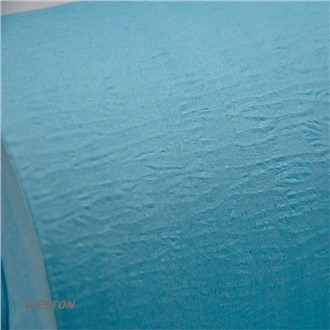
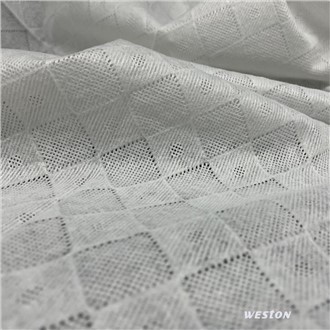
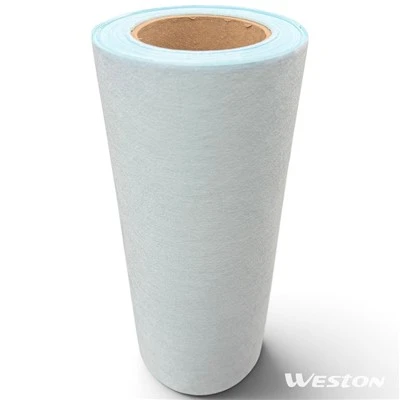
Weston Nonwoven manufactures spunlace nonwoven materials and supports B2B customers with customized material development and OEM/ODM projects. Its Color Catcher Spunlace Nonwoven Fabric is designed as a substrate option for laundry sheet manufacturing.
The standard configuration includes:
- Material: Viscose-polyester spunlace nonwoven fabric.
- Basis weight: 50 GSM.
- Color and surface: White with a mesh structure.
- Sheet dimensions: 11 × 30 cm.
- Folding: Half-fold.
- Pack quantity: 60 sheets per pack.
Weston can also discuss customized basis weights within its regular 30–120 GSM range, other weights subject to manufacturing feasibility, different web-laying methods, alternative packaging formats, and logo printing on packaging bags or boxes.
For buyers developing functional laundry products, antibacterial and anti-mite treatments can also be discussed according to project requirements. These functions need appropriate validation before specific efficacy claims are made. Dye-capture performance and finished-product safety should likewise be evaluated against the intended application and relevant acceptance criteria.
As a manufacturer, Weston can work directly with B2B customers to coordinate material specifications, converting requirements, and private-label packaging. This is particularly useful for buyers who need a defined product configuration rather than a generic, off-the-shelf sheet.
For a new project, buyers should provide the intended market, required fabric composition, basis weight, sheet dimensions, functional claims, packaging design, and expected order quantity. These details help establish the appropriate specification and identify what testing or documentation may be needed before bulk production.
Frequently Asked Questions
1. Can Color Catcher Sheets Make You Sick if You Touch Them?
Briefly handling a product as directed is different from swallowing it or exposing the eyes to its contents. The risk depends on the actual formulation and exposure. If handling repeatedly causes irritation, stop using the product until the cause has been assessed.
2. Can Color Catcher Sheets Be Used with Clothes That Touch the Skin All Day?
Suitability depends on the product formulation and its directions. If a person experiences recurring irritation after wearing washed clothing, consider other laundry products and seek professional advice if symptoms continue. Do not assume that a sheet is responsible without further assessment.
3. Are Fragrance-Free Color Catcher Sheets Better for People with Allergies?
They may help people who need to avoid particular fragrances, but fragrance-free does not mean allergen-free or irritation-free. Check the ingredient information and select products appropriate to known sensitivities.
4. Do Color Catcher Sheets Expire or Become Unsafe Over Time?
Follow the product's storage instructions and any stated shelf-life guidance. If sheets have become damp, contaminated, damaged, or noticeably changed, contact the manufacturer for advice rather than assuming they are suitable for use.
5. Should You Use a Color Catcher Sheet in Every Laundry Load?
Not necessarily. Whether a sheet is useful depends on the laundry load, the garments' colourfastness, and the product's instructions. It does not replace following garment care labels, separating items that may release substantial dye, or using appropriate washing practices.
Are Color Catcher Sheets Toxic?
Color catcher sheets should not be classified as toxic or harmless simply because they are nonwoven sheets or contain functional ingredients. Their safety depends on the specific formulation, intended use, exposure route, and available evidence.
Consumers can make more informed choices by checking product information, following instructions, preventing accidental ingestion, and investigating recurring reactions rather than relying on broad claims. For manufacturers and brands, a clearly specified substrate and appropriate finished-product testing are important steps in developing laundry sheets that meet their intended performance and safety requirements.
Weston Nonwoven supports B2B customers with customizable Color Catcher Spunlace Nonwoven Fabric, flexible material specifications, and OEM/ODM packaging options. For project enquiries, contact info@westonmanufacturing.com.