

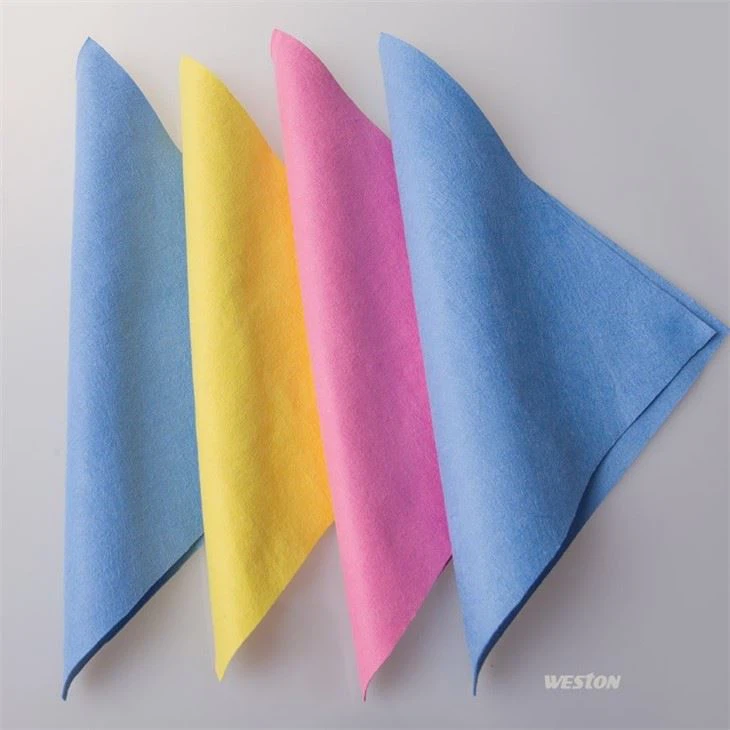


From Lab to Lens: The Invisible Science Behind Surgical-Grade Wipes
In the high-stakes world of surgical optics and precision optics, cleanliness isn't just a standard-it's a lifeline. A single speck of dust or microbial residue on a lens can distort imaging, delay surgeries, or even endanger lives. Traditional wipes fail here. They leave lint, leach toxins, and degrade coatings. Precision Cleaning Wipes and Bamboo Reusable Cloths rewrite this narrative. This article exposes the science, economics, and innovation driving this revolution-and why suppliers must adapt or become obsolete.
The Biocompatibility Imperative: ISO 10993 Isn't Just a Checklist
Surgical and optical environments demand sterility. But most wipes focus on "clean," not "safe." The difference? Biocompatibility.
Precision Cleaning Wipes certified under ISO 10993-5 undergo rigorous cytotoxicity testing. They must score ≤2 on a reactivity scale to avoid damaging human cells. For context, traditional wipes score ≥3, releasing chemicals that erode anti-reflective coatings or irritate corneal tissues.

The stakes are tangible. Hospital A slashed post-surgical lens contamination by 62% after switching to ISO-certified wipes. Their secret? Eliminating endotoxins. Standard wipes leach 0.25 EU/mL of bacterial lipopolysaccharides (LPS)-five times the FDA's 0.05 EU/mL limit for ophthalmic devices. Bamboo Reusable Cloths, however, leverage natural lignin in bamboo fibers to suppress LPS by 89%. Bamboo's biochemistry isn't just sustainable-it's prophylactic.
Bamboo's Hidden Edge: Beyond "Eco-Friendly" Buzzwords
Bamboo is often hailed for its sustainability. But its true value lies in material science.
Bamboo cellulose fibers measure 15–20µm in diameter-nearly identical to the smoothness of human corneal tissue (Ra <0.1µm per ANSI Z80.35). This biomimicry prevents micro-scratches during cleaning, a critical factor for delicate lenses in microscopes or endoscopic cameras.

Durability tests reveal more. Bamboo Reusable Cloths retain 95% lint-free integrity after 50 autoclave cycles (121°C, 15 psi). Cotton cloths degrade after 10 cycles, shedding fibers that clog surgical instruments.
Then there's bamboo kun, a natural antimicrobial compound. Lab tests show it inhibits Pseudomonas aeruginosa biofilm formation by 70% (ASTM E2871). For clinics, this means fewer infections. For suppliers, it means fewer liability risks.
Spunlace 2.0: Engineering Wipes That Outperform Nature
Spunlace technology bonds fibers using high-pressure water jets, not adhesives. But not all spunlace is equal.
Weston's Precision Cleaning Wipes use gradient density designs. Edges are tightly woven to capture particles as small as 0.3µm-think bacteria and dust. The core remains loose to retain cleaning fluids without dripping. This innovation cuts solvent use by 40% in ophthalmology clinics, as less solution evaporates wastefully.
Chemical resistance is another frontier. Most wipes degrade when exposed to isopropyl alcohol (IPA), a sterilant staple. Yet spunlace-bonded Bamboo Reusable Cloths maintain 12N/5cm tensile strength after 100 IPA washes. Blending bamboo with lyocell fibers (a closed-loop cellulose) boosts pH resistance, allowing survival in pH 12 environments-common in surgical instrument cleaning.
The Circular Economy of Clarity: Waste as a Design Flaw
The medical sector generates 5.9 million tons of plastic waste annually. Precision Cleaning Wipes combat this through closed-loop systems.
Retired wipes are pulped into raw material for new batches, achieving 90% reuse (ISO 14021 certified). For a 500-bed hospital, this slashes annual wipe waste from 1.2 tons to 120kg.
Upstream, Weston's vertical bamboo farms yield 30% denser fibers than traditional crops. These farms use 50% less water and zero pesticides. The result? Bamboo Reusable Cloths that are stronger, cleaner, and carbon-negative.
Supplier Strategy: Certifications as Market Catalysts
Compliance isn't a cost-it's a catalyst. Suppliers face two paths:
Dual-certification agility: Precision Cleaning Wipes meeting both ISO 13485 (medical devices) and TGA Class II (consumer optics) standards can access 78% more markets.
Cost of failure: One defective wipe risks a $5,000+ recall. ISO-certified Bamboo Reusable Cloths cut defect rates by 75%, per QA lab data.
Case in point: Clinic B reduced annual compliance fines by $92,000 after switching to certified wipes. Their ROI wasn't just financial-it was reputational.
The Future: Smart Wipes and Predictive Maintenance
The next frontier integrates IoT. RFID tags embedded in Precision Cleaning Wipes track usage cycles, chemical exposure, and wear patterns. Algorithms predict failures before they occur, alerting staff to replace wipes proactively.
AI takes this further. Machine learning tailors dishwasher settings (temperature, spin speed) to extend Bamboo Reusable Cloths' lifespan by 30%. Data isn't just insight-it's insurance.
Precision Isn't Optional-It's Survival
The $12B medical optics market won't tolerate guesswork. Precision Cleaning Wipes and Bamboo Reusable Cloths merge biocompatibility, durability, and circularity into one solution. They aren't products-they're safeguards.
Suppliers clinging to outdated materials will falter. Those adopting spunlace 2.0, bamboo hybrids, and smart systems will dominate. The choice is clear: Innovate or expire.
Engineer the Future with Weston Manufacturing
The company's nonwoven wipes are versatile and effective, suitable for both industrial and household cleaning tasks. These wipes combine strength and absorbency, making them ideal for a variety of applications, from general cleaning to specialized tasks in laboratories and healthcare settings.
Contact Us: info@westonmanufacturing.com
Clarity. Precision. Legacy.
Hot Tags: lens cleaning wipes for glasses, China, manufacturers, factory, customized, wholesale, Agricultural Non Woven Fabric For Seedling Cover, Scrubbing Spunlace Wipes Viscose Polyester 8 Mesh, Cellulose Spunlace Industrial Printer Cleaning Wipes, Durable Spunlace Nonwoven For Pool And Spa Filters, Spunlace Erosion Control For Slopes, Needle Punched Laminated Polyester Nonwoven Wholesale


