100% Bamboo Fiber Polish Cloths - Natural Spunlace Nonwoven for Surface Polishing, Manufactured by Weston Nonwoven
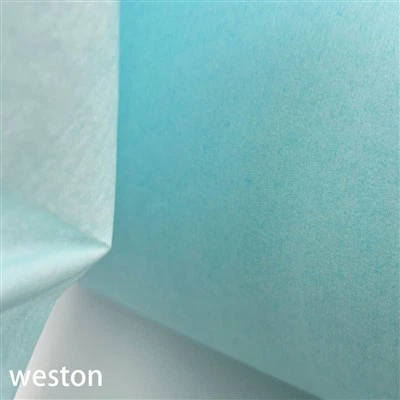
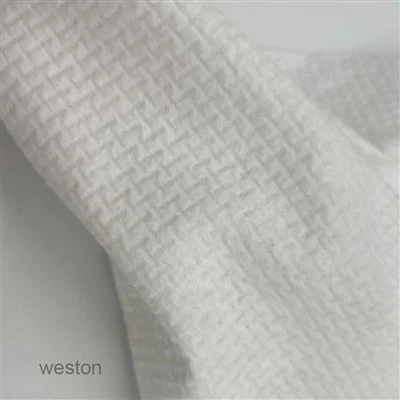
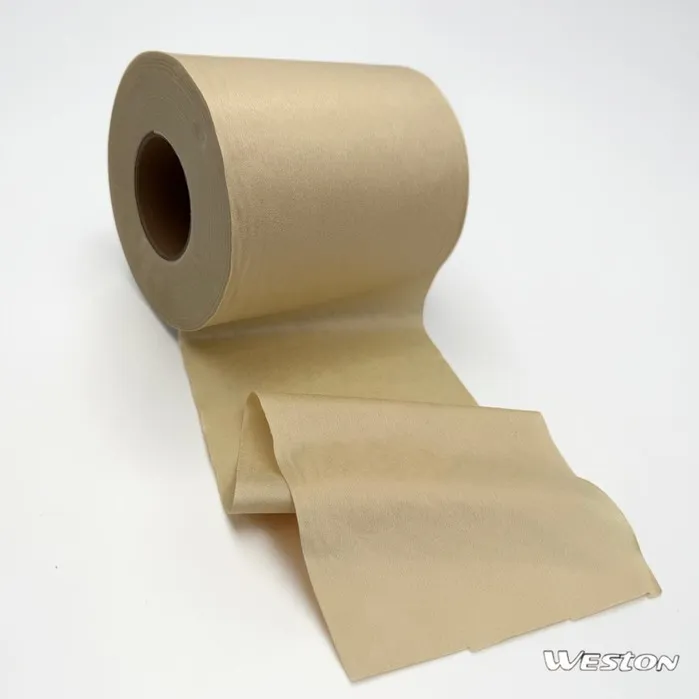
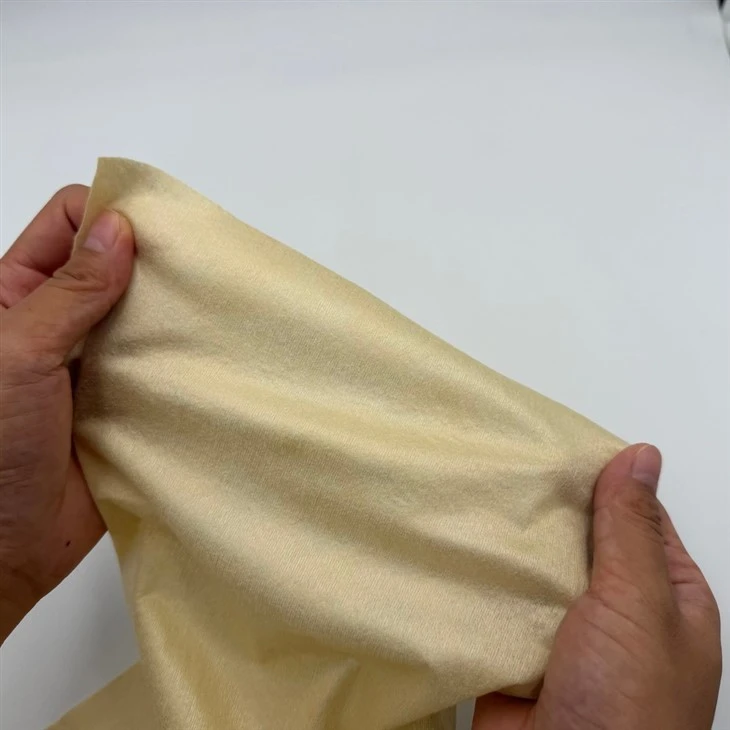
100% Bamboo Fiber Polish Cloths are dry, binder-free nonwoven cloths made entirely from natural bamboo cellulose fiber, produced via the spunlace (hydroentanglement) process. They are designed for surface polishing tasks where a soft, lint-controlled, chemically neutral substrate is required. At 50 g/m², the cloth is lightweight enough for detail polishing yet structurally stable under moderate wiping pressure.
Key Properties
- Fiber: 100% bamboo cellulose, no polyester or viscose blending
- Process: Spunlace (water-jet entanglement), no chemical binders or thermal adhesives
- Basis weight: 51.8 g/m² (nominal 50 g/m²)
- Water absorption: 823% by dry weight (test result under GB/T 24218.6; standard minimum: ≥700%)
- Tensile balance: MD/CD breaking strength ratio of 64.9 / 62.2 N/5cm - a 1.04:1 ratio indicating near-uniform wiping performance in both directions
- pH: Neutral, confirmed per YY0331-2006
- FWA: No migratable fluorescent whitening agents detected
- Color: Natural off-white (no bleaching agents, no dyes applied)
- Moisture regain: 8.3% (standard limit ≤13%), confirming stable dry-storage performance at ambient warehouse conditions
Laboratory Test Data
All figures below are from production lot test reports conducted under Chinese national and industry standards.
|
No. |
Test Item |
Direction |
Unit |
Requirement |
Result |
Test Standard |
|
1 |
Basis Weight |
- |
g/m² |
- |
51.8 |
GB/T 24218.1 |
|
2 |
Thickness |
- |
mm |
- |
0.37 |
GB/T 24218.2 |
|
3 |
Breaking Strength |
Machine Direction (MD) |
N/5cm |
- |
64.9 |
GB/T 24218.3 |
|
3 |
Breaking Strength |
Cross Direction (CD) |
N/5cm |
- |
62.2 |
GB/T 24218.3 |
|
4 |
Elongation at Break |
Machine Direction (MD) |
% |
- |
31.7 |
GB/T 24218.3 |
|
4 |
Elongation at Break |
Cross Direction (CD) |
% |
- |
36.2 |
GB/T 24218.3 |
|
5 |
Water Absorption Rate |
- |
% |
≥700 |
823 |
GB/T 24218.6 |
|
6 |
Whiteness |
- |
% |
≥80 |
86.3 |
GB/T 7974-2013 |
|
7 |
Moisture Regain |
- |
% |
≤13 |
8.3 |
GB 9995-1997 |
|
8 |
pH Value |
- |
- |
Neutral |
Neutral |
YY0331-2006 |
|
9 |
Fluorescent Whitening Agents |
- |
- |
No migratable FWA |
None detected |
YY0331-2006 |
Fabric Construction Summary
|
Parameter |
Value |
|
Fiber Composition |
100% Bamboo Cellulose |
|
Manufacturing Process |
Spunlace / Hydroentanglement |
|
Nominal Basis Weight |
50 g/m² |
|
Measured Basis Weight |
51.8 g/m² |
|
Thickness |
0.37 mm |
|
Color |
Natural ,black,white (undyed, no FWA) |
|
Bond Type |
Mechanical (water-jet entanglement only) |
|
Binder |
None |
|
Finish |
Dry, unscented, no wet treatment |
|
pH |
Neutral |
|
Fluorescent Whitening Agents |
Not present |
Surface Polishing Applications
Automotive Detailing
Bamboo spunlace at 50 g/m² is used for final-stage paint surface polishing and glass cleaning. The neutral pH eliminates risk of pH-induced hazing on clear coats. The absence of synthetic fibers removes the risk of microplastic deposition on lacquered surfaces. The cloth is suitable as a finishing wipe after compound or polish application, where surface cleanliness and low lint transfer are the primary requirements.
Optical and Precision Glass
For lens cleaning, screen polishing, and optical component surface preparation, the combination of soft fiber fineness (1.5–2.5 dtex), neutral pH, and zero FWA content makes this cloth compatible with anti-reflective coatings and hydrophobic glass treatments that are sensitive to chemical contamination.
Cosmetic and Stainless Steel Surfaces
Food-grade and cosmetic-grade stainless steel surfaces require polishing cloths that leave no fiber contamination and no chemical transfer. The confirmed absence of FWA and neutral pH means this cloth can contact product-contact surfaces in food processing and pharmaceutical environments without introducing regulated substances. Note: this product is not itself certified to food contact standards; buyers with specific regulatory requirements should request lot-specific test documentation.
Cosmetic and Skincare Application
Used as a dry or lightly dampened facial polishing cloth, the soft bamboo fiber structure is suitable for gentle skin exfoliation and cleansing. The 823% water absorption rate supports effective product removal per pass. The absence of FWA is relevant to sensitive skin formulations and professional skincare treatment protocols.
Household Surface Polishing
Glass and mirror polishing: the low-lint, neutral-pH structure reduces streaking and chemical interference with glass coatings
Lacquered furniture and cabinetry: soft fiber contact without abrasive risk at this GSM
Chrome and polished metal fixtures: residue-free wiping without synthetic fiber contamination
Note: This cloth is not tested or rated for cleanroom ISO class environments. For controlled-contamination environments, consult cleanroom-certified wipe specifications.


How to Use This Cloth for Surface Polishing
For Dry Surface Polishing (e.g., automotive paint, optical glass)
Unfold the cloth to full sheet size. Do not bunch or fold unevenly, as concentrated edge pressure can create light pressure lines on soft lacquer surfaces.
Apply polishing compound or finishing spray to the surface, not directly to the cloth, to control distribution.
Work in overlapping straight passes or circular motions at moderate pressure. The 1.04:1 MD/CD tensile balance means the cloth performs consistently in either pattern.
Flip to a clean face for final buffing. At 51.8 g/m², each sheet provides two usable surfaces before through-saturation occurs.
Do not reuse a cloth that has contacted abrasive compounds on optical or paint surfaces, as embedded particles from a previous pass will scratch on reapplication.
For Wet Surface Polishing (e.g., skincare, kitchen surfaces)
Dampen the cloth uniformly. At 823% absorption, a 4-gram sheet holds approximately 33 ml of water at saturation - reduce to 40–60% saturation for controlled wet wiping.
Wring lightly to working moisture level before contact with the surface.
Wipe in one direction on reflective or lacquered surfaces to avoid cross-pattern streaking.
After use, dispose per local solid waste guidelines. This product is not tested to flushability standards; do not flush.
Surface polishing workflows often require different substrates at different stages. Surface Preparation Microfibre Cloths are suited to initial abrasive preparation before final finishing. Where a single cloth needs to combine scrubbing and absorbency, Abrasive Spunlace With Plastic Dots provides that dual function. For kitchen surface cleaning with stain resistance as a priority, see Stain Resistant Kitchen Cloth.
OEM and Private Label Manufacturing
Weston Nonwoven produces this cloth at its own spunlace manufacturing facility. All parameters listed below are adjustable for custom orders.
|
Parameter |
Customizable Range or Options |
|
Basis Weight |
30–120 g/m² (spunlace process range) |
|
Fabric Width |
Adjustable per production line configuration |
|
Sheet Size |
Custom cut dimensions available |
|
Roll Format |
Custom roll diameter, core size, perforation pitch |
|
Packaging |
Roll, flat-pack, folded, resealable pouch, dispenser box |
|
Emboss Pattern |
Plain, dot, wave, diamond, custom tooling |
|
Fiber Blend |
100% bamboo; or bamboo/cotton, bamboo/viscose blends |
|
Color |
Natural off-white, bleached white, or custom dyed (MOQ applies) |
|
Certification Support |
FSC, SGS, FDA, CE documentation for export |
|
Labeling |
Private label, custom language, barcode, country of origin |
MOQ and lead time are established at inquiry stage, based on specification complexity and current production schedule. Sample rolls are available for material validation prior to bulk order commitment.
Frequently Asked Questions
Q: What is the difference between bamboo spunlace and bamboo viscose nonwoven?
Bamboo spunlace uses bamboo cellulose fiber in its fiber form, entangled mechanically without chemical binders. Bamboo viscose (also called bamboo rayon) dissolves bamboo pulp into solution and regenerates it into fiber - a distinct chemical process that produces a different fiber structure, moisture profile, and manufacturing environmental footprint. This product is bamboo spunlace, not viscose.
Q: The listed basis weight is 50 g/m², but the test result shows 51.8 g/m². Which is correct?
Both are accurate. 50 g/m² is the nominal specification. 51.8 g/m² is the measured lot result. GB/T 24218.1 governs the test method; nonwoven basis weight production tolerances are typically ±5%, so 51.8 g/m² is within normal specification range.
Q: Does this cloth leave lint on polished surfaces?
All nonwoven fabrics release some fiber during use. Lint behavior in this product is governed by the spunlace entanglement structure at 51.8 g/m². The absence of cut or broken fiber ends (which thermally bonded fabrics can produce at bond points) reduces loose fiber presence. For lint-critical applications such as optical surfaces, evaluate using a sample under your specific use conditions before production commitment.
Q: Can this cloth be used with polishing compounds or solvents?
The cloth is compatible with water-based polishing compounds, mild detergents, and alcohol-based cleaners. Solvent compatibility (e.g., acetone, MEK) has not been specifically tested; cellulosic fibers are generally solvent-resistant but may show dimensional change under extended solvent saturation. Test under your specific formulation before use in production workflows.
Hot Tags: 100% bamboo fiber polish cloths, China, manufacturers, factory, customized, wholesale, Needle Punched Laminated Polyester Nonwoven Wholesale, 12x12 Microfiber Spunlace Pads, Cellulose Spunlace Industrial Printer Cleaning Wipes, Durable Spunlace Nonwoven For Pool And Spa Filters, Customizable Microfiber Spunlace Nonwoven Bulk Rolls, Agricultural Non Woven Fabric For Seedling Cover